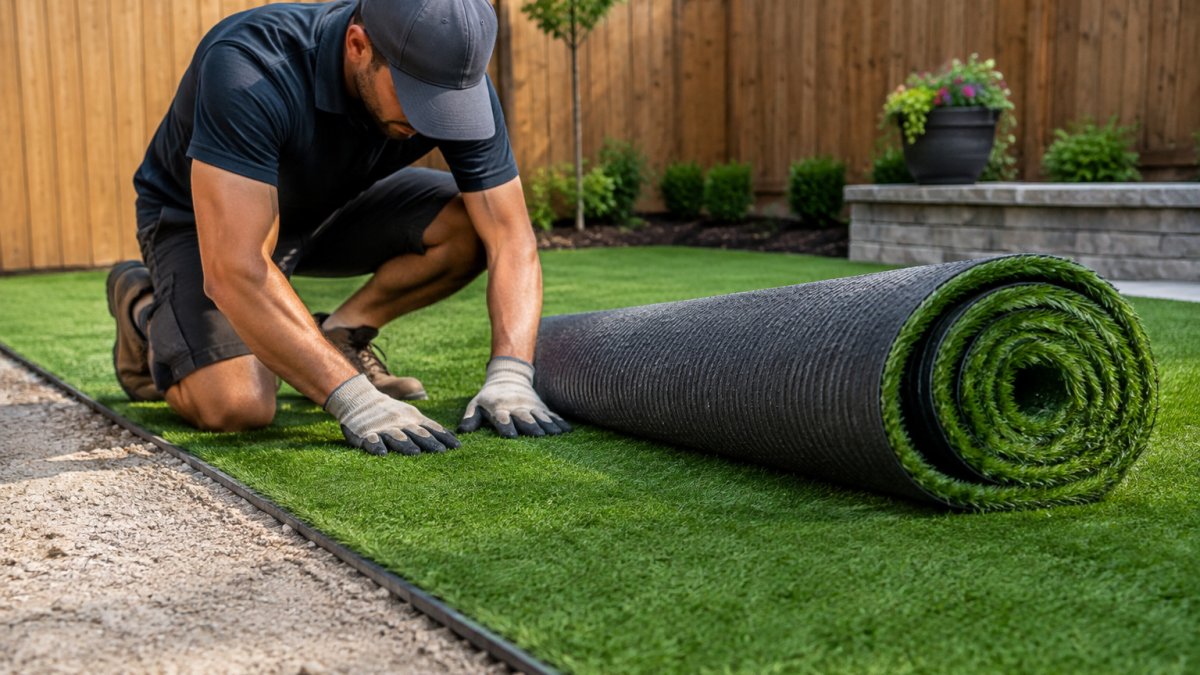
Can You Really DIY Artificial Turf Installation?
Last Updated: November 22, 2026
Quick Summary
Yes, you can DIY artificial turf installation in Utah, but treat it as a base-building project, the crushed rock underneath decides whether your lawn stays flat after a freeze. Small, flat, well-drained areas are doable with a weekend and a helper; hire a professional for slopes, large yards, or anything near a foundation.
- Rent the heavy digging and compacting equipment and buy the hand tools yourself.
- Add 10% to your measured square footage for cuts and waste.
- Overlap weed barrier seams by 6 inches to block weeds and soil migration.
- Nail or staple every 6 to 8 inches along the turf perimeter.
- Skipping the plate compactor is the most common DIY failure, causing ripples and standing water.
Table of Contents
- Can you really DIY artificial turf installation in Utah?
- Artificial turf installation tools and materials checklist
- How to install artificial grass on soil
- Frequently Asked Questions
Can you really DIY artificial turf installation in Utah?
Yes, you can DIY artificial turf installation in Utah, but treat it as a base-building project, the crushed rock underneath decides whether your lawn stays flat after a freeze. Small, flat, well-drained areas are doable with a weekend and a helper; a professional is the safer choice for slopes, large yards, or anything near a foundation.
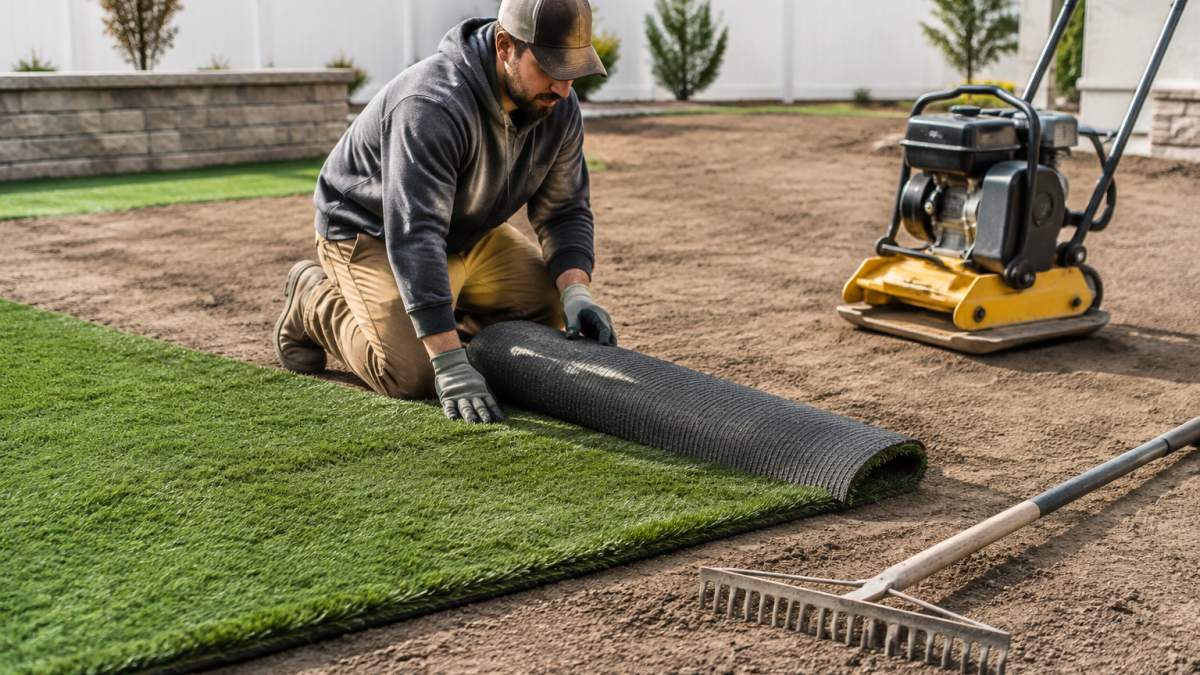
The DIY versus pro decision
Miss two or more boxes and the project is probably a hire. Before you dig, read our guide to landscaping permits for Utah homeowners; if you bring in help, here is how to approach hiring licensed landscape contractors in Utah. Soils along the Wasatch Front can include clay and gravel mixes that drain poorly once compacted, so a base built for sandy soil may pond.
Artificial turf installation tools and materials checklist
Artificial turf installation tools fall into three groups: digging, compacting, and finishing, rent the heavy items, buy the hand tools. Materials include crushed aggregate base, weed barrier fabric, perimeter edging, and infill if your product calls for it. Match your plate compactor to your square footage with our guide on how to choose gravel compactor size for a solid base; the tool list for compacting a gravel patio base overlaps almost entirely.
Watch out: skipping the plate compactor and tamping by hand is the most common DIY failure, loose base means ripples, open seams, and standing water.
How to install artificial grass on soil
Step 1: Measure and mark. Sketch the area, note the square footage, mark the outline, and add 10% for cuts and waste.
Step 2: Clear the site. Remove grass, roots, and debris, taking out enough soil plus the turf pile height so the surface sits flush with walkways.
Step 3: Check for obstacles. Contact your local utility locating service before you dig; map sprinkler lines, downspouts, and tree roots, and reroute or cap irrigation.
Step 4: Grade for drainage. Slope the subgrade away from the house.
Step 5: Lay weed barrier. Overlap seams by 6 inches to block weeds and keep fine soil from migrating into the base.
Step 6: Add and compact base. Spread crushed aggregate in lifts, wetting and compacting each until the plate stops sinking.
Step 7: Final grade and check. Rake smooth, check with a level and string line, and fill and recompact any low spots.
Step 9: Cut and seam. Trim with a straightedge and fresh blade, joining edges with seam tape and adhesive or nailing both sides to a common board.
Step 10: Fasten the perimeter. Nail or staple every 6 to 8 inches along the edge and set perimeter edging to hold the line.
Step 11: Brush in infill. Spread infill per the product spec and work it in with a power broom to stand the fibers up and add weight.
Step 12: Rinse and inspect. Light water settles the infill; walk the whole lawn looking for ripples and lifted seams.
How to install artificial grass on concrete
Artificial grass over concrete skips excavation. You need a drainage mat or perforated backing so water can escape, then adhesive or weighted edging to hold the turf down. Confirm the slab drains away from the structure before you glue anything.
Utah soil, climate, and drainage notes
Three local factors can change the install: clay soil can pool water on compacted clay, so a coarser base layer and a careful slope check may help; freeze-thaw cycles generally favor a deep, well-compacted base over a shallow one; and summer heat can raise turf surface temperatures, so infill choice and shade planning may help. For pet households, our guide on installing a dog-friendly landscape at home covers odor control and rinse points.
Project budget and quantity calculator
Pricing depends on quantity, dates, and delivery. Build your own estimate:
| Line Item | How to Calculate | Notes |
|---|---|---|
| Base aggregate | Sq ft × 0.33 ft ÷ 27 = cubic yards | Order 10% extra |
| Turf | Sq ft + 10% waste | Check roll widths |
| Rentals | Daily rate × days needed | Compactor, trailer |
For current prices or a quote, visit the Luxury Concrete And Landscaping pricing page.
Troubleshooting and quality checks
- Ripples after rain: base was not compacted in lifts. Pull the turf and recompact.
- Visible seams: adhesive cured under tension. Re-tape with weight applied.
- Standing water: grading error. Regrade the subgrade, not the turf.
- Loose edges: staples too shallow. Reset deeper and add edging.
DIY artificial turf installation is a base-building job with a landscaping finish, and the base is where most homeowners get stuck. If your yard is sloped, large, or on heavy clay, the risk of a failed install is not worth the savings. Luxury Concrete And Landscaping handles turf installation as part of full outdoor builds, backed by a 5-year workmanship warranty, licensing and insurance, and an in-house design team. Get started with Luxury Concrete And Landscaping and get a lawn that survives its first Utah winter.
Frequently Asked Questions
Can I install artificial turf myself?
Yes, a DIY artificial turf installation is realistic for a flat, small-to-medium yard if you are comfortable with excavation, base compaction, and precise cutting. The base work is what decides whether the turf stays flat and drains well. If your yard slopes, has heavy clay soil, or needs utility locating, a professional crew is the safer call. Budget several weekends for a typical project.
What should you put down before laying artificial turf?
You need a compacted aggregate base, usually crushed stone, topped with a weed barrier or geotextile fabric. On soil, excavate to the required depth, grade for drainage, then compact the base in lifts with a plate compactor. On concrete, skip excavation and use a shock pad or geotextile directly over the slab. Never lay turf on bare dirt or loose fill.
What tools do you need to install artificial turf?
The core artificial turf installation tools are a plate compactor, landscape rake, turf cutter or sharp utility knife, wheelbarrow, shovel, and a power broom for infill. You also need landscape staples or nails, seam tape and adhesive, perimeter edging, and a tape measure. Rent the compactor and power broom rather than buying them for a one-time project.

