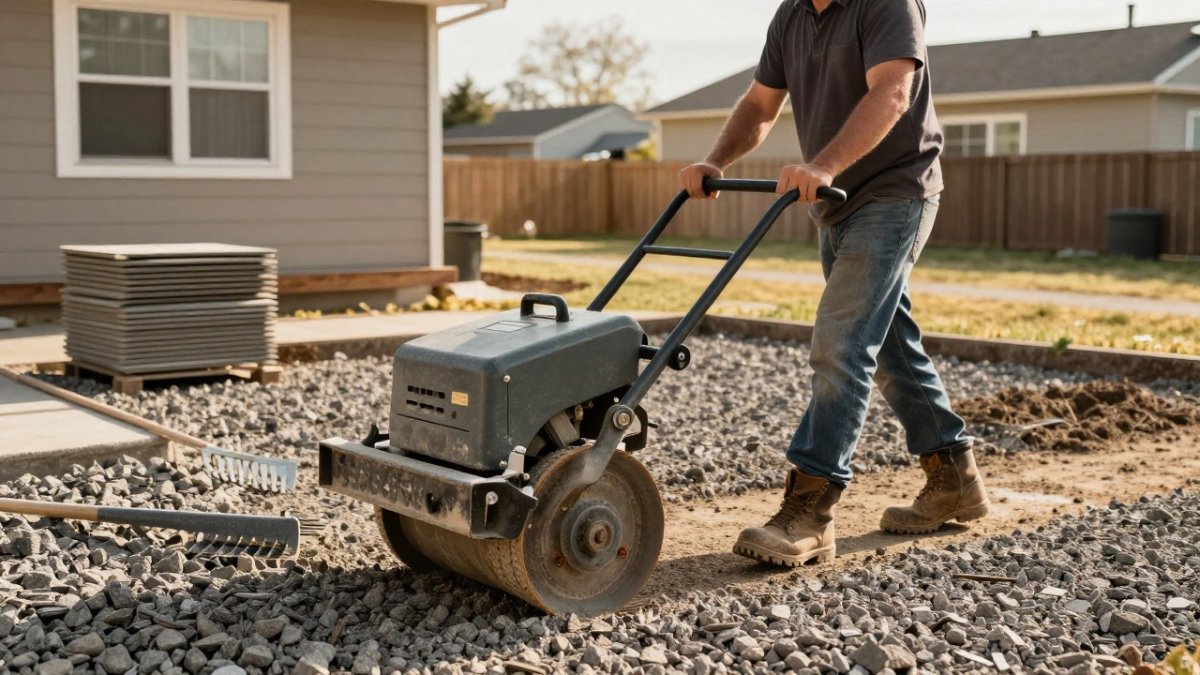
How to Choose Gravel Compactor Size for a Solid Base
Last Updated: November 20, 2026
Quick Summary
Choose a gravel compactor by matching plate width and machine weight to your project: 12-14 inch plates under 150 lb for patios and walkways, 18-20 inch plates at 150-250 lb for driveways, and 20+ inch plates at 250+ lb for large pads and deep lifts.
- An oversized plate on soft subgrade can rut the base instead of compacting it.
- Angular crushed stone locks together under vibration, while rounded river rock shifts.
- A mix of 3/4-inch crushed aggregate with fines compacts into a stable paver base.
- Reversible compactors handle granular lifts up to 12 inches, and some heavy-duty models reach 16 inches.
- Dampen the material before compacting, but never soak it.
Table of Contents
- Matching Gravel Compactor Size to Your Project
- Plate Compactor Width and What Size Gravel Is Best for Compaction
- How to Determine 95% Compaction and Plan Plate Compactor Rental
- Frequently Asked Questions
Matching Gravel Compactor Size to Your Project
Choosing a gravel compactor starts with plate width, machine weight, and lift depth.
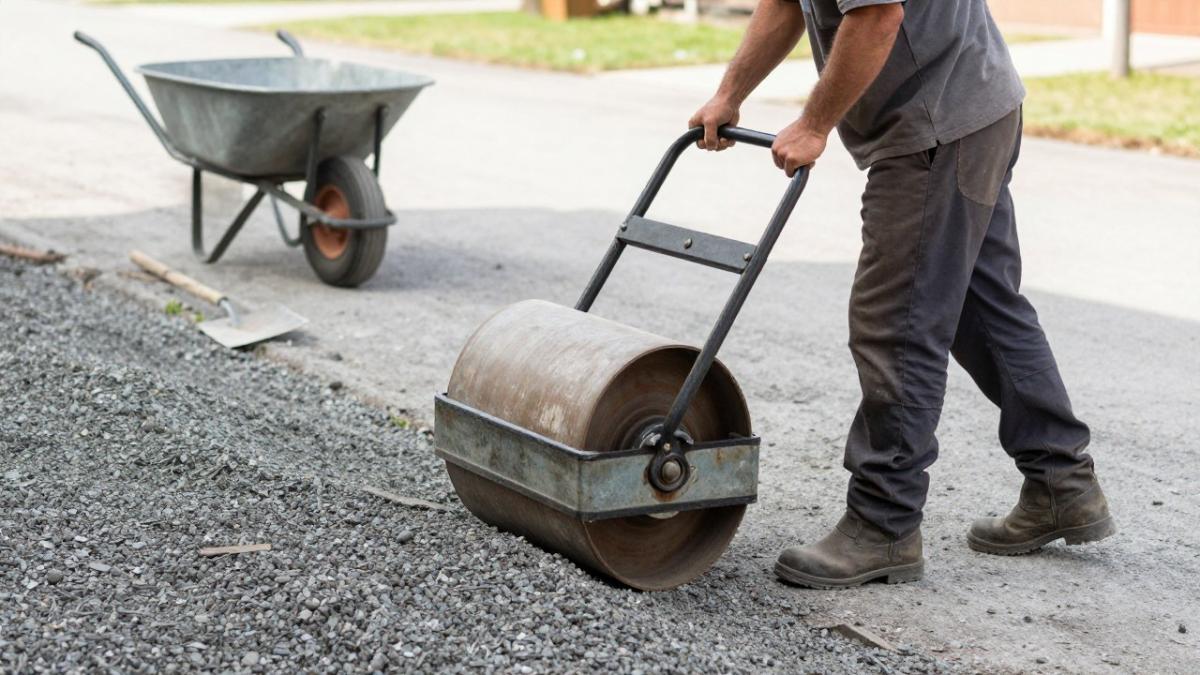
Match the machine to area and access. See our guide on how to choose tools for compacting a gravel patio base.
| Project | Plate Width | Machine Weight | Best For |
|---|---|---|---|
| Patio, walkway | 12-14 in | Under 150 lb | Tight corners, small area |
| Driveway | 18-20 in | 150-250 lb | Fast coverage, granular base |
| Large pad | 20+ in | 250+ lb | Deep lifts, high force |
An oversized plate on soft subgrade can rut the base instead of compacting it.
Plate Compactor Width and What Size Gravel Is Best for Compaction
Plate compactor width sets your coverage rate, and gravel gradation decides how well that plate transfers force: angular crushed stone locks together under vibration, while rounded river rock shifts, so a mix of 3/4-inch crushed aggregate with fines compacts into a stable paver base.
Lift thickness matters as much as width. Reversible compactors handle granular lifts up to 12 inches, and some heavy-duty models reach 16 inches, per TMS Equipment buying guide. Dampen the material, never soak it.
How to Determine 95% Compaction and Plan Plate Compactor Rental
Reaching a target compaction level is typically verified by a field density test rather than by feel alone.
Plan a plate compactor rental around your lift count and total surface area. Before you compact, confirm the base is sound; our articles on when to replace an unstable driveway base and signs of poor subgrade preparation explain when compaction will not fix a failing layer.
Global demand for vibratory plate compactors is climbing, with the market projected to grow at a 6.90% compound annual rate through 2034, according to Fortune Business Insights.
Getting the base right is the difference between a patio that lasts and one that shifts within a season. Luxury Concrete And Landscaping handles the full build, from in-house design to final compaction, backed by a 5-year workmanship warranty and full licensing and insurance. We bring premium materials and a crew that honors its timelines. Get started with Luxury Concrete And Landscaping and build an outdoor space that holds up for years.
Frequently Asked Questions
What size plate compactor do I need for a gravel driveway?
For most gravel driveways, a forward plate compactor with a plate width around 20 inches and a machine weight of 150 to 200 pounds handles the job. Wider plates cover more ground per pass, which matters on a long drive. If you are working around curves, edges, or tight access points, a narrower plate or a reversible model gives you more control. Match the plate to the lift thickness too: granular material lifts up to 12 inches suit reversible compactors, while lighter forward plates work best in thinner layers.
What size gravel is best for compaction?
Crushed stone in the 3/4-inch range is the standard choice for a compactable base because the angular faces interlock under vibration. Graded aggregate with a mix of particle sizes, sometimes called crusher run, compacts tighter than uniform stone because the fines fill the voids. Avoid rounded river rock, which shifts instead of locking. For a paver base, a 3/4-inch minus mix compacted in 2 to 4 inch lifts gives you a stable, dense surface.
How do you determine 95% compaction on a gravel base?
Field verification usually relies on a nuclear density gauge or a sand cone test run by a technician, comparing the measured dry density to the maximum dry density from a Proctor test. For residential work, a plate load test or a simple proof-rolling pass with a heavy compactor gives a practical read. Compact in thin lifts, keep moisture near optimum, and run multiple passes. If a inspector or engineer requires 95% compaction, schedule the test before you pave or pour.

