How to Choose Tools for Compacting a Gravel Patio Base
Last Updated: October 27, 2026
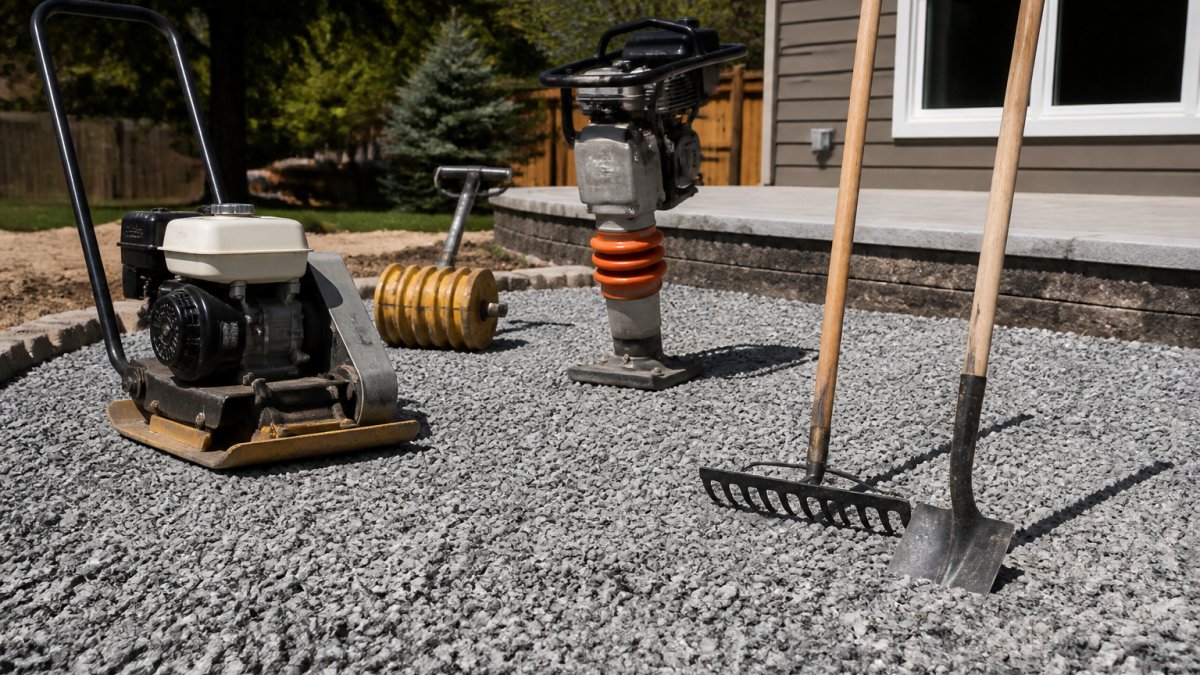
Plate Compactor vs Hand Tamper: Which Tool Fits Your Patio Base
Choosing tools for compacting gravel patio base material comes down to square footage: a plate compactor wins above a small walkway, while a hand tamper covers tight corners.
A loose gravel patio base shifts under pavers within a season, compaction is not optional.
| Tool | Best For | Compaction Force | Effort | Typical Use |
|---|---|---|---|---|
| Plate compactor | Patios over roughly 100 sq ft, paver bases, driveways | High, machine-driven vibration | Low operator effort, needs transport | Large gravel patio base, driveway, sidewalk |
| Hand tamper | Small patios, edges, corners, tight spots | Low, human-powered | High physical effort | Walkway, small patio, finishing edges |
| Vibratory roller | Large flat aggregate areas | Moderate, surface-focused | Low, but bulky | Driveway, large open base |
| Rammer | Confined trenches, cohesive soil | High, impact-based | Moderate | Utility trenches, not patio gravel |
Using a Plate Compactor for Paver Base and Larger Gravel Patios
A plate compactor is the standard tool for a gravel patio base larger than a small walkway. Its vibrating steel plate settles aggregate in repeated passes, which is why Blades Direct's gravel compaction guidance names plate compactors as the common choice for residential and light-commercial work.
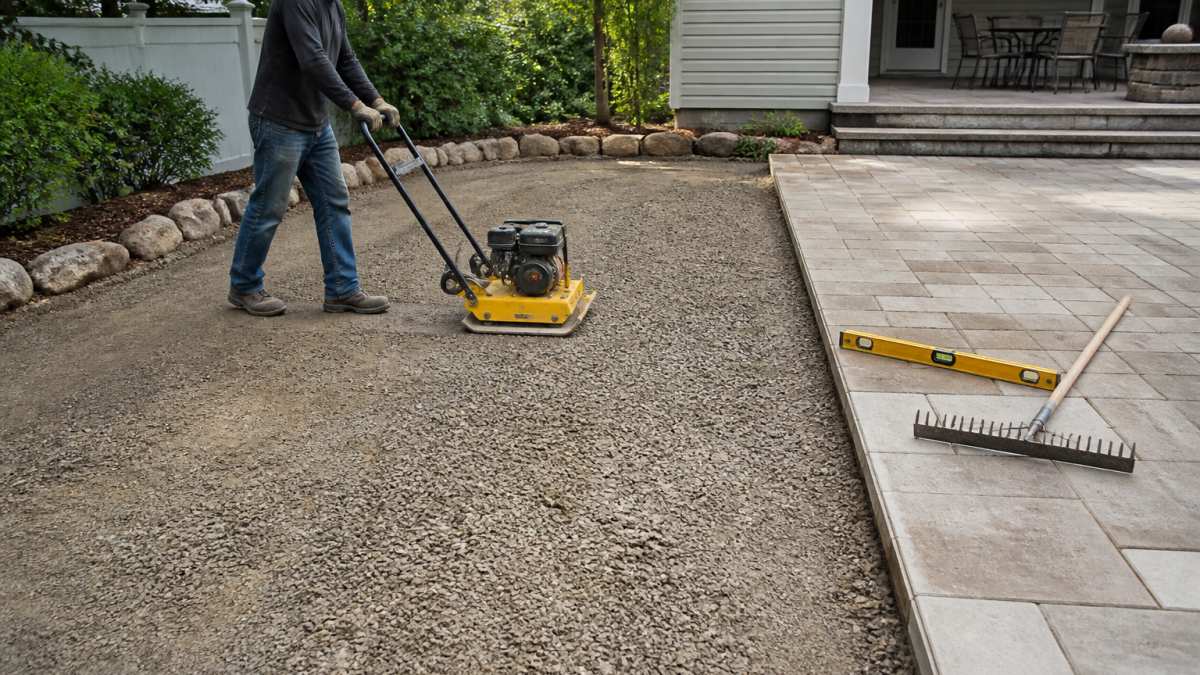
Match the machine to the job: a narrow plate fits between edging and tight corners, while a wider plate covers open ground faster but struggles near walls. Spread gravel in layers, Tomahawk Power's patio base guide recommends 2 to 4 inch lifts, compacting each before adding the next, since skipping lifts leaves loose material buried under a firm surface.
Watch out: Over-compacting saturated gravel pushes water to the surface and leaves a soft, unstable layer. Compact dry or barely damp material, and stop if the plate starts sinking.
Get My FREE Estimate →
When a Hand Tamper for Gravel Makes Sense
A hand tamper for gravel earns its place on small patios, walkways, and the edges a plate compactor cannot reach. Western Interlock's compactor selection guide identifies the steel tamper and plate compactor as the two tools most often used for compacting a paver base, and the tamper exists precisely because machines miss tight spots.
Homeowners sometimes choose a hand tamper when renting or transporting a plate compactor is impractical. Tamping by hand takes far longer and produces less consistent density, so reserve it for small areas and finishing work.
- Confirm the base is level before tamping
- Work in thin lifts, no more than 2 to 3 inches
- Tamp in overlapping passes, not random spots
How to Compact Gravel for a Patio: Step by Step
How to compact gravel for a patio: spread aggregate in thin lifts, compact each fully with a plate compactor or hand tamper, then verify the surface is firm and level before adding the next layer.
- Excavate to depth and grade the subgrade
- Spread the first lift, 2 to 4 inches deep
- Compact with overlapping passes until the surface stops moving
- Check level and fill low spots before the next lift
- Repeat until you reach final base height
- Verify with a firm heel test and a level check
Safety, Noise, and Surface Protection
Plate compactors are loud and vibrate hard. Wear hearing protection, gloves, and boots, keep the plate flat, and let the machine do the work. Protect finished pavers with a rubber mat or plywood when compacting nearby.
A gravel patio base is only as good as the compaction beneath it, and getting that wrong shows up as sunken pavers and shifted joints within a season. If you would rather not gamble on rental equipment and weekend labor, Luxury Concrete And Landscaping brings an in-house design team, premium materials, and a 5-year workmanship warranty to every patio and hardscape project. Get started with Luxury Concrete And Landscaping and build a base that holds.

