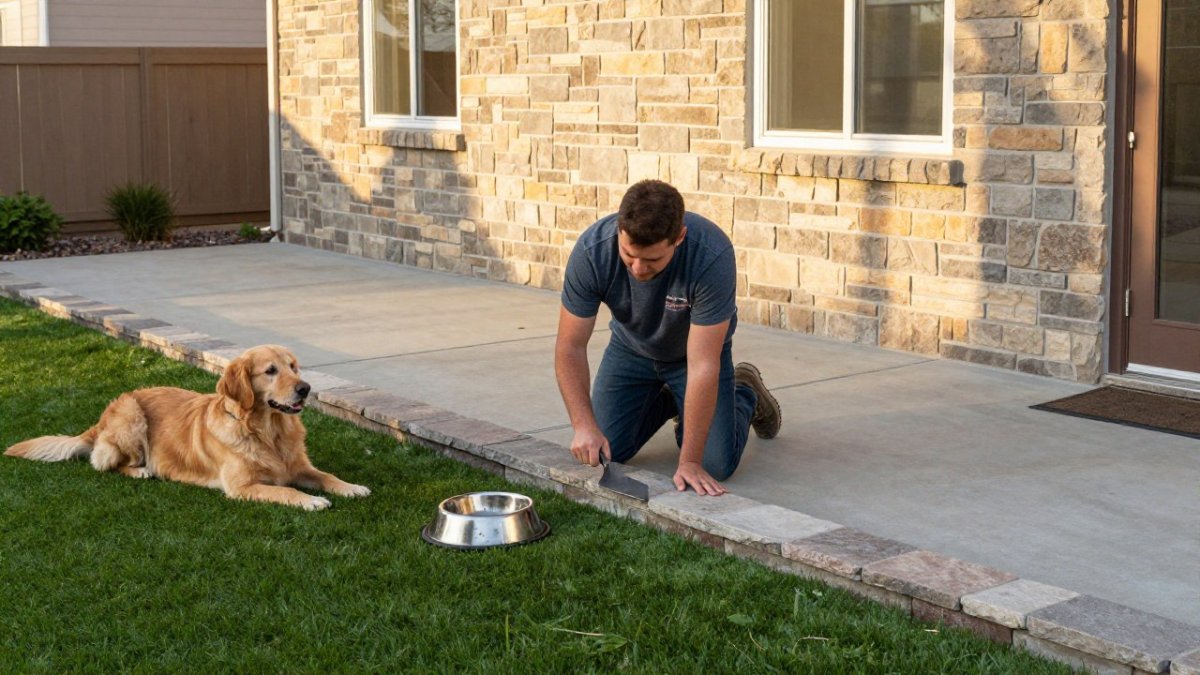
How Do You Install a Dog-Friendly Landscape at Home?
Last Updated: November 10, 2026
Quick Summary
Install a dog friendly landscaping setup by first mapping how your dog moves through the yard, then placing barriers along garden bed edges and building a dedicated run with compacted base and permeable ground cover. Designate a digging pit to redirect digging away from your plants. Choose surfaces that drain well and rinse clean.
- Watch worn paths and favorite dig spots before designing the layout.
- Use decorative metal fences 1 to 3 feet tall to keep dogs out of beds.
- Compact the base before adding surface material so the run does not sink.
- Add a sandbox-style digging pit at one end of the run as an outlet.
- Avoid cocoa mulch, which can be toxic to dogs if ingested.
Table of Contents
- Planning a Dog Friendly Landscaping Layout Before You Dig
- Step-by-Step DIY Dog Run Installation and Ground Cover Setup
- Choosing Pet-Friendly Artificial Turf and Durable Ground Cover for Dogs
- Frequently Asked Questions
Planning a Dog Friendly Landscaping Layout Before You Dig
Dog friendly landscaping starts with watching how your dog actually uses the yard. Note the worn paths, the favorite digging spots, and where the dog runs hardest. Designing around those habits saves you from replanting later.
Decorative metal fences 1 to 3 feet tall are recommended to discourage dogs from running through landscape beds (UF/IFAS Gardening Solutions petscaping guidance). Physical barriers like these protect garden beds while still letting your dog see the yard.
| Planning Step | What to Check | Why It Matters |
|---|---|---|
| Traffic mapping | Worn paths and running lines | Sets where the dog path goes |
| Digging zones | Favorite dig spots | Redirects digging away from beds |
| Barrier placement | Bed edges along dog routes | Keeps plants intact |
Step-by-Step DIY Dog Run Installation and Ground Cover Setup
Start by marking the run with stakes and string, then remove sod and level the base. Compact the base before adding surface material so the run does not sink or pool water after rain. Read how to choose tools for compacting a gravel patio base to pick the right equipment for the job.
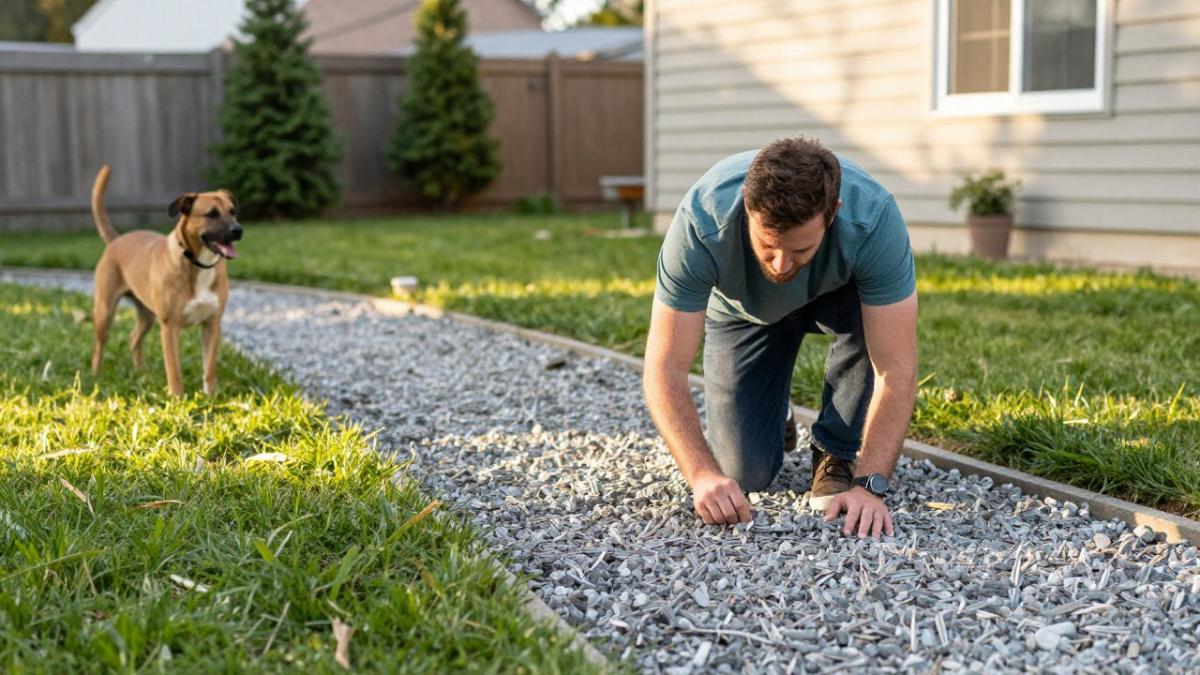
Designers increasingly add designated digging pits to divert dogs from garden areas (Monrovia landscape design trends). A sandbox-style pit at one end of the run gives the dog a legitimate outlet.
Install edging, lay your gravel or pavers, and check that the surface drains away from the house. If you use pea gravel, see how to remove pet odors from pea gravel for keeping the run fresh.
Choosing Pet-Friendly Artificial Turf and Durable Ground Cover for Dogs
Pet-friendly artificial turf and permeable grid systems hold up better under heavy paw traffic than standard lawn. Permeable materials such as decomposed granite, pavers, and grid-based gravel create defined, paw-friendly walkways (GoTurf industry trends report).
Choose surfaces that drain well and rinse clean, and avoid cocoa mulch, which can be toxic to dogs if ingested (Gibbs Landscape Company guidance on dog-safe mulch). Weigh the benefits and drawbacks in a balanced look at artificial turf pros and cons before deciding.
Ready to plan your yard? Luxury Concrete And Landscaping designs and installs dog-friendly hardscaping and turf with a 5-year workmanship warranty. Get My FREE Estimate.
Frequently Asked Questions
What are the best materials for a dog-friendly backyard?
Materials that hold up to claws, urine, and heavy foot traffic work best. Pavers, flagstone, and permeable gravel handle daily running well, and pet-tolerant artificial turf with proper drainage stays clean and cool. Avoid cocoa mulch, which can be toxic to dogs if eaten. Choose surfaces that drain quickly so mud and odor do not build up, and check that edges are secured so dogs cannot dig under them.
How do I keep my dog from digging in the yard?
Give the dog a designated digging area, such as a sandbox or digging pit filled with loose sand or soil, and bury a few toys there to encourage use. Place low decorative fencing around garden beds so the dog has a clear boundary. Supervise outdoor time, and redirect the dog to the digging zone whenever it starts digging elsewhere. Consistent redirection works better than punishment.
Is artificial turf safe for dogs?
Pet-specific artificial turf can be safe when it has good drainage. Check that the turf is rated for heat, since sun-exposed synthetic surfaces can get hot in summer, and provide shade and water nearby. Rinse the surface regularly and clean up waste promptly to prevent odor. Confirm the installer uses a proper base and sub-base so the turf does not shift or pool water.

