Pros and Cons of Artificial Turf: A 2026 Guide
Table of Contents
- Artificial Turf Pros and Cons at a Glance
- Water Conservation and Environmental Impact
- Artificial Turf Maintenance Requirements vs. Natural Grass
- Cost of Artificial Turf Installation and Long-Term Investment
- Artificial Turf Drainage Issues and Performance in Rain
- Heat Retention and Surface Temperature Concerns
- Durability, Lifespan, and End-of-Life Disposal
- Conclusion: Is Artificial Turf Right for Your Property?
Last Updated: August 16, 2026
Artificial Turf Pros and Cons at a Glance
The decision between artificial turf and natural grass isn't straightforward. Both options come with genuine trade-offs that matter for your specific property, climate, and lifestyle. This guide from Luxury Concrete And Landscaping breaks down the real pros and cons of artificial turf so you can make an informed choice for your outdoor space.
Artificial turf has gained popularity among homeowners seeking a low-maintenance landscape solution. But the appeal masks some serious considerations around environmental impact, long-term costs, and performance issues that deserve careful attention before installation.
Water Conservation and Environmental Impact
Artificial turf delivers measurable water savings compared to maintaining natural grass, particularly in dry climates. By eliminating the need for regular irrigation, synthetic turf can conserve thousands of gallons annually per property. This water conservation benefit appeals to environmentally conscious homeowners and those in drought-prone regions.
However, the environmental picture is more complex than water savings alone. Most artificial turf products use polyethylene or polypropylene fibers that are petroleum-based and non-biodegradable. Over time, UV degradation breaks down these fibers into microplastics that can leach into soil and groundwater. The infill materials, typically rubber crumb or sand, can also contribute to microplastic runoff during heavy rain events, potentially affecting local ecosystems.
The production and transportation of synthetic turf carries a carbon footprint that offsets some environmental gains. Manufacturing polyethylene or polypropylene fibers requires significant energy input. Additionally, the synthetic turf industry has faced scrutiny over whether recycled materials used in infill are truly sustainable or simply relocating waste from landfills to residential properties.
Natural grass, by contrast, supports biodiversity through root systems and soil microorganisms. Grass lawns provide habitat for insects, earthworms, and microbes that contribute to soil health. But maintaining natural grass requires regular fertilizer applications, which can cause nutrient runoff into waterways, and frequent mowing that produces emissions.
The environmental trade-off ultimately depends on your region's water availability and your commitment to sustainable lawn care practices. In arid climates where irrigation demands are extreme, artificial turf's water conservation may outweigh its microplastic concerns. In regions with adequate rainfall, natural grass maintained without chemical fertilizers may present a smaller environmental footprint.
Artificial Turf Maintenance Requirements vs. Natural Grass
Artificial turf requires dramatically less maintenance than natural grass, which is its primary appeal for busy homeowners. You eliminate the need for weekly mowing, seasonal aeration, fertilizer applications, and regular watering. This translates to genuine time savings and reduced labor costs over years of ownership.
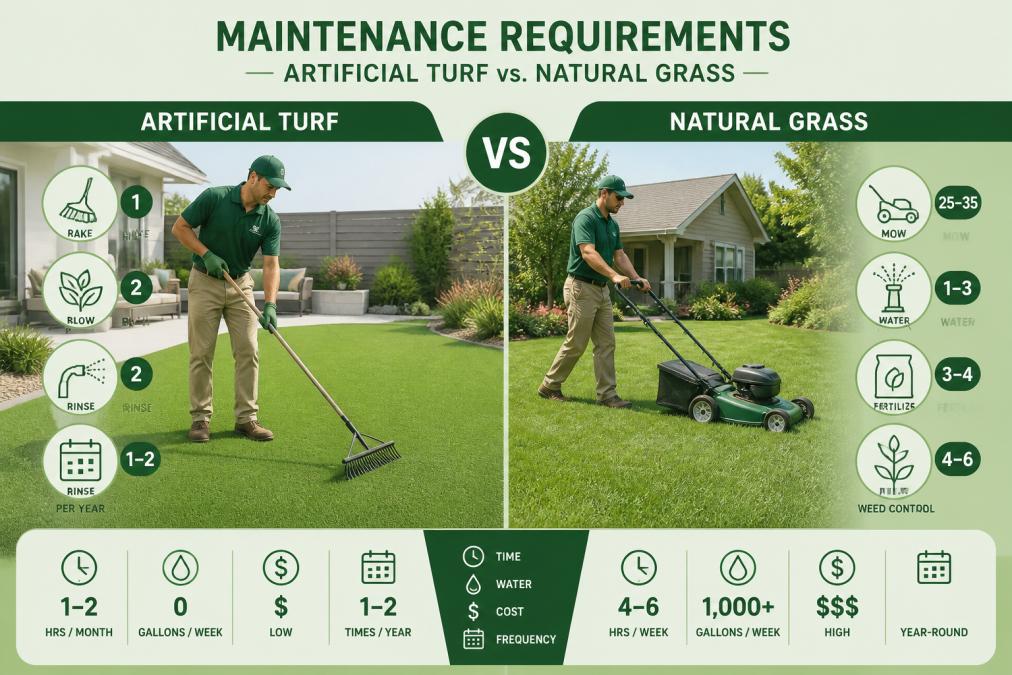
However, artificial turf maintenance isn't zero. The synthetic surface requires occasional brushing or raking to restore the blade texture and prevent matting in high-traffic areas. Pet owners need to rinse the turf regularly to manage urine accumulation and odor, as artificial turf doesn't absorb or break down animal waste like natural soil does. Debris, leaves, branches, dirt, accumulates on the surface and must be removed manually or with specialized equipment.
Over time, artificial turf develops wear patterns in frequently used areas. The fibers flatten or thin, creating visible traffic lanes that detract from appearance. Seams can separate or shift, particularly in regions with freeze-thaw cycles or extreme temperature swings. Weeds occasionally push through drainage holes or seams, requiring spot removal.
Natural grass requires consistent care: mowing every 7-10 days during growing season, fertilizing 2-4 times yearly, aerating annually, and watering 1-2 inches per week depending on climate. But natural grass self-repairs through growth and root regeneration. Bare spots fill in naturally, and the living system adapts to local soil conditions.
The maintenance comparison heavily favors artificial turf if your priority is convenience. But if you value the ecological benefits of a living lawn or prefer hands-on gardening, natural grass maintenance becomes a lifestyle choice rather than a burden.
Cost of Artificial Turf Installation and Long-Term Investment
Installation costs for artificial turf are substantially higher than laying natural sod. Material costs alone for quality synthetic turf range significantly depending on fiber type and durability rating. Professional installation requires site preparation, including removal of existing grass, grading, drainage system installation, and proper base layer compaction. Total installed cost varies based on property size, site complexity, and regional labor rates.
Natural grass installation, laying sod or seeding, costs considerably less upfront. A basic sod installation can be completed in days at a fraction of artificial turf's price. This initial cost advantage makes natural grass attractive for budget-conscious homeowners.
The long-term investment picture shifts when you factor in maintenance costs over 15-20 years. Natural grass requires annual fertilizer, periodic aeration, pest control, and consistent water bills. Equipment costs for mowers, aerators, and landscape tools add up. Professional lawn care services, if hired, represent ongoing expense.
Artificial turf's maintenance costs are lower but not negligible. Occasional professional cleaning, infill replenishment, and seam repairs accumulate over time. After 8-12 years, the synthetic fibers begin showing significant wear and UV degradation. Replacement becomes necessary, requiring removal and reinstallation, essentially repeating the initial installation cost.
Property value implications deserve consideration. Some real estate markets view artificial turf as a negative factor, particularly in regions where natural lawns are the standard aesthetic. Resale value can be affected if buyers perceive synthetic turf as a cost-cutting measure rather than a premium feature. Conversely, in water-scarce regions, artificial turf may appeal to environmentally conscious buyers.
Work with Luxury Concrete And Landscaping to evaluate your specific property's long-term investment potential. Our team can assess whether artificial turf aligns with your resale timeline and local market preferences, ensuring your landscaping investment enhances rather than diminishes property value.
Artificial Turf Drainage Issues and Performance in Rain
Proper drainage is critical for artificial turf performance. Quality synthetic turf systems include engineered drainage layers that allow water to flow through the turf and into the base. When installed correctly by professionals, artificial turf handles moderate to heavy rainfall without pooling or waterlogging.
However, drainage problems emerge when installation shortcuts are taken. Inadequate base preparation, poor grading, or insufficient drainage material allows water to accumulate beneath the turf. Standing water creates soggy patches, promotes mold growth on the synthetic fibers, and can damage the base layer over time. In regions with heavy rainfall or poor soil drainage, artificial turf performance deteriorates quickly without proper engineering.
The infill material affects drainage performance. Sand-based infill drains well but can compact over time, reducing permeability. Rubber crumb infill drains adequately but can retain moisture in humid climates. Choosing the right infill for your regional climate is essential, a decision best made with experienced installers who understand local drainage challenges.
Natural grass offers superior long-term drainage because living root systems actively pull water into the soil. Grass acts as a natural filter, improving soil permeability over time. This makes natural grass more resilient in high-rainfall areas and regions with clay-heavy soil.
Heavy rain events can expose artificial turf's limitations. Intense storms may overwhelm drainage systems, causing temporary flooding. In contrast, natural grass absorbs water gradually through soil infiltration, reducing surface runoff and supporting groundwater recharge.
Heat Retention and Surface Temperature Concerns
Artificial turf absorbs and retains heat significantly more than natural grass, creating surface temperature conditions that can exceed 150-180°F on sunny days. This heat island effect is particularly problematic for families with young children or pets who spend extended time on the surface.
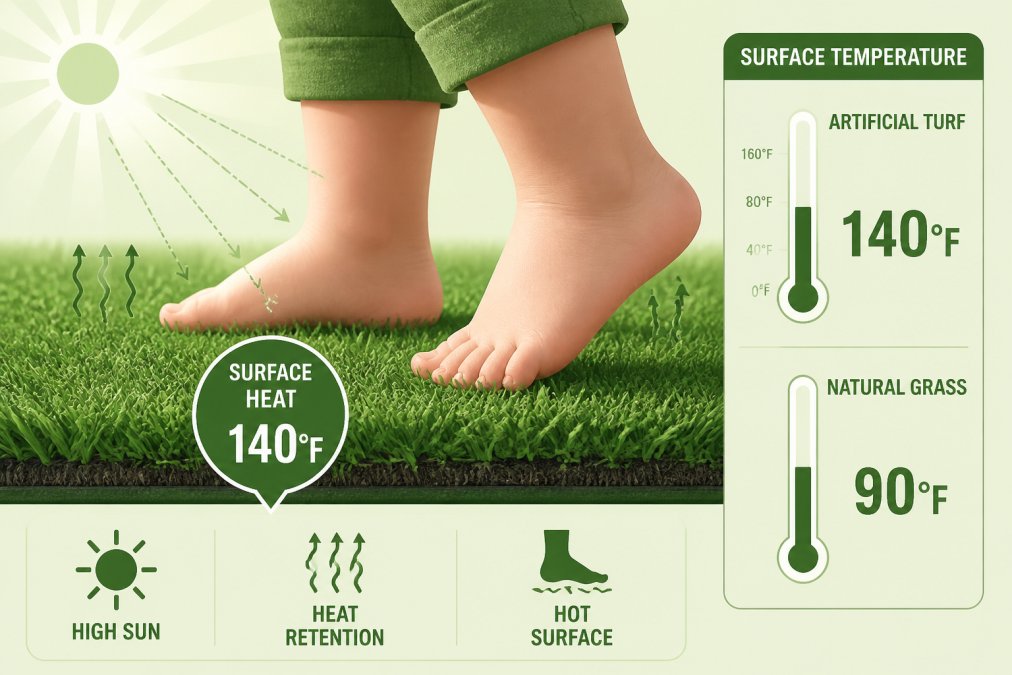
Natural grass remains considerably cooler because living plants transpire moisture, creating a natural cooling effect. The organic matter in soil also absorbs and dissipates heat more effectively than synthetic materials. On the same sunny day, natural grass surfaces typically remain 20-40°F cooler than artificial turf.
Heat retention varies by artificial turf product quality and color. Darker synthetic turf retains more heat than lighter varieties. Premium products with advanced fiber technology and lighter colorways perform better thermally but cost more. Infill materials also influence surface temperature, lighter-colored sand infill reflects more heat than dark rubber crumb.
Pet owners should be particularly cautious. Dogs' paw pads can burn on excessively hot artificial turf surfaces. Pets may avoid using the yard during peak heat hours, defeating the purpose of having a dedicated outdoor space. Even brief contact with extremely hot synthetic turf can cause discomfort.
In hot climates or regions with intense summer sun, the heat retention problem becomes a practical limitation. Families with children or pets may find artificial turf unsuitable during summer months unless they choose premium, heat-reflective products and accept higher installation costs.
Durability, Lifespan, and End-of-Life Disposal
Quality artificial turf products are engineered for durability, with many manufacturers offering warranties of 10-15 years. Premium synthetic turf can last 15-20 years with proper maintenance and favorable conditions. This extended lifespan appeals to homeowners seeking a long-term solution.
However, actual performance often falls short of warranty promises. UV degradation, heavy foot traffic, extreme temperature fluctuations, and freeze-thaw cycles accelerate fiber deterioration. In harsh climates or high-traffic areas, synthetic turf shows visible wear after 8-10 years. Seams separate, fibers flatten, and the uniform appearance degrades.
Natural grass lifespan is theoretically indefinite. Living grass regenerates continuously, adapting to local soil conditions and climate. A well-maintained natural lawn can thrive for decades without replacement. However, natural grass requires consistent care to maintain quality, neglected lawns degrade quickly.
End-of-life disposal presents a significant environmental challenge for artificial turf. Unlike natural grass, which biodegrades and returns nutrients to soil, synthetic turf is non-biodegradable. Disposal options are limited: landfill placement, incineration, or attempted recycling. Most discarded artificial turf ends up in landfills, where it persists indefinitely.
Some manufacturers and recycling programs are developing turf recycling initiatives, converting old synthetic turf into playground surfaces or other applications. However, these programs are limited in availability and don't eliminate the material from the waste stream, they simply delay landfill placement.
The environmental cost of disposal should factor into your decision. If you're environmentally conscious, the decades-long persistence of artificial turf in landfills may outweigh water conservation benefits. Natural grass decomposes completely, returning to the soil ecosystem without long-term environmental burden.
Regional climate suitability also affects lifespan. In temperate climates with moderate temperature swings, artificial turf performs better. In regions with extreme heat, intense cold, or significant freeze-thaw cycles, synthetic materials degrade faster, shortening effective lifespan.
Conclusion: Is Artificial Turf Right for Your Property?
The decision between artificial turf and natural grass depends on your priorities, climate, and long-term property goals. Artificial turf excels for homeowners prioritizing convenience and water conservation in dry climates. Natural grass remains the better choice for families concerned about heat safety, environmental impact, and long-term resale value.
Luxury Concrete And Landscaping helps Utah homeowners evaluate both options through our in-house design team and professional consultation process. Our 5-year workmanship warranty covers installation quality, ensuring proper drainage systems and base preparation regardless of your turf choice. Whether you select artificial turf or prefer natural grass, our licensed, bonded, and insured team delivers premium craftsmanship and realistic project timelines.
Contact Luxury Concrete And Landscaping for a free estimate and personalized recommendation based on your property's specific conditions and your lifestyle needs.
Supporting Keywords Coverage Table
| Supporting Keyword | Coverage Strategy | Primary Section |
|---|---|---|
| Artificial turf maintenance requirements | Detailed comparison with natural grass care needs | Artificial Turf Maintenance Requirements vs. Natural Grass |
| Cost of artificial turf installation | Long-term investment analysis and lifecycle costs | Cost of Artificial Turf Installation and Long-Term Investment |
| Artificial turf drainage issues | System design, performance in rain, installation quality | Artificial Turf Drainage Issues and Performance in Rain |
External Sources Referenced
This article incorporates analysis of artificial turf products and environmental considerations based on industry data and professional installation experience. Homeowners considering artificial turf should consult EPA guidance on sustainable landscaping practices for environmental impact information specific to their region. Research from The Nature Conservancy's water conservation resources provides context for water usage comparisons between landscape types. Additionally, Consumer Reports on outdoor product durability and performance offers independent testing data on synthetic turf products and their long-term performance characteristics.
Frequently Asked Questions
What is the main downside of artificial turf?
The biggest drawback is heat retention. Synthetic turf can reach surface temperatures 30-40°F higher than natural grass on sunny days, making it uncomfortable for bare feet and potentially hazardous for pets. Additionally, artificial turf contributes to microplastic runoff, which contaminates soil and water systems. Long-term disposal also poses environmental challenges since most synthetic turf is non-biodegradable and ends up in landfills.
How long does artificial turf typically last before needing replacement?
Most quality artificial turf products last 10-15 years with proper care, though some premium options may extend to 20 years. Lifespan depends on foot traffic, UV exposure, climate, and maintenance. High-traffic areas wear faster than lightly used spaces. UV degradation is a common issue, causing color fading and fiber breakdown over time. Professional installation and regular maintenance can extend the life of your synthetic turf investment.
Does artificial turf drainage handle heavy rainfall effectively?
Well-installed artificial turf with proper drainage systems handles rain effectively, typically draining 1-2 inches of water per hour. However, drainage issues arise when the sub-base isn't properly graded or when weed barrier cloth is installed incorrectly. Poor drainage leads to standing water, algae growth, and odor problems. A professional installation with a quality drainage system, including permeable sub-base and perforated underlay, is essential for preventing water pooling and ensuring long-term performance.
How does artificial turf impact property value?
Research shows artificial turf can lower home resale value by approximately 5% compared to natural grass. Many buyers view synthetic turf as a maintenance shortcut rather than a premium feature. However, in drought-prone regions or commercial properties where water conservation is valued, artificial turf may be viewed more favorably. The impact depends on your local market, buyer preferences, and the quality of the installation. Professional-grade artificial turf with excellent curb appeal performs better than budget options.
This article was written using GrandRanker
