Landscaping Permits for Utah Homeowners: What You Need
Table of Contents
- Landscaping Permit Requirements Every Utah Homeowner Should Know
- Retaining Wall Permit Requirements and Landscaping Site Plan Requirements
- Utah Contractor License Verification Before You Sign
- Frequently Asked Questions
Last Updated: October 21, 2026
Landscaping Permit Requirements Every Utah Homeowner Should Know
Landscaping permits are the official approvals a city or county issues before you build certain outdoor structures, and understanding landscaping permits early saves time. At Luxury Concrete And Landscaping, we walk homeowners through this on nearly every patio, wall, and driveway project, and rules differ by jurisdiction.
A building permit is a local approval for physical construction; a contractor license is a state credential allowing someone to legally perform the work.
Routine lawn care and planting generally need no approval; structural work does. Patios, retaining walls over a certain height, fences, grading, and irrigation tie-ins each fall under different municipal requirements, and your city building department has the final say.
| Project Type | Permit Typically Required? | Who Approves |
|---|---|---|
| Lawn mowing, weeding, planting beds | No | N/A |
| Patio or hardscaping (flat, at grade) | Sometimes | City building department |
| Retaining wall above local height limit | Usually | City building department |
Retaining Wall Permit Requirements and Landscaping Site Plan Requirements
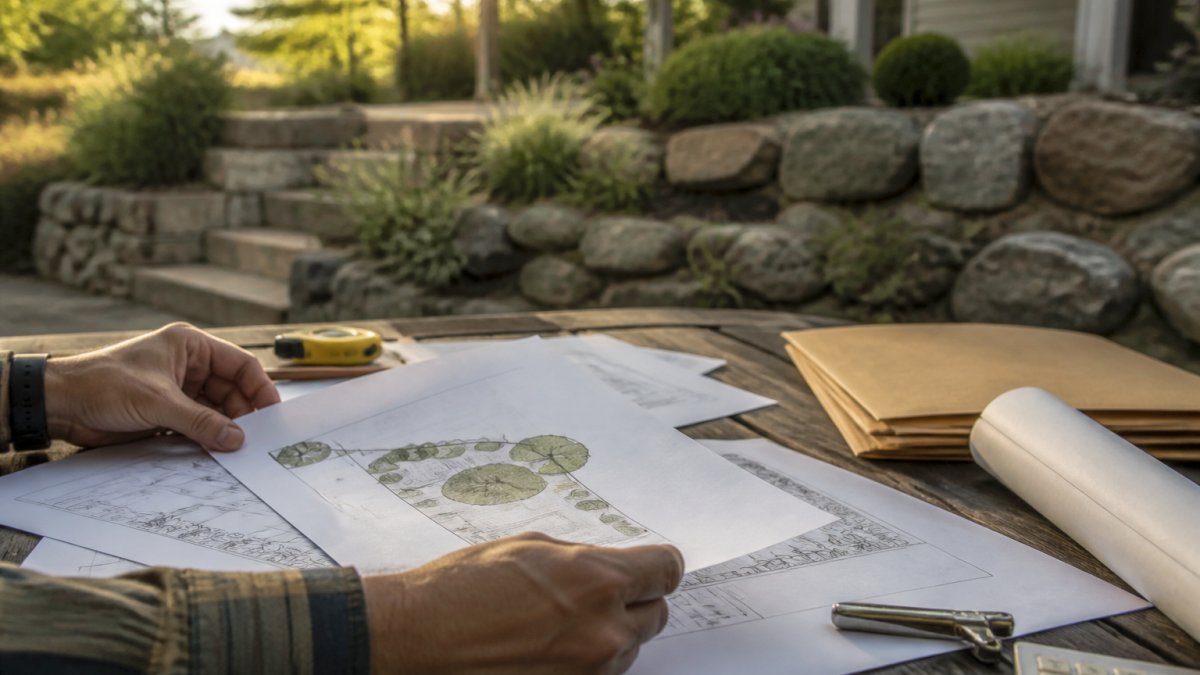
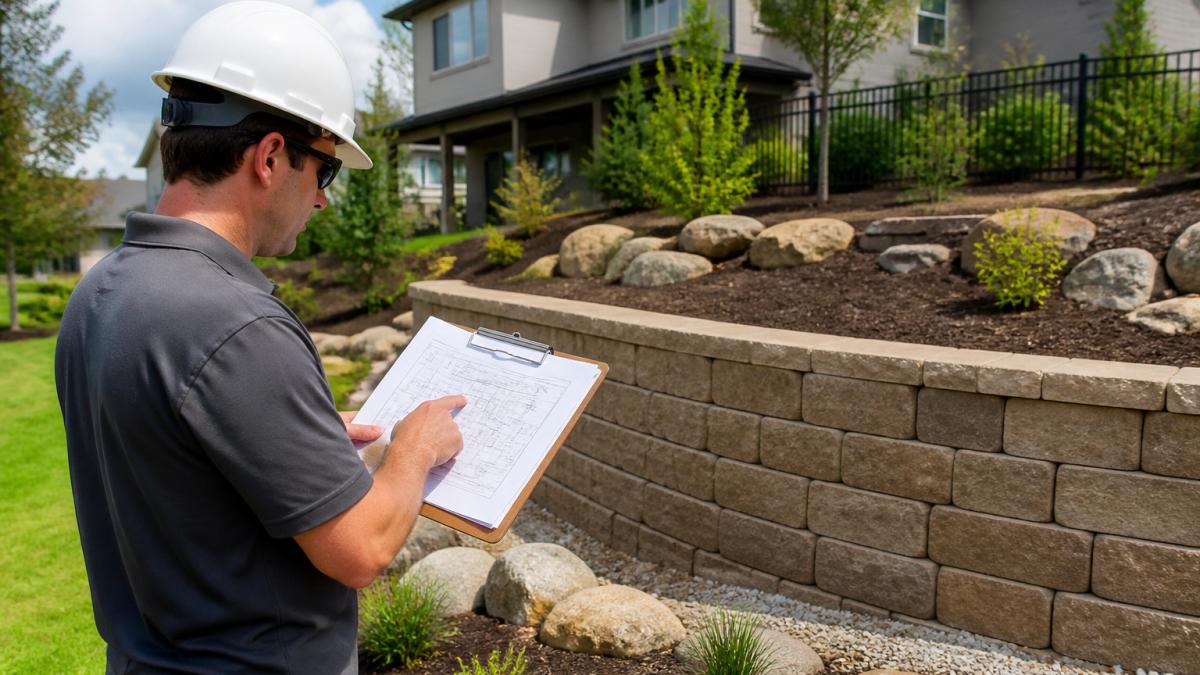
Retaining wall permit requirements usually trigger once a wall passes your city's height threshold, and many Utah municipalities require engineered plans for walls holding back significant soil. A landscaping site plan is a scaled drawing showing property lines, easements, setbacks, drainage patterns, and every proposed structure.
Before submitting, order utility locates through the national 811 service and confirm unclear property lines with a survey. Drainage is the most overlooked detail: a wall or patio that pushes water toward a neighbor's foundation becomes a dispute, not a project.
A complete application package generally includes a scaled site plan with setbacks and easements marked, wall height, materials, and footing details, grading and drainage calculations, proof of contractor licensing and insurance, and property owner authorization.
Review timelines vary by city, so confirm current fees and processing windows with your local building department rather than a neighbor's experience.
Get My FREE Estimate →
Utah Contractor License Verification Before You Sign
Utah contractor license verification is the single most important check you can run before work begins. Confirm a contractor's status through the Utah Division of Professional Licensing before any contract is signed.
Ask for the license number, a certificate of general liability insurance, and proof of workers' compensation coverage, then verify each independently.
At Luxury Concrete And Landscaping, we are licensed, bonded, and insured, and we back our work with a 5-year workmanship warranty. We also handle site plan and permit coordination in-house so you are not chasing paperwork between three parties.
Frequently Asked Questions
Do I need a permit to landscape my yard in Utah?
It depends on the scope. Routine work like planting beds, sod, mulch, and irrigation repairs generally does not require a permit. Structural changes do: retaining walls above a local height threshold, new patios or driveways tied to grading, fences over the allowed height, and any work that alters drainage or sits in a setback. Because landscaping permit requirements vary by city and county, call your local building department with your project scope before you break ground.
Do retaining walls need a permit in Utah?
Most Utah cities require a building permit for retaining walls once they pass a set height, commonly around 4 feet, and nearly all require one for walls that hold back a surcharge like a driveway or structure. Retaining wall permit requirements also usually call for an engineered design, a site plan showing the wall location and property lines, and inspections at footing and backfill stages. Check your city's threshold before ordering materials.
Who is responsible for pulling permits, the homeowner or the contractor?
Either can pull the permit, but the licensed contractor usually should. When a contractor pulls it, their license and insurance are on record with the building department, and inspections are tied to their work. If you pull it as an owner-builder, you take on the inspection schedule and any correction costs. Always confirm in writing who is responsible, and verify the contractor's Utah license through the state Division of Professional Licensing before signing.
Utah homeowners face a fragmented permit landscape, and one missed approval can turn a backyard makeover into a resale problem. Luxury Concrete And Landscaping takes the guesswork out of that process with an in-house design team, full licensing and insurance, and a 5-year workmanship warranty on every installation. Get your free estimate and start your project on solid legal ground.
