When Should You Seal Concrete Before Winter?
Last Updated: November 1, 2026
Quick Summary
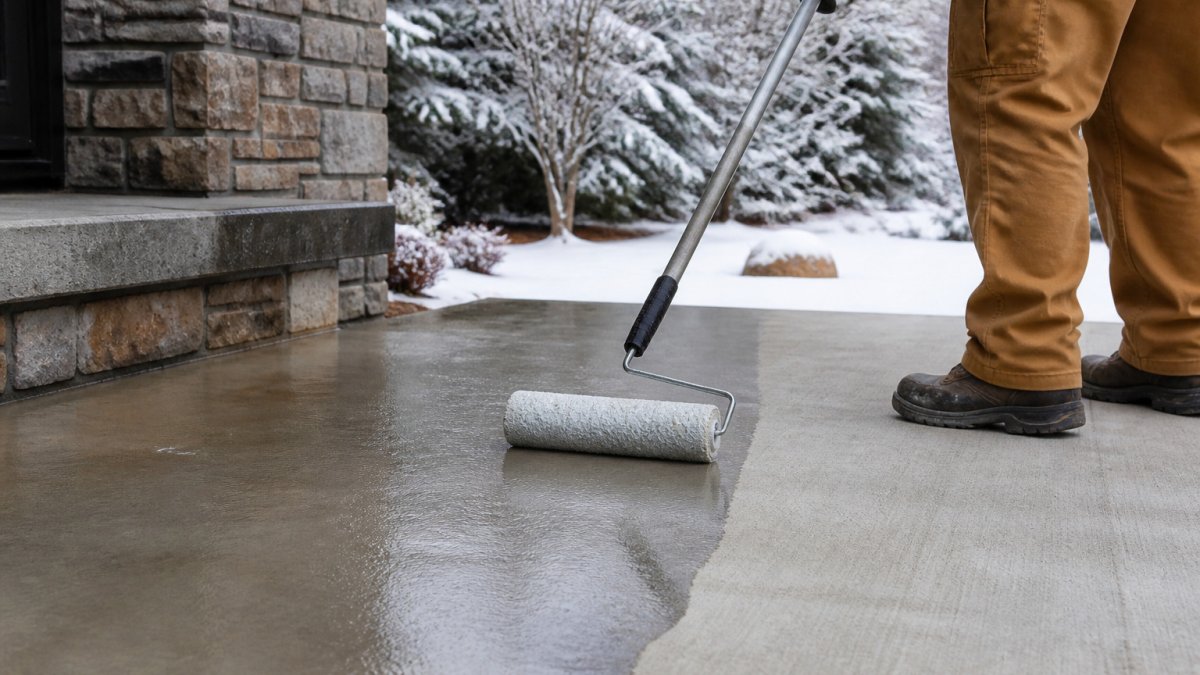
Seal concrete before winter during a dry stretch of warm weather, once the slab has fully cured and stays above your sealer's minimum temperature, which the product label sets. Plan a dry window that covers the full cure time, and wait if cold or wet weather is closing in.
- Keep air and slab temperatures above 50°F until the sealer fully cures.
- Check actual slab temperatures daily, since a calendar date alone is not enough.
- Schedule sealing and prep six to eight weeks before you need protection.
- Clean, dry, sound concrete is essential, because sealer only bonds to a clean surface.
- Check the forecast daily for overnight lows and rain during the full cure period.
Table of Contents
- How to Prepare Concrete for Sealing Before Winter
- Best Temperature to Apply Concrete Sealer and How Long to Wait Before Sealing New Concrete
- Concrete Sealer Curing Time Before Rain and Your Winter Sealing Deadline
- Frequently Asked Questions
How to Prepare Concrete for Sealing Before Winter
Sealer only bonds to clean, dry, sound concrete, so prep decides how long protection lasts.
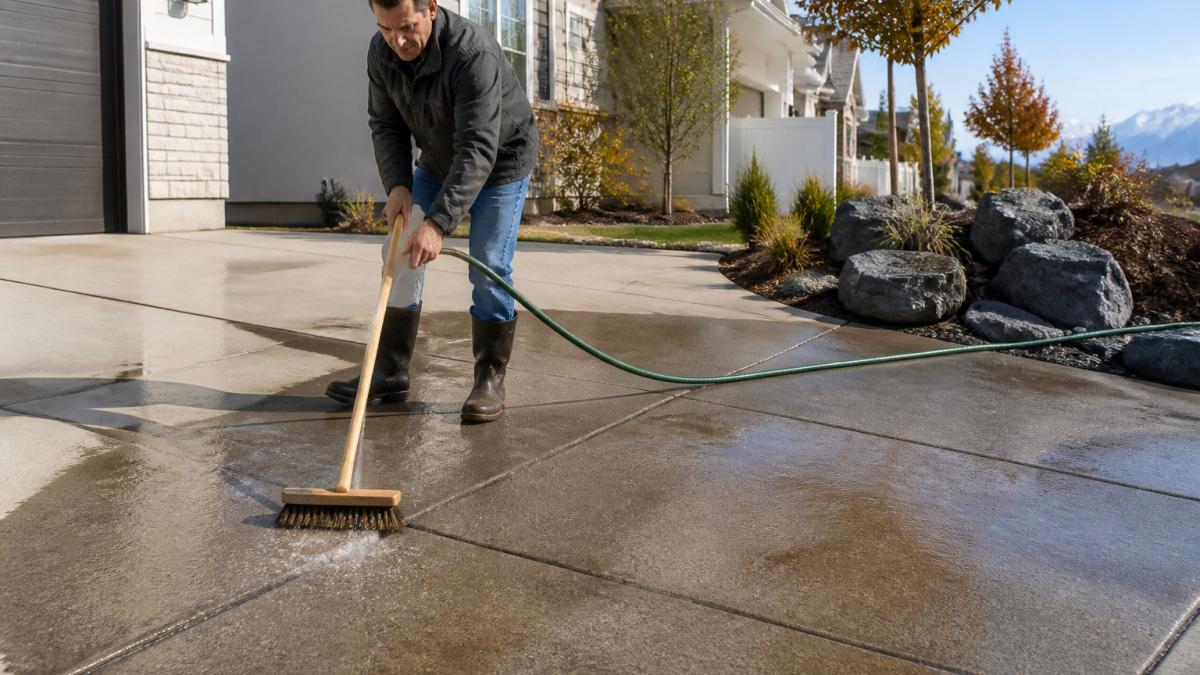
Sweep off debris, scrub away oil and dirt, rinse, and let the slab dry completely. Fill cracks and repair flaking spots first, then pick a dry stretch with no rain forecast. To learn how to prevent concrete cracking before it starts, read this guide.
Best Temperature to Apply Concrete Sealer and How Long to Wait Before Sealing New Concrete
Sealer labels set a minimum temperature. Follow the label for your specific product, since requirements vary. For the full sealing process, see the concrete patio sealing and protection guide.
New concrete needs time to cure before sealing. ChemMasters guidance on sealer application temperatures and curing advises keeping both air and substrate temperatures above 50°F long enough for the sealer to cure fully, not just at application.
A calendar date alone does not tell you whether conditions are right. Check actual slab temperatures each day.
Get My FREE Estimate →
The article's key timing and temperature points are summarised below.
| Item | Value | Note |
|---|---|---|
| Minimum air and substrate temperature | 50°F | Keep above this until the sealer fully cures |
| Temperature requirement source | Product label | Requirements vary by product |
| Dry-day check | Daily slab temperature | A calendar date alone is not enough |
Concrete Sealer Curing Time Before Rain and Your Winter Sealing Deadline
Rain and dew can ruin a fresh coat. For practical winter upkeep, see how to maintain concrete patios in Utah. Plan a dry window covering the full cure time and check the forecast for that whole period.
- Six to eight weeks out: schedule sealing and prep
- Two to three weeks out: confirm cure and temperature range
- Final week: check the forecast daily for overnight lows
If winter is close, waiting is usually safer than sealing in cold, wet conditions. To understand how a sealing warranty protects your work, read our five reasons it matters. A poor cure leaves the surface vulnerable through freeze-thaw cycles.
Frequently Asked Questions
What temperature does it need to be to apply concrete sealer?
Check the product label first, since requirements vary by sealer. Sealer manufacturers generally advise keeping both ambient and surface temperatures above the product's stated minimum long enough for the sealer to cure fully, not just at the moment of application. Measure the concrete surface itself with a thermometer, because cold slabs can stay cold even when the air feels mild in the afternoon. If overnight lows are expected to drop below the product's minimum, wait for a warmer window.
How long does concrete sealer need to dry before rain or freezing temperatures?
Most sealers need time to cure before they can handle rain, dew, or freezing temperatures, and that period is set by the product label rather than a calendar date. Confirm the recommended dry time and the rain-free window printed on the container, then check the forecast for at least that length of time after application. Rain, dew, or a freeze during curing can leave a cloudy film or weaken protection. If the forecast shows a freeze or heavy rain before the cure window closes, postpone the job.
Should concrete be completely dry before sealing?
Yes, the surface should be clean and dry before you apply sealer. Sweep away debris, wash off dirt or oil, and let the slab dry fully after rinsing. Then check for surface moisture by taping a square of plastic sheeting to the concrete for 16 to 24 hours and looking for condensation underneath. Moisture trapped in the slab can prevent the sealer from bonding properly and can cause haze or blistering.

