Concrete Patio Sealing and Protection Guide
Table of Contents
- How to Seal a Concrete Patio: Step-by-Step
- Choosing the Best Concrete Sealer for Patios
- How Often to Reseal a Concrete Patio
- Frequently Asked Questions
Last Updated: October 19, 2026
How to Seal a Concrete Patio: Step-by-Step
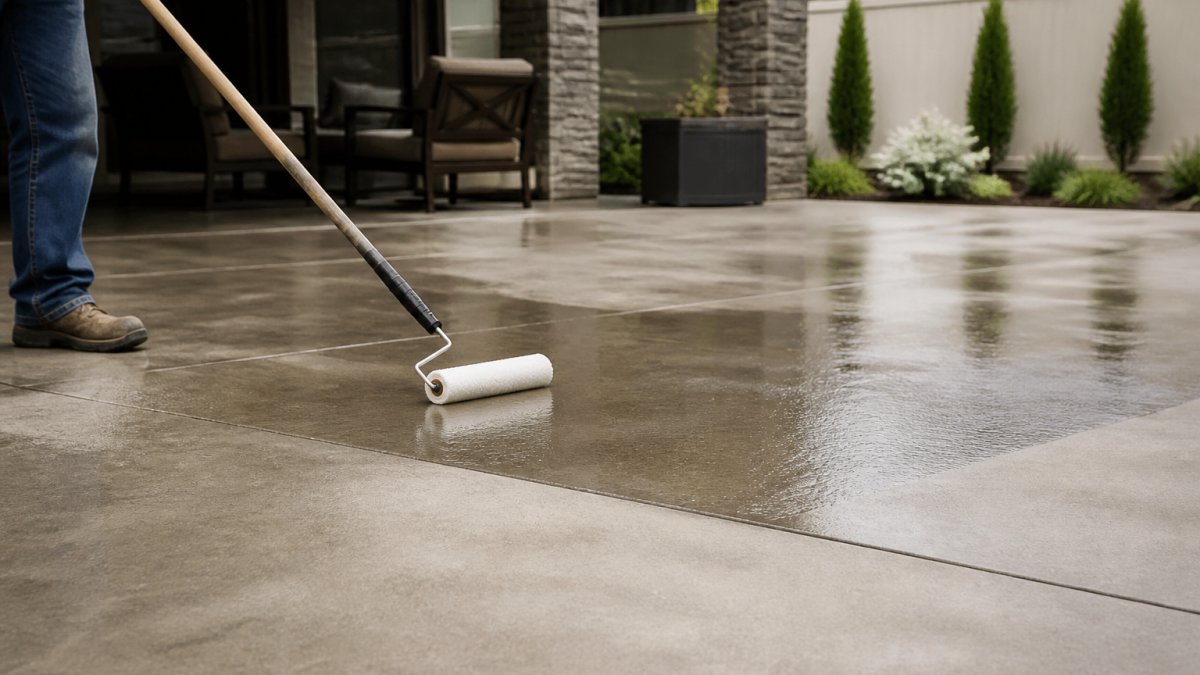
Concrete patio sealing applies a protective coating to cured concrete so it resists water, stains, and freeze-thaw damage.
Here is the sequence we follow, whether you hire out or do it yourself.
- Confirm the concrete is fully cured. New concrete needs roughly 28 days before sealing.
- Clean the surface thoroughly. Remove dirt, oil, efflorescence, and old sealer residue.
- Let it dry completely. Two dry days minimum, longer in humid weather.
- Check the weather window. Stay within the manufacturer's temperature range, with no rain forecast for 24 to 48 hours.
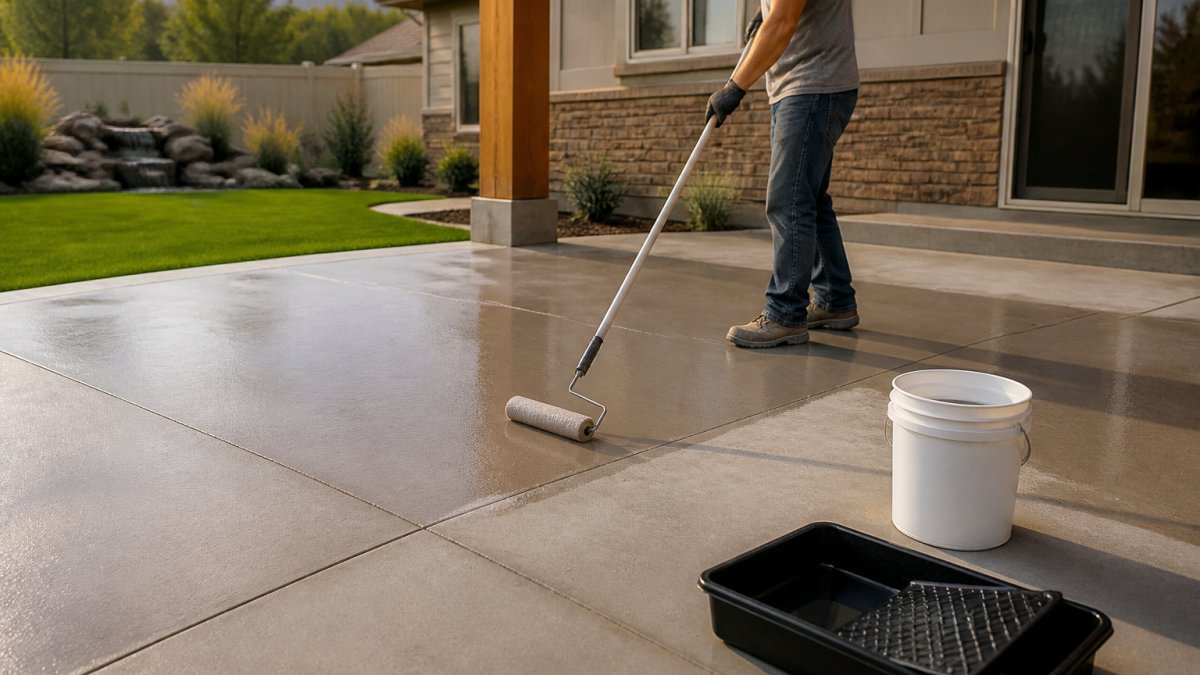
- Apply thin, even coats. Two coats, back-rolled, is standard for most penetrating and film-forming products.
- Respect recoat and dry times. Rushing causes cloudiness and lap marks.
Choosing the Best Concrete Sealer for Patios
The best concrete sealer for patios depends on finish preference, sun exposure, and slip resistance. For most patios, a penetrating sealer offers the best balance of protection and safety because it soaks in without leaving a slick film.
| Sealer Type | Best For | Finish | Watch Out For |
|---|---|---|---|
| Penetrating siloxane/silane | Wet climates, freeze-thaw | Natural, invisible | Little stain blocking |
| Acrylic film-forming | Budget projects, easy recoat | Satin to gloss | Can peel, gets slick when wet |
| Polyurethane | High-traffic, stain-prone | Gloss | Higher cost, harder to apply |
| Solvent-based | Cold-weather application | Varies | Strong fumes, ventilation needed |
| Water-based | Low-odor, interior-adjacent | Matte to satin | Shorter service life |
Add a slip-resistant additive to any film-forming product. Water beading looks great until someone walks across it in wet shoes.
How Often to Reseal a Concrete Patio
Most patios need resealing every two to five years. Penetrating sealers on a shaded patio may last five years; film-forming sealers in full sun often need refreshing at two or three years.
Get My FREE Estimate →
Watch for the signs rather than the calendar: water stops beading, the surface looks chalky, or color fades. For a professional assessment, a concrete patio sealing contractor can check adhesion and moisture before recommending a recoat.
Frequently Asked Questions
Do you have to seal a concrete patio?
Sealing is optional, but it extends the life of a patio by blocking moisture, reducing stain absorption, and adding UV protection. Unsealed concrete still performs, though it takes on stains and weathers faster. In cold-winter climates with freeze-thaw cycles and road salt exposure, sealing helps prevent surface damage. If your patio is decorative or you want color enhancement, sealing also deepens the finish and keeps it looking consistent.
Is it better to roll or spray concrete sealer?
Rolling gives more control and even coverage on small to mid-size patios, while spraying speeds up larger jobs but requires back-rolling to avoid lap marks. For most homeowners, a roller with a 3/8-inch nap cover works well for penetrating sealers, and a solvent-resistant roller is best for film-forming products. Whichever method you choose, apply thin coats rather than one heavy pass to prevent puddling and uneven gloss.
Can you seal a concrete patio yourself, or should you hire a contractor?
DIY sealing is realistic for a sound, clean, fully cured patio with no cracks or prior coating issues. Hire a concrete patio sealing contractor when the slab has existing sealer to strip, visible damage, moisture problems, or you want a warranty-backed result. A licensed contractor also handles surface preparation and product compatibility, which are the two most common causes of failed sealer jobs.
A patio that is sealed on schedule stays safer, looks sharper, and resists the seasonal damage that shortens a slab's life. If you would rather hand the work to a crew that builds and protects patios daily, Luxury Concrete And Landscaping brings licensed, insured crews, in-house design, and a 5-year workmanship warranty to every project. Get My FREE Estimate and let us protect the patio you already have or build the one you have been planning.
