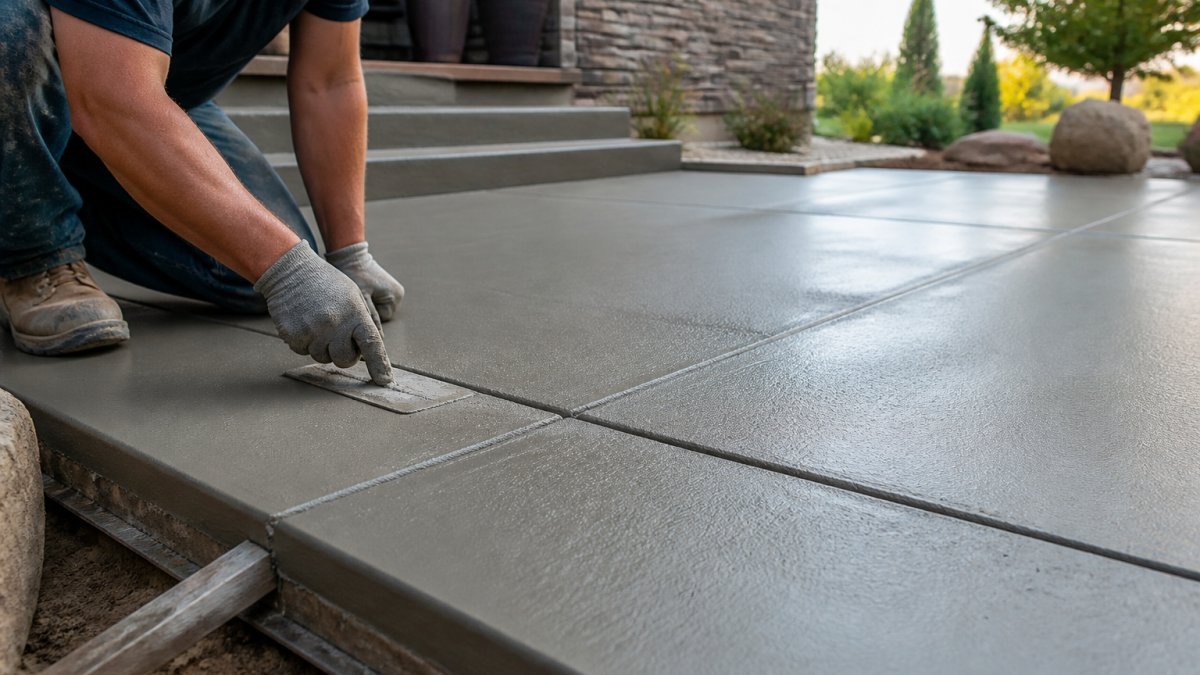
How to Prevent Concrete Cracking: 2026 Guide
Table of Contents
- Causes of Concrete Cracking: What Actually Goes Wrong
- Concrete Curing Methods That Prevent Cracks
- Concrete Control Joints Spacing and Driveway Base Preparation
- Diagnosing Cracks: Which Ones Matter
- When to Hire a Professional
- Frequently Asked Questions
Last Updated: October 7, 2026
Causes of Concrete Cracking: What Actually Goes Wrong
Concrete cracking is the separation of a slab's surface or structure, and it almost always traces back to how the mix was placed, finished, and cured. To prevent concrete cracking, control water, timing, and ground support.
The usual culprits:
- Too much water in the mix. Weakens concrete and increases shrinkage.
- Fast drying. Wind, heat, and sun pull moisture out before curing.
- No control joints, or joints cut too late. The slab cracks wherever it wants.
- A weak or shifting base. If the ground moves, the concrete above it moves too.
- Missing reinforcement. Steel helps hold the slab together.
The biggest mistake is treating these as separate problems, water content, curing speed, joint placement, and base prep all work together.
Portland Cement Association guidance on concrete shrinkage and cracking
Concrete Curing Methods That Prevent Cracks
Curing keeps concrete moist so it reaches full strength. Poor curing is a top cause of surface cracks and the easiest problem to fix, just slow moisture loss.
Common curing methods:
- Water spraying. Light, repeated misting keeps the surface damp.
- Wet burlap or blankets. These hold moisture against the slab.
- Plastic sheeting. A vapor barrier traps moisture underneath.
- Curing compound. A spray-on coating seals moisture in.
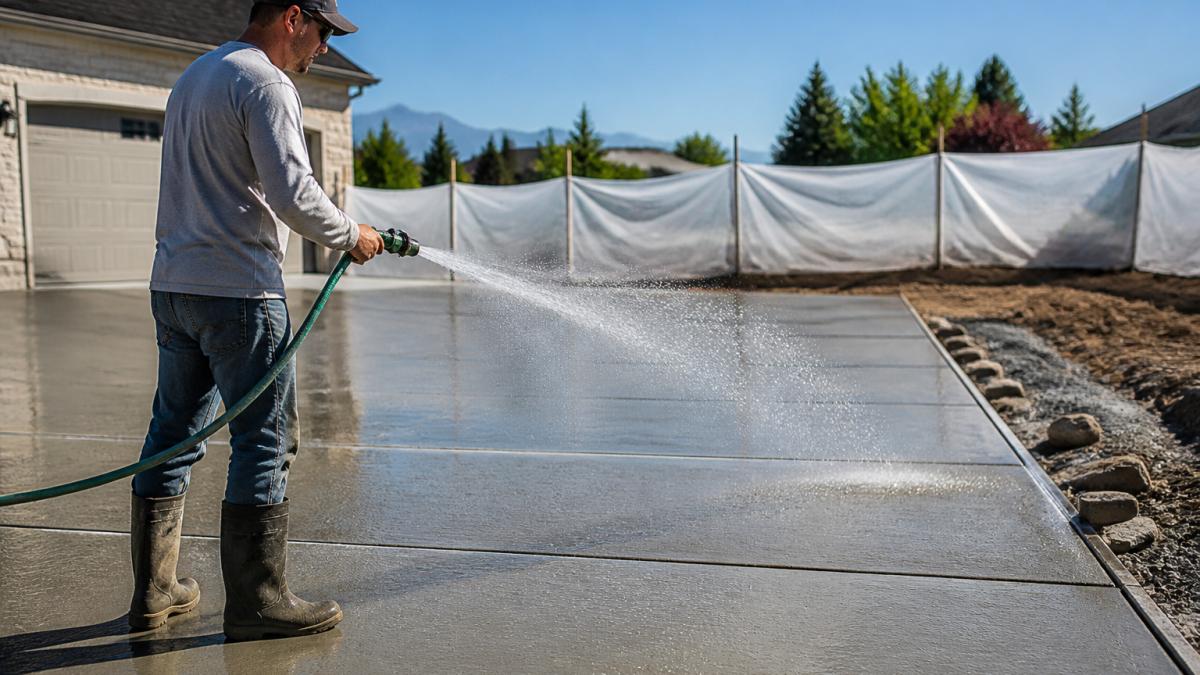
Keep concrete moist for at least seven days; in hot, dry, or windy conditions, longer is better.
Weather changes the rules: hot, windy conditions cause rapid evaporation and plastic shrinkage cracks, while cold weather requires protection so concrete does not freeze before it sets.
Concrete Control Joints Spacing and Driveway Base Preparation
Control joints are planned cuts that tell concrete where to crack. Get spacing and depth right and cracks happen inside the joints, where you never see them.
Use these guidelines:
Get My FREE Estimate →
| Item | Guideline | Why It Matters |
|---|---|---|
| Joint spacing | Roughly 2 to 3 times the slab thickness in feet | Controls where cracks form |
| Joint depth | About one quarter of the slab thickness | Weakens the slab at the joint line |
| Timing | Cut within 6 to 12 hours of finishing | Beats the concrete to the crack |
| Base prep | Compacted, stable, well-drained subgrade | Stops settlement cracks |
| Reinforcement | Steel mesh or rebar per design | Holds the slab together |
Base preparation matters as much as the pour. A soft or uneven subgrade lets the slab settle, compact the base, keep it level, and drain water away.
Timing is everything: cut too late and the concrete has already cracked; cut too early and you tear up the surface.
American Concrete Institute resources on jointing and crack control
Diagnosing Cracks: Which Ones Matter
Not every crack is a crisis.
- Hairline cracks are usually cosmetic, seal them and move on.
- Wide or widening cracks often point to settlement or a bad base.
- Cracks at corners usually mean missing or misplaced joints.
- Crumbling, pitting, or divots signal a weak mix or poor finishing.
A stable hairline crack is a maintenance item; a crack that keeps growing is a structural warning, call a professional.
When to Hire a Professional
Some jobs are worth doing yourself; a cracked slab needing diagnosis, a failing base, or a full driveway replacement are not. Licensed, insured contractors bring the right mix design, joint layout, and curing plan.
That is where we come in. Luxury Concrete And Landscaping handles patios, driveways, retaining walls, and turf across the area, with in-house design and a 5-year workmanship warranty. We are licensed, bonded, and insured.
Frequently Asked Questions
What is the most common cause of cracking in concrete?
The most common cause is drying shrinkage, which happens as concrete loses moisture and contracts. Other frequent causes include rapid evaporation in hot or windy weather, inadequate curing, missing or poorly spaced control joints, and settlement from a poorly prepared subgrade. Addressing these factors during installation is the best way to prevent concrete cracking.
Do control joints prevent concrete from cracking?
Control joints do not stop cracking entirely, but they control where cracks occur. By creating a weakened plane at regular intervals, typically every 8 to 12 feet for a 4-inch slab, joints encourage cracks to form in straight lines rather than randomly. Proper concrete control joints spacing and depth of at least one-quarter of the slab thickness are essential for them to work.
How long should concrete cure before it is driven on?
Concrete typically needs at least 7 days of curing before light vehicle traffic, and 28 days to reach full design strength. For driveways, waiting the full 28 days is safest. Proper concrete curing methods, such as moisture retention with plastic sheeting or curing compound, help the slab gain strength and reduce the risk of cracking.
Concrete cracking is rarely random. It comes from too much water, rushed curing, bad joints, or a weak base, and every one of those is preventable with the right plan. If you want a driveway or patio that holds up, get it done right the first time. Luxury Concrete And Landscaping brings in-house design, premium materials, and a 5-year workmanship warranty to every project. Get started with Luxury Concrete And Landscaping and get a free estimate for outdoor concrete built to last.
