Concrete Driveway Base Preparation Guide
Table of Contents
- Why Concrete Driveway Base Preparation Matters
- Sub-Base Compaction Requirements for Driveway Stability
- Best Gravel for Concrete Driveway Base and Drainage
- Frequently Asked Questions
Last Updated: September 21, 2026
Why Concrete Driveway Base Preparation Matters
A solid concrete driveway starts long before the concrete truck arrives. The concrete driveway base preparation determines whether your driveway lasts 10 years or 30. Most homeowners focus on the visible surface, but the foundation beneath is what prevents cracking, settling, and premature failure.
The subgrade, aggregate layer, and drainage system work together to support the concrete slab above. Neglecting any element causes the entire structure to fail.
Poor base preparation causes water pooling, frost heave, cracking, and settling; a properly prepared base distributes loads evenly and drains water away.
Sub-Base Compaction Requirements for Driveway Stability
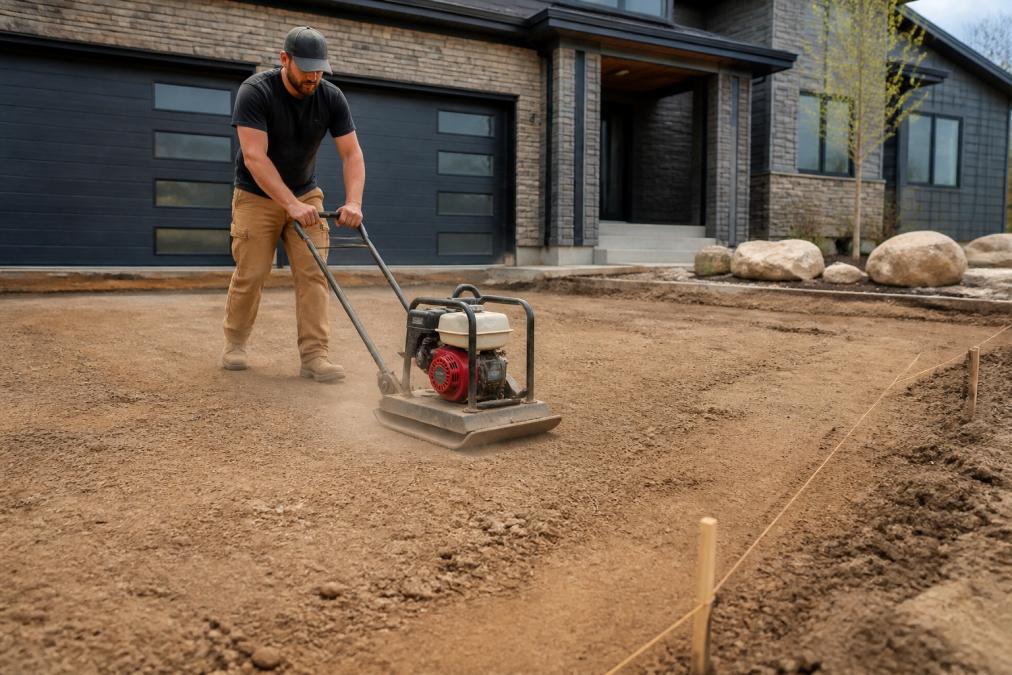
Compaction is critical, loose soil cannot support vehicle weight without settling, while a compacted subgrade resists movement and maintains load-bearing capacity.
Uniform density prevents differential settlement, where one area sinks faster than another and creates cracks; proper compaction reduces voids and increases structural integrity.
Most residential driveways require compaction to 95% of maximum density, achieved through multiple passes with a plate compactor until soil feels firm and resists further compression.
Soil that is too dry won't compact properly; soil that is too wet becomes unstable. Ideal moisture allows particles to lock together; if too wet, allow drying before compacting.
Common mistakes include single-pass compaction, compacting only edges, and skipping areas under the driveway. Each section must receive equal attention for uniform support.
Best Gravel for Concrete Driveway Base and Drainage
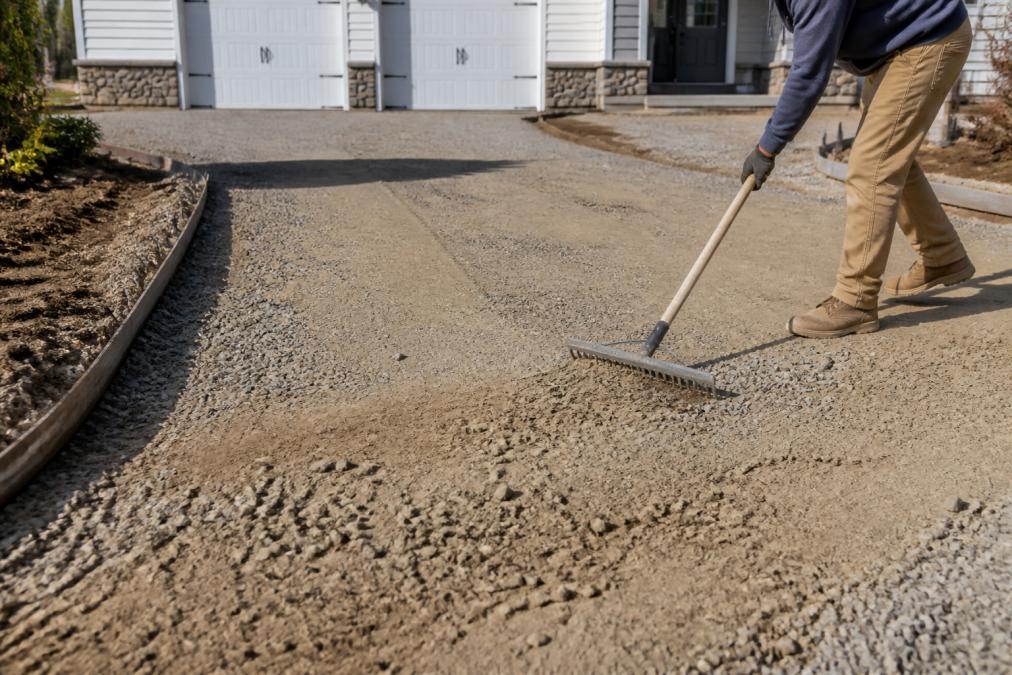
The aggregate layer distributes loads and manages water; crushed stone is standard because it provides stability and allows drainage.
Crushed stone with angular edges locks together better than smooth gravel, creating friction that prevents shifting under load.
A base layer typically measures 4 to 6 inches thick; thicker bases suit poor drainage or heavy frost areas. Crushed limestone, granite, or trap rock work well with consistent gradation and proper compaction.
Water trapped beneath concrete accelerates deterioration and promotes frost heave. Geotextile fabric between subgrade and aggregate prevents fine particles from clogging drainage paths.
The aggregate layer must slope 1 to 2 percent to direct runoff away; flat or inward-sloping bases trap water and undermine durability.
A well-prepared base prevents costly repairs and ensures durability. Get My FREE Estimate to discuss your driveway project with our team.
Frequently Asked Questions
How do I prepare the base for a concrete driveway?
Start by clearing and excavating the site to remove topsoil and debris. Grade the area with proper slope for drainage, typically 1-2% slope away from structures. Remove any unstable soil and replace with compacted aggregate base material (crushed stone or gravel). Compact each 2-3 inch layer with a plate compactor or vibratory plate to achieve 95% standard Proctor density. Install formwork to define the driveway edges, then pour concrete over the prepared subgrade.
What type of gravel is best for a concrete driveway base?
Use crushed stone or crushed gravel with angular edges, typically 3/4-inch minus size. Angular aggregate compacts better than rounded gravel and provides superior load-bearing capacity. Avoid fine sand or silt, which retain moisture and reduce permeability. A well-graded aggregate mix, combining larger stones with smaller fines, creates a stable base. Aim for 4-6 inches of compacted base material, with climate-specific depth requirements in colder regions to prevent frost heave.
How long should concrete sit before driving on it?
Concrete typically reaches 70% strength after 7 days and 90% strength after 28 days of curing. Most contractors recommend waiting at least 7 days before driving light vehicles on a new driveway, though full strength takes 28 days. Temperature and humidity affect curing time, cooler weather slows the process. Avoid heavy trucks or equipment for at least 2-3 weeks. Follow your contractor's specific recommendations, as factors like concrete mix design and air temperature impact the curing timeline.
