How to Resurface Old Concrete Patio Slabs Step by Step
Quick Summary
To learn how to resurface old concrete patio slabs, first confirm the slab is sound, then clean and repair it thoroughly. Prep decides how long the new surface lasts, so plan for it to take most of your project time. Apply the resurfacer in thin, even coats, let each cure, then seal the finished patio.
- Resurfacing suits slabs with surface flaking, hairline cracks, or stains, not badly cracked, sunken, or moving slabs.
- Pressure wash the slab and remove oil, dirt, and loose paint before anything else.
- Fill cracks and holes with a patching compound made for concrete repair.
- Keep the air temperature above 50°F for 24 hours before and after the job.
- Apply the resurfacer in thin, even coats and let each cure before walking on it.
Table of Contents
- Check Whether Your Slabs Are Good Candidates for Resurfacing
- Preparing Concrete for Resurfacing and How to Repair Old Concrete
- Concrete Resurfacer Application, Curing and Sealing Your Patio
- Frequently Asked Questions
Check Whether Your Slabs Are Good Candidates for Resurfacing
Knowing how to resurface old concrete patio slabs starts with checking that they are sound underneath. If you are weighing resurfacing against replacement, How to Price Resurfacing a Cracked Concrete Patio outlines what a cracked patio job involves. Before you buy any material, walk the patio and look for these signs:
- Surface flaking, scaling, or peeling
- Small cracks that are hairline or narrow
- Stains or pitting that do not come from structural movement
- A level slab with no major heaving or sinking
Resurfacing is generally not a fix for a slab that is badly cracked, sunken, or moving, because those problems come from the base and a new surface layer will not correct them. Our Signs of Poor Subgrade Preparation: A Guide shows how to recognize these base problems.
Preparing Concrete for Resurfacing and How to Repair Old Concrete
Good prep decides how long the new surface lasts, so learn how to resurface old concrete patio slabs with prep in mind. Plan for it to take most of your project time.
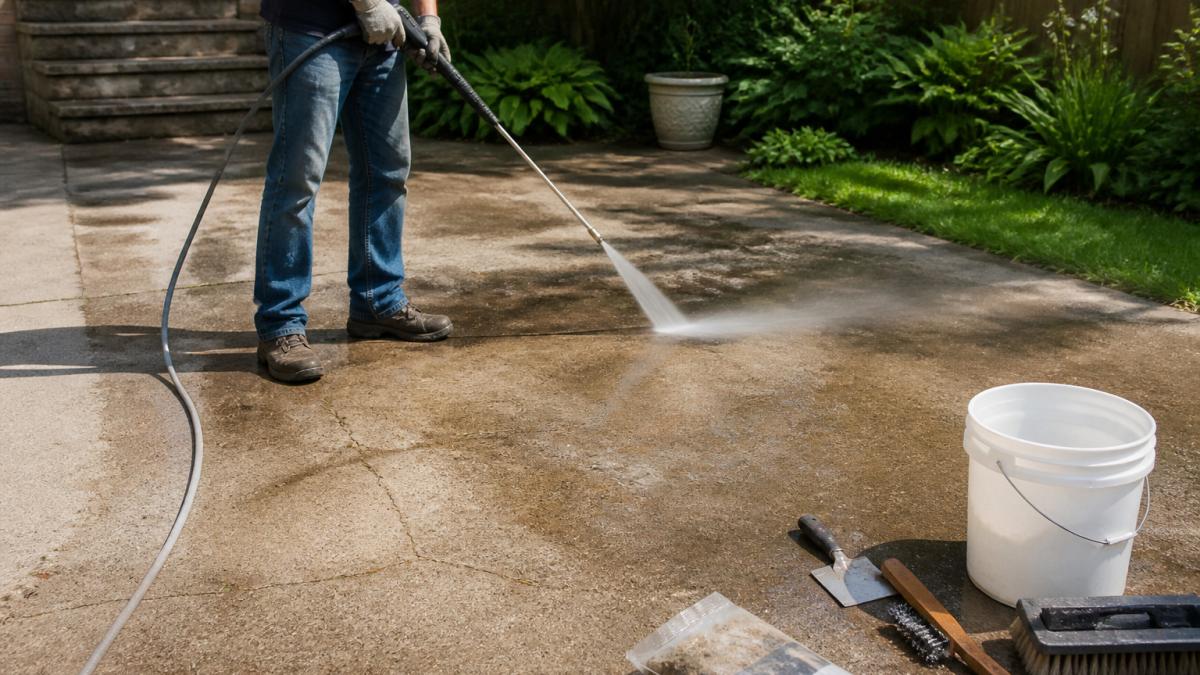
- Clean the surface. Pressure wash the slab and remove oil, dirt, and loose paint.
- Remove loose material. Scrape or grind away anything that flakes or sounds hollow.
- Repair cracks and holes. Fill them with a patching compound made for concrete repair.
- Apply a bonding agent. Brush or roll it on so the new layer grips the old slab.
Old concrete often needs more than a rinse. Our Concrete Driveway Base Preparation Guide explains how to prepare the base before any resurfacing starts. Give the surface a rough profile so the resurfacer can bond to it. Work in mild weather, and keep the air temperature above 50°F for 24 hours before and after the job.
Here is a quick summary of the prep steps covered above, with the key action for each.
Get My FREE Estimate →
| Step | What to do | Key note |
|---|---|---|
| Clean the surface | Pressure wash the slab | Remove oil, dirt, loose paint |
| Remove loose material | Scrape or grind away flaking parts | Remove anything that sounds hollow |
| Repair cracks and holes | Fill with concrete patching compound | Use a compound made for concrete repair |
| Apply bonding agent | Brush or roll it on | Helps the new layer grip the old slab |
| Check conditions | Work in mild weather | Keep air above 50°F for 24 hours before and after |
Concrete Resurfacer Application, Curing and Sealing Your Patio
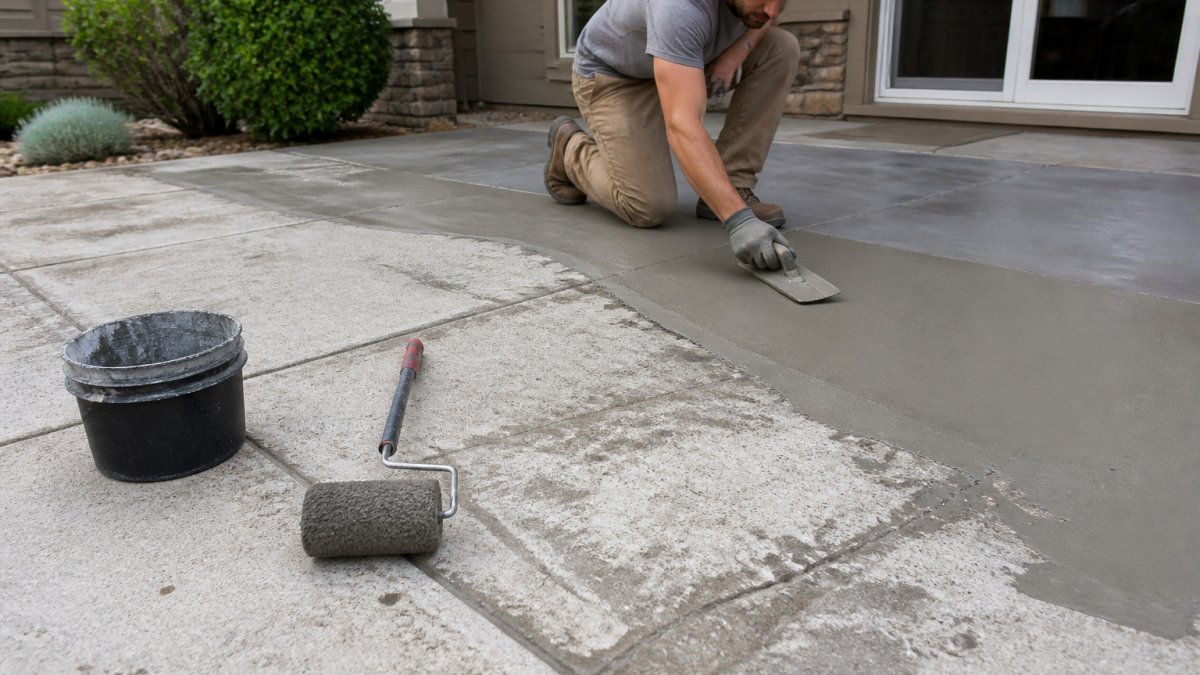
Mix the resurfacer to the manufacturer's directions, then apply it in thin, even coats with a trowel or squeegee. Work in small sections so the edges do not dry before you blend them.
Let each coat cure before you walk on it or add the next layer. Curing time depends on temperature, humidity, and product, so check the label for the exact window.
Once the surface is fully cured, apply a concrete patio sealer. Our Concrete Patio Sealing and Protection Guide covers choosing and applying the right sealer. A sealer protects the finish from water, stains, and wear, and it helps the decorative finish last longer.
Frequently Asked Questions
Can you resurface cracked or uneven patio slabs?
Yes, but only when the cracks are surface-level and the slab is structurally sound. Hairline cracks and small chips can be filled with a patching compound before resurfacing. Wide cracks, slabs that have sunk, or areas where the base has washed out usually need the slab repaired or replaced first, because a new overlay will not correct movement underneath. Press on the slab in several spots: if it flexes, rocks or crumbles, resurfacing alone will not hold.
How long does a concrete patio resurfacing project take?
Most small patio projects take two to four days of active work, plus curing time. Cleaning and repairs usually take a day, the resurfacer is applied the next day, and the surface needs at least 24 hours before light foot traffic. Air temperature should stay above 50°F for 24 hours before and after application, so plan around weather. Sealer typically goes on after the resurfacer has cured fully, which can add several more days.
How do you seal a resurfaced concrete patio?
Wait until the resurfacer has cured completely, which often takes several days, and confirm the surface is dry and clean. Apply a thin, even coat of concrete patio sealer with a roller or sprayer, working in sections so you can keep a wet edge. Allow the recommended drying time before foot traffic or furniture, and plan to reapply sealer every few years, depending on sun and wear.
Need help deciding whether your patio is a good candidate for resurfacing? Luxury Concrete And Landscaping offers a free estimate, and our team backs our work with a 5-year workmanship warranty. Contact us to get started.

