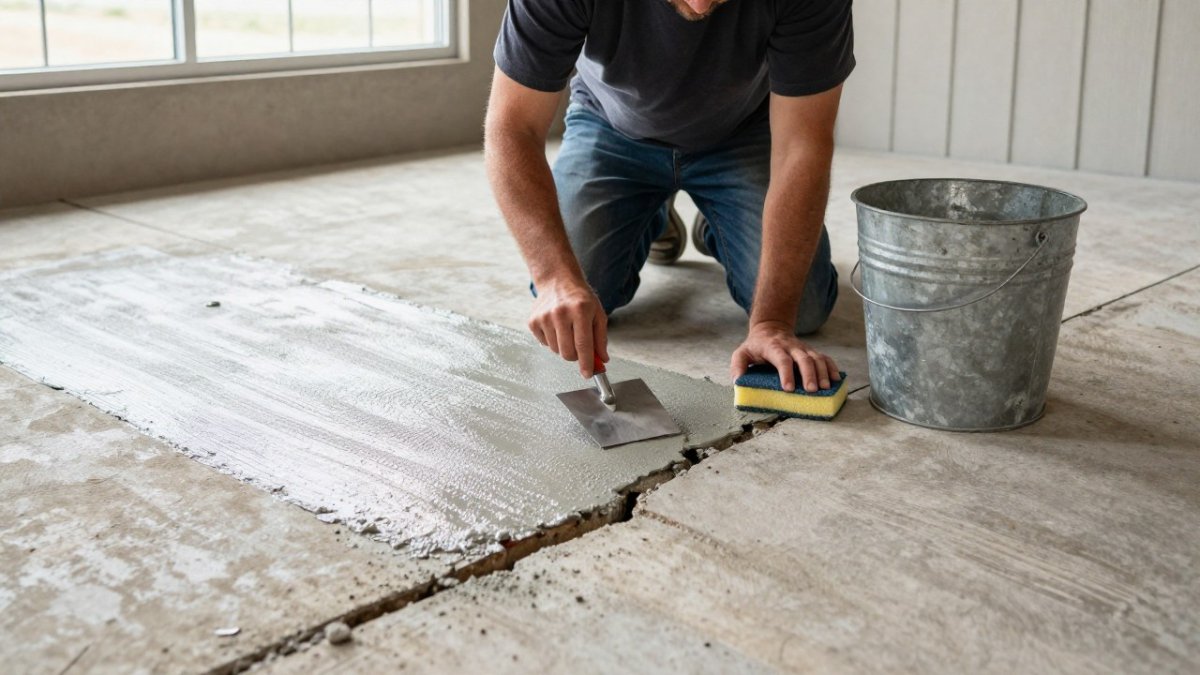
Can You Resurface a Badly Cracked Patio?
Table of Contents
- Can You Resurface a Badly Cracked Patio? The Honest Answer
- How to Repair Large Cracks in a Concrete Patio Before Any Overlay
- Concrete Patio Resurfacing Options and How to Resurface a Concrete Patio
- Frequently Asked Questions
Last Updated: November 21, 2026
Can You Resurface a Badly Cracked Patio? The Honest Answer
Yes, you can resurface a badly cracked patio, but only when the slab underneath is still sound and stable. An overlay hides cracks; it does not fix movement.
So can you resurface a badly cracked patio in every case? No. Cracks are a symptom, not the problem.
Resurfacing bonds a new cement-based layer over an existing slab to restore its look and surface. It works when the concrete is solid but worn.
- Crack width: Hairline cracks are fine. Wide cracks are a warning.
- Vertical displacement: If one side sits higher, the slab has moved.
- Heaving: Raised, uneven sections point to soil or water problems.
- Freeze-thaw damage: Scaling and flaking mean the surface is failing.
Concrete Network's resurfacing guidance is blunt about this: resurfacing is not feasible when concrete is heaving, has severe cracks, or shows freeze-thaw damage.
A patio with many surface cracks can still qualify; one crack can rule it out if the slab is sinking. The slab's condition decides, not the crack count.
Watch out: the most common mistake is coating over a moving slab. The new surface cracks along the same lines within a season or two.
Cost is the other honest question. Angi's 2026 concrete resurfacing data puts patio resurfacing at about $4 per square foot. That is a fraction of replacement, which is why homeowners ask about it first.
For a full cost breakdown, see our guide on how to price resurfacing a cracked concrete patio.
If the slab is moving, sinking, or badly heaved, resurfacing is the wrong tool, that calls for structural repair or replacement. Our 7-step concrete contractor hiring checklist helps you vet who you hire.
Best for: Sound slabs with surface wear and cosmetic cracks. Skip if: The slab is heaving, sinking, or has wide cracks with displacement.
How to Repair Large Cracks in a Concrete Patio Before Any Overlay
Large cracks need repair before any overlay goes down, or the new surface fails with them. Crack repair decides whether your resurfacing lasts five years or five months.
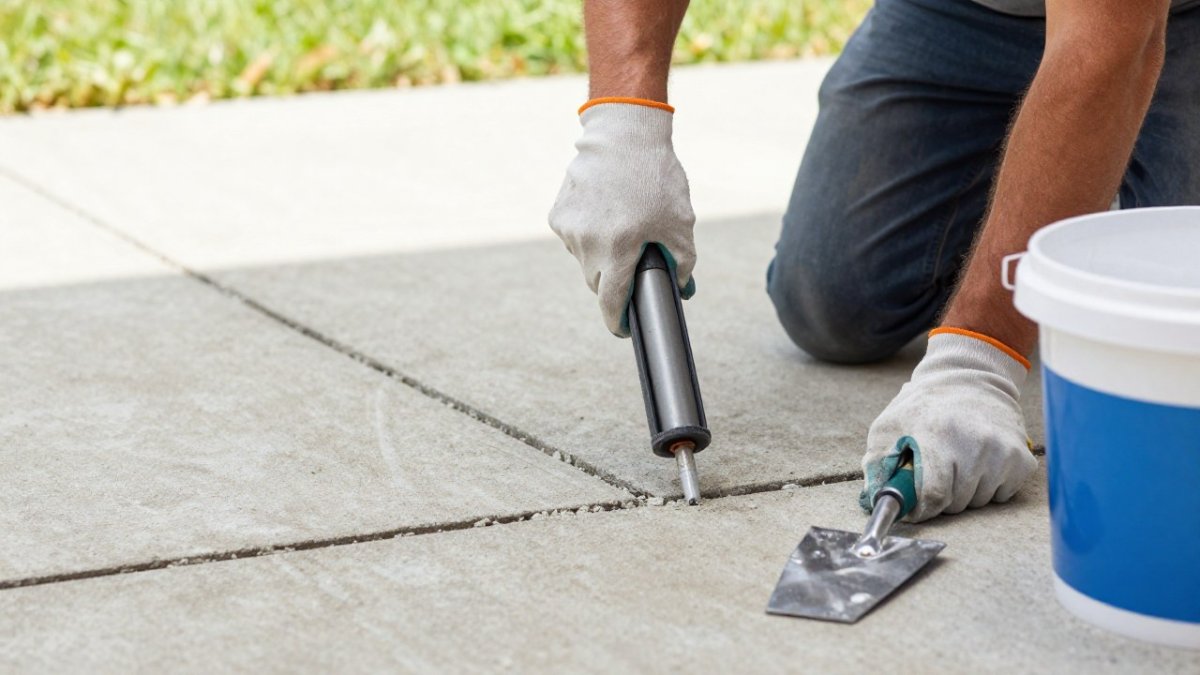
- Hairline cracks: Clean and fill with crack filler.
- Cracks up to 1/2 inch: Route them out, then fill with epoxy or patching compound.
- Cracks wider than 1/2 inch: Evaluate first; width alone may rule out a simple overlay.
- Vertical displacement: Stop, this is movement, not a surface flaw.
Federal Highway Administration research on concrete repair best practices notes that restoring support beneath a slab can matter as much as filling the crack itself. Fill a crack over a hollow void and it comes back.
- Clean the crack with a wire brush and compressed air.
- Route or widen it so the filler can bond.
- Fill with epoxy or patching compound.
- Level flush with the surface.
- Cure fully before resurfacing.
Crack movement is the tell. If a crack has changed width since last season, the slab is still moving, and filler will not stop it.
Want to understand why cracks form? Our guide on how to prevent concrete cracking covers the causes and fixes.
Concrete Patio Resurfacing Options and How to Resurface a Concrete Patio
Resurfacing options range from a simple concrete resurfacer to decorative overlays, pavers, and coatings. Each suits a different slab condition and budget.
| Option | Best For | Watch Out For |
|---|---|---|
| Concrete resurfacer | Sound slabs, cosmetic wear | Fails over moving slabs |
| Decorative overlay | Stamped or stained finishes | Needs a stable base |
| Full replacement | Heaving, sinking, severe cracks | Highest cost |
How to resurface a concrete patio, step by step:
- Assess the slab. Confirm it is sound and stable.
- Repair cracks and chips. Fill and cure as above.
- Clean the surface. Remove dirt, oil, and loose material.
- Prep the bond. Grind or etch so the resurfacer grips.
- Apply the resurfacer. Work in sections at the maker's thickness.
- Cure it properly. Keep it shaded and damp as directed.
- Seal it. A sealer adds moisture protection and extends life.
Surface preparation is where most DIY jobs fail. A dusty or slick slab will not hold an overlay, no matter how good the product.
Apply in mild temperatures, out of direct sun, and never in rain. Curing too fast causes shrinkage cracks.
For the full walkthrough, see our guide on how to resurface old concrete patio slabs. Our patio sealing and protection guide shows how to keep the new surface looking new.
A 30-year-old broken patio can be ground down and resurfaced to look new again, as shown in a widely shared patio resurfacing video walkthrough. The key word is "sound." Grinding fixes the surface, not the structure.
If your slab is stable, resurfacing is a smart, cost-effective repair. If it is not, replacement or a paver cover is the honest answer.
A cracked patio does not have to mean a full rebuild. The right fix depends on the slab, and getting that call right saves you money and repeat work. Luxury Concrete And Landscaping brings an in-house design team, premium materials, and a 5-year workmanship warranty to every patio project, so the repair holds and the finish impresses. Get started with Luxury Concrete And Landscaping and turn your cracked patio into an outdoor space built to last.
Frequently Asked Questions
Can a badly cracked concrete patio be resurfaced, or does it need replacement?
It depends on the slab, not the crack count. An overlay can work when cracks are hairline to about 1/2 inch wide, the slab is stable, and there is no vertical displacement. Resurfacing is not feasible when the concrete is heaving, has severe cracks, or shows freeze-thaw damage. If sections have shifted or sunk, repair the base or replace the slab before you resurface cracked patio surfaces.
How expensive is it to resurface a concrete patio?
Your total depends on square footage, crack repair, and surface prep. For a quote on your patio, visit our website to request a free estimate.
Will concrete resurfacer hide deep or moving cracks?
No. A concrete resurfacer is a thin overlay, so it follows the slab beneath it. Cracks that are still moving or wider than 1/2 inch will telegraph through the new surface within a season or two. Fill and stabilize those cracks first, confirm the slab is sound, then apply the overlay. If the crack keeps reopening, the slab needs structural repair or replacement, not another coat.

