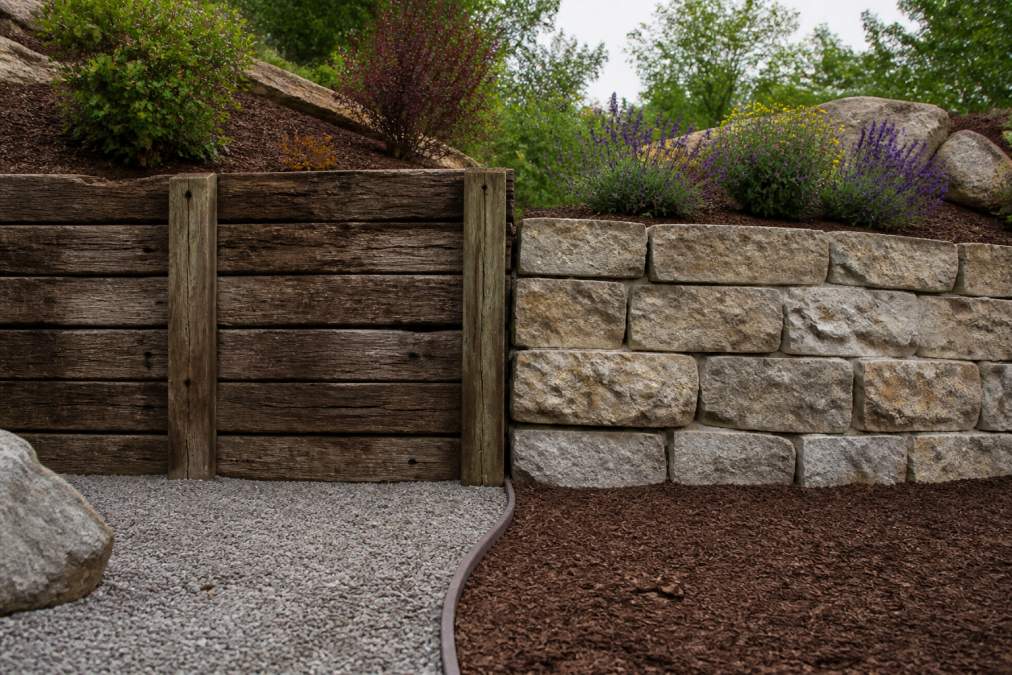
Timber vs Stone Retaining Walls: Pros and Cons
Table of Contents
- Timber vs Stone Retaining Walls: A Direct Comparison
- Pros and Cons of Timber Retaining Walls
- Pros and Cons of Stone and Masonry Retaining Walls
- Retaining Wall Drainage Requirements
- Retaining Wall Material Durability
- Installation, Cost, and Permitting
- Frequently Asked Questions
Last Updated: September 25, 2026
Timber vs Stone Retaining Walls: A Direct Comparison
Choosing between timber vs stone comes down to one question: how long do you want the wall to last? Timber is the budget option that looks warm for a decade or so; stone and masonry are the long-term investment that can outlive the house. At Luxury Concrete And Landscaping, we build retaining walls across Utah.
| Factor | Timber | Stone / Masonry |
|---|---|---|
| Upfront cost | Lower | Higher |
| Lifespan | Roughly 10-15 years | Often 50+ years |
| Maintenance | Regular sealing and replacement | Minimal |
Timber walls are pressure-treated lumber stacked and pinned to hold back soil; stone and masonry walls use natural stone or concrete block on a prepared base to resist the same pressure with far greater structural integrity.
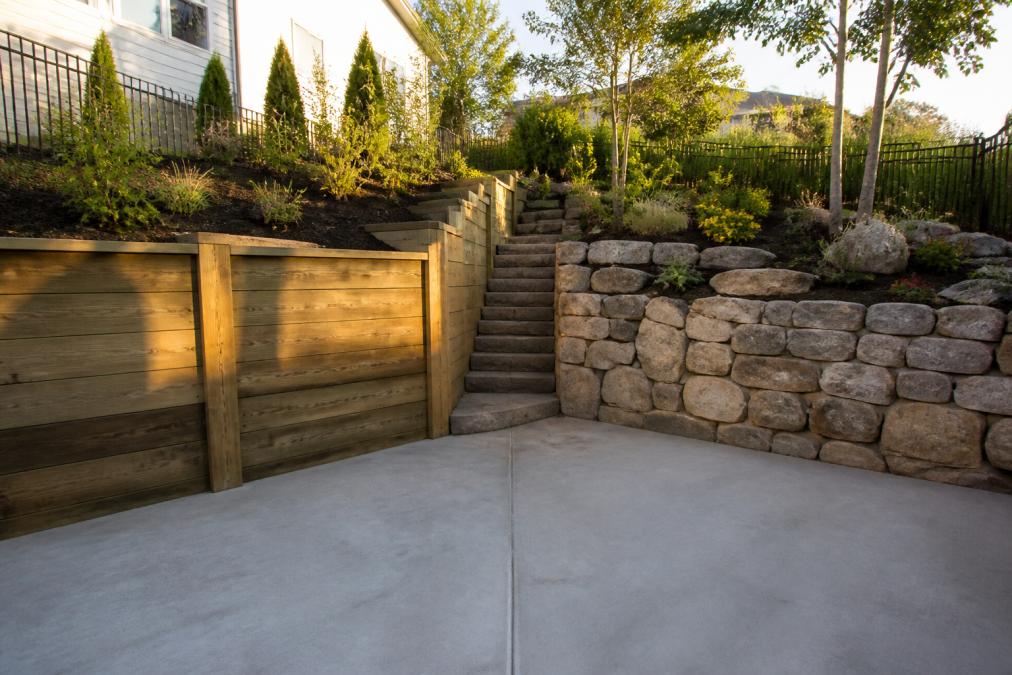
Pros and Cons of Timber Retaining Walls
Timber's biggest advantage is cost and speed: pressure-treated lumber is inexpensive, widely available, and simple enough for a confident homeowner to install a low garden wall over a weekend.
Pros: Lower upfront costs than masonry; straightforward installation for short walls; warm, natural look; easy to modify later.
Cons: Rot, warping, and insect damage are inevitable; lifespan runs roughly 10-15 years; poor choice for walls over about three feet; requires periodic sealing and inspection.
Pros and Cons of Stone and Masonry Retaining Walls
Stone and masonry walls cost more upfront and pay it back over decades: natural stone resists freeze-thaw cycles, holds its color, and needs almost no attention once built correctly.
Pros: Lifespans often exceeding 50 years; high resistance to harsh weather; minimal maintenance; handles taller walls and heavier loads with engineering; classic curb appeal.
Cons: Higher material and installation costs; requires professional installation and, for taller walls, engineering; less forgiving of a poor foundation base.
Retaining Wall Drainage Requirements
Drainage is not optional on either material, and it's where most DIY walls fail: hydrostatic pressure builds when water can't escape the soil behind the wall. Every wall needs clean gravel aggregate directly behind it, geotextile fabric to keep soil from clogging the gravel, and weep holes or a perforated drain pipe at the base. On timber, standing water accelerates rot; on stone and masonry, it prevents freeze-thaw from cracking mortar joints and shifting blocks.
Retaining Wall Material Durability
Durability separates these two materials more than anything else. Pressure-treated timber resists decay for a while, but ground contact, moisture, and insects eventually win; stone and concrete block don't rot, don't host termites, and hold up through decades of freeze-thaw cycles. Durability depends on installation as much as material: a stone wall on a shallow, uncompacted base will fail sooner than a well-built timber wall.
Installation, Cost, and Permitting
Timber suits DIY installation on low walls. Stone and masonry almost always require a professional crew, and taller walls may need engineered plans.
Cost follows the same split. Timber wins on upfront cost; stone wins on long-term cost-effectiveness because it doesn't need replacing. For a precise quote on your project, contact Luxury Concrete And Landscaping.
Two things to check before you build: your local building code, which often requires a permit for walls above a certain height, and your soil's drainage behavior. Utah's freeze-thaw cycle is hard on poorly drained walls of any material.
Frequently Asked Questions
Is it a good idea to use timber for a retaining wall?
Timber works well for short walls, garden beds, and low-height retaining needs where budget matters most. Pressure-treated lumber resists decay initially and is simpler to install, which suits DIY or smaller projects. The trade-off is lifespan: timber will rot, warp, and suffer insect damage over time, so it needs more frequent replacement than stone. For taller walls or long-term structural stability, stone or masonry is the better choice.
What is the expected lifespan of a timber retaining wall compared to stone?
Timber retaining walls typically last far fewer years than stone because pressure-treated lumber eventually rots and warps, especially in wet soil. Natural stone retaining walls often exceed 50 years with minimal maintenance, and concrete block systems hold their appearance and integrity over decades. If you plan to stay in your home long term, stone's durability usually outweighs its higher upfront cost.
What are the retaining wall drainage requirements for timber and stone walls?
Both materials need proper drainage to relieve hydrostatic pressure. Use drainage aggregate behind the wall, wrap it in geotextile fabric to keep soil out, and include weep holes so water can escape. Stone and gabion walls drain more freely by design, while timber walls trap moisture against the wood and rot faster without a gravel backfill and compaction done correctly. Skipping drainage is the most common cause of wall failure.
