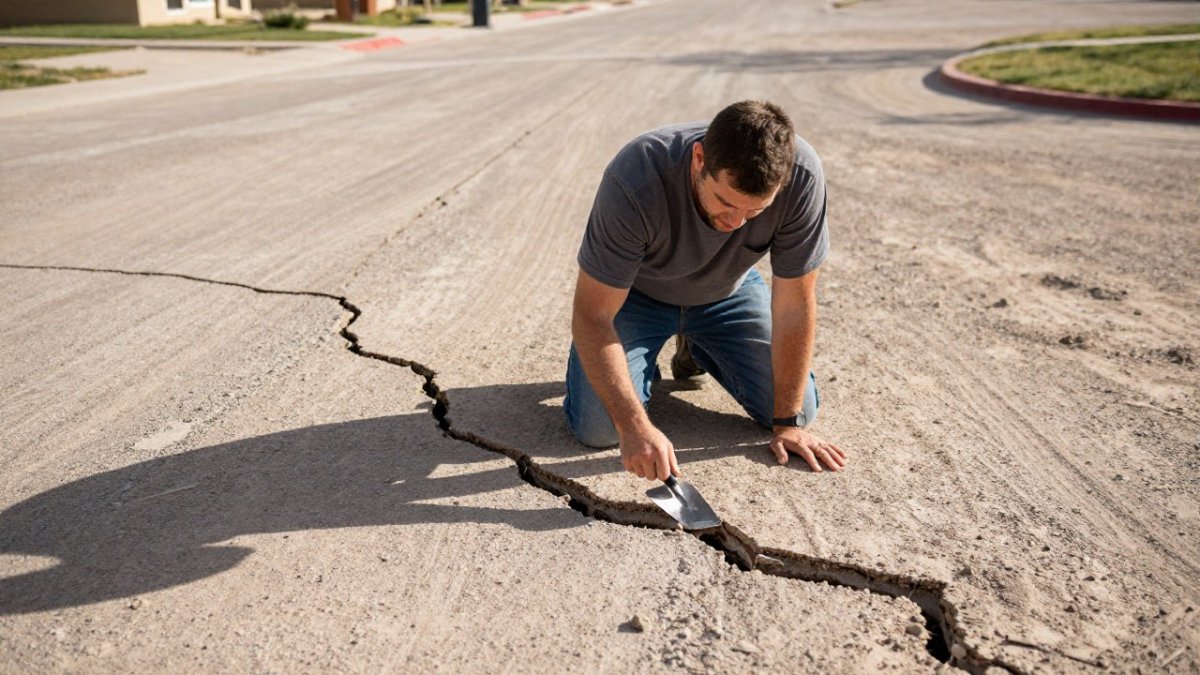
7 Signs of Poor Concrete Workmanship to Spot
Last Updated: November 23, 2026
Quick Summary
The signs of poor concrete workmanship are honeycombing, scaling, plastic shrinkage cracks, surface dusting, cold joints, and pooling water at the slab edges. Other common defects include hairline cracks that widen over time, efflorescence, uneven troweling, and ponding water.
- Cosmetic cracks are hairline and stable, usually caused by plastic shrinkage or surface drying.
- Structural cracks are wider and deeper, often tracing to settlement or missing reinforcement.
- Improper curing shows up as dusting, map cracking, weak edges, and discoloration.
- A slab poured on a hot, windy afternoon and never covered may show surface dusting within a year.
Table of Contents
- What are the signs of poor concrete workmanship?
- Concrete cracking causes: Structural vs. Cosmetic
- Signs of improper concrete curing
- Frequently Asked Questions
What are the signs of poor concrete workmanship?
The signs of poor concrete workmanship are honeycombing, scaling, plastic shrinkage cracks, surface dusting, cold joints, and pooling water at the slab edges. Common defects in concrete work include honeycombing, scaling and flaking, hairline cracks that widen over time, dusting, efflorescence, uneven troweling, and ponding water.
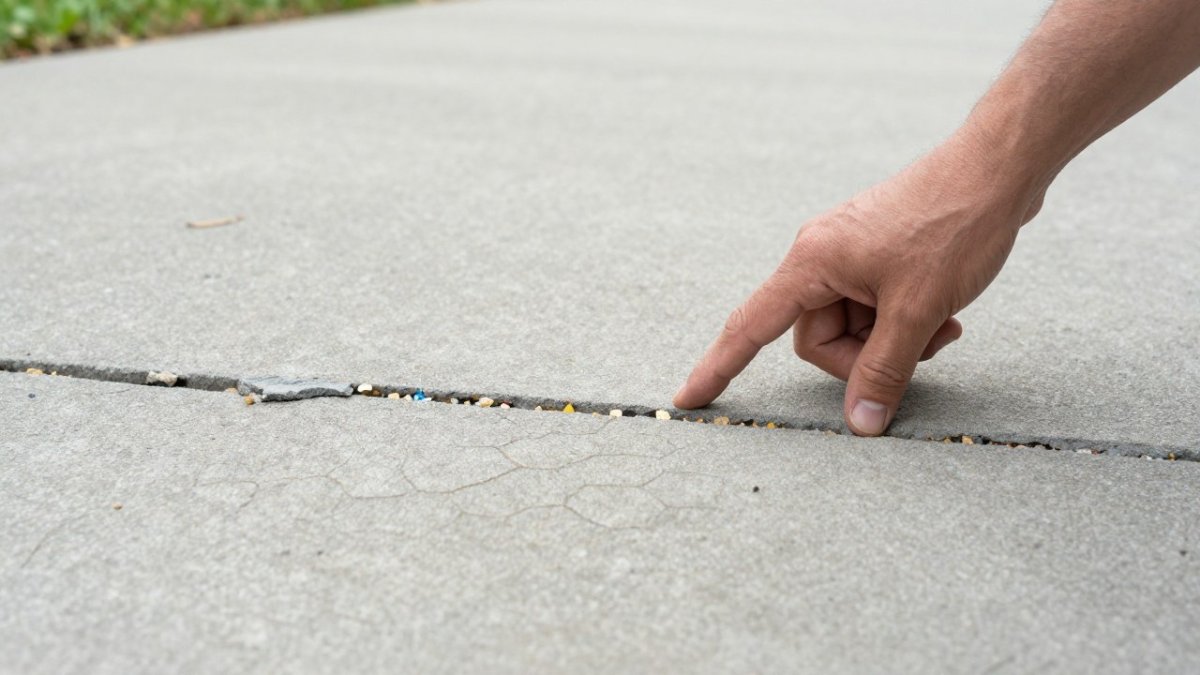
If those defects trace back to the base, the problem started below the slab. Our guide to signs of poor subgrade preparation explains how to check the layer underneath.
Concrete cracking causes: Structural vs. Cosmetic
Cracking is not always a sign of poor workmanship; some cracking and spalling are typical deterioration patterns, according to industry analysis of concrete failures. Cosmetic cracks are hairline, stable, and usually caused by plastic shrinkage or surface drying. Structural cracks are wider, deeper, and often trace to settlement, missing reinforcement, or a water-cement ratio that weakened compressive strength. The U.S. Department of Transportation's concrete repair case studies document how omitted tiebars and misplaced reinforcement cut durability.
Cosmetic cracking is often a resurfacing question. Our breakdown of how to price resurfacing a cracked concrete patio covers what drives that estimate, and our concrete cracking prevention guide goes deeper.
Not every crack points to bad workmanship, so it helps to know which type you are looking at.
| Crack type | Appearance | Typical causes |
|---|---|---|
| Cosmetic | Hairline, stable | Plastic shrinkage, surface drying |
| Structural | Wider, deeper | Settlement, missing reinforcement, weak water-cement ratio |
Signs of improper concrete curing
Improper curing shows up as dusting, map cracking, weak edges, and discoloration. Curing is where hydration continues and concrete reaches design strength, so shortcuts can cost surface hardness and tensile strength.
Watch out: if your slab was poured on a hot, windy afternoon and never covered, expect surface dusting within a year.
Curing problems also affect your recourse. Our article on concrete curing and warranty coverage explains how curing ties to what a warranty will honor. If you are hiring a replacement, start with our 7-step concrete contractor checklist.
Concrete defects rarely fix themselves, and the cost of waiting climbs with every freeze-thaw cycle. Luxury Concrete And Landscaping builds patios, driveways, and retaining walls with an in-house design team, premium materials, and a 5-year workmanship warranty, backed by full licensing, bonding, and insurance. Get started with Luxury Concrete And Landscaping and build outdoor concrete that holds up.
Frequently Asked Questions
How can you tell if a concrete contractor did a bad job?
Look for visible defects within the first year: honeycombing (exposed aggregate and voids), scaling or flaking surfaces, and cracks wider than a hairline. Check for uneven curing discoloration and poor drainage that leaves water pooling. A contractor who skips proper subgrade compaction or uses the wrong water-cement ratio leaves these telltale marks. Ask for the mix design and slump test records, and confirm the crew used a curing compound. Poor concrete workmanship shows up fast, often before the project is even a year old.
What is the difference between cosmetic cracks and structural concrete issues?
Cosmetic cracks are typically hairline (under 0.3 mm), shallow, and stable over time. Structural cracks are wider, deepen, and often run diagonally or follow reinforcement lines. They may accompany settlement, uneven slab heights, or exposed rebar. Deep vertical, horizontal, and diagonal cracks with exposed reinforcement can signal serious structural defects. If a crack widens over a few months or lets water into the subgrade, treat it as structural and get a professional assessment before repairing.
Does surface scaling indicate poor concrete mixing?
Often, yes. Scaling, the flaking of the finished surface, usually traces back to an improper water-cement ratio, inadequate curing, or finishing while bleed water was still present. A mix that is too wet weakens the top layer, and cold weather without proper protection can cause the surface to spall. Scaling, chipping, and flaking are commonly recognized early warnings of poor workmanship. If scaling appears within the first winter, the mix or the curing was likely at fault, not normal wear.

