Concrete Patio vs Paver Costs: 2026 Comparison Guide
Table of Contents
- Concrete Patio vs Paver Costs: What Drives the Price
- Stamped Concrete Patio Pricing and Material Durability
- Paver Installation Labor Costs and Concrete Patio Maintenance Requirements
- Frequently Asked Questions
Last Updated: September 30, 2026
Concrete Patio vs Paver Costs: What Drives the Price
Concrete patio vs paver costs come down to four variables: material type, square footage, site conditions, and installation labor. This guide from Luxury Concrete And Landscaping breaks down where the money goes.
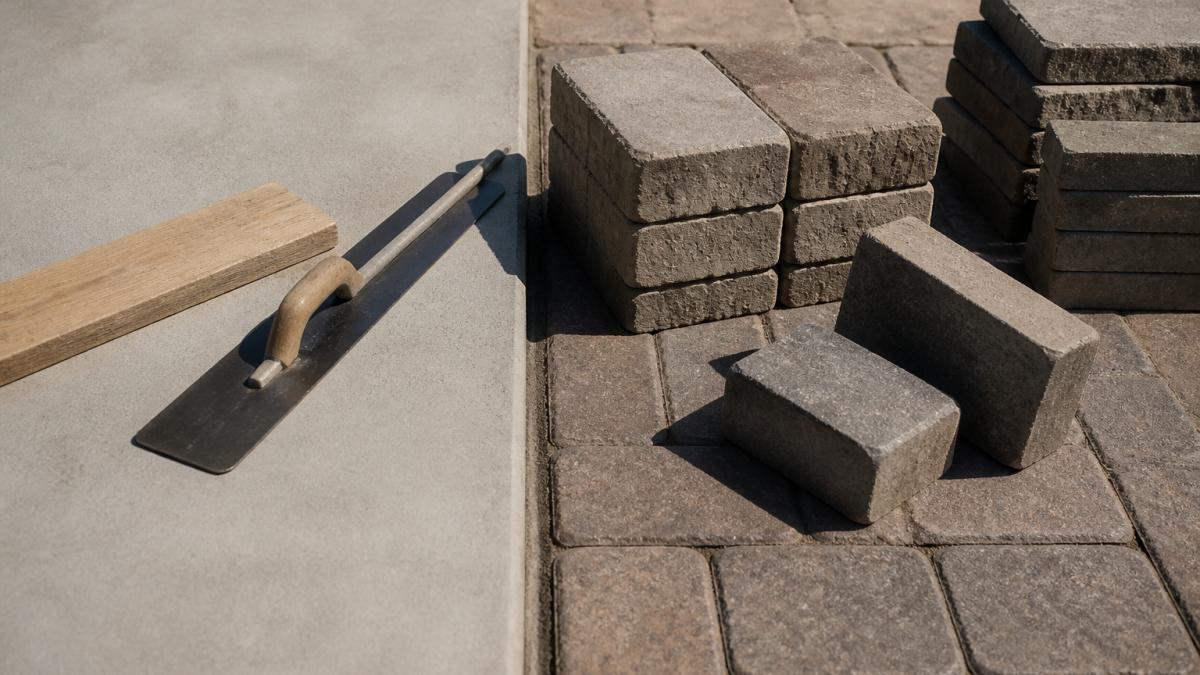
Standard poured concrete is a monolithic slab finished with a broom, smooth, or exposed aggregate texture. Stamped concrete is decorative concrete pressed to mimic stone, brick, or slate. Interlocking concrete pavers are individual units set over a compacted base, letting them flex with ground movement instead of cracking.
| Cost Driver | Concrete Patio | Paver Patio |
|---|---|---|
| Base preparation | Moderate | More extensive |
| Installation labor | Lower | Higher, labor-intensive |
| Repair approach | Sectional replacement | Individual unit swap |
| Freeze-thaw performance | Rigid, can crack | Flexes at joints |
| Long-term maintenance | Sealing, crack repair | Joint sand, resealing |
Stamped Concrete Patio Pricing and Material Durability
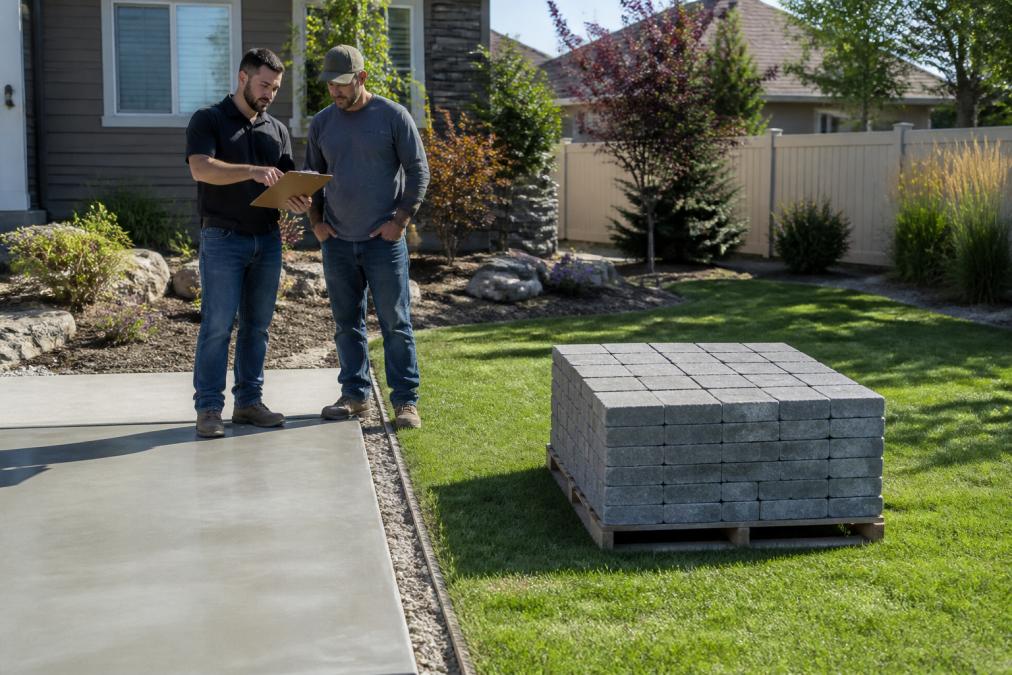
Stamped concrete patio pricing runs higher than standard poured concrete because of added stamping labor, color hardeners, and release agents. The trade-off is a premium look at a lower cost than natural stone.
Durability depends on the mix, the sub-base, and the seal. A properly compacted base and correct drainage slope prevent settling and cracking, while periodic resealing protects color and surface from the freeze-thaw cycle.
The biggest mistake is skipping sub-base preparation to save money; that shortcut shows up as cracking within a few winters.
Paver Installation Labor Costs and Concrete Patio Maintenance Requirements
Paver installation labor costs are the largest line item in a paver project. Each unit is hand-set, leveled, and compacted, then joint sand is swept into the gaps, labor intensity that gives pavers a higher upfront investment than a poured slab.
Concrete patio maintenance requirements are lighter day to day but less forgiving when something fails: a cracked slab often means sectional replacement, while pavers let you lift and swap individual units.
Frequently Asked Questions
Is it cheaper to pour a concrete patio or use pavers?
Standard poured concrete usually carries the lowest upfront material and labor cost of the two, while interlocking pavers sit higher because of the base material, cutting, and hand-setting involved. Stamped concrete lands in between, giving you a decorative finish without the unit-by-unit labor. The gap narrows once you factor in long-term maintenance, since pavers can be repaired piece by piece while concrete often needs patching or resurfacing. Request a free estimate for numbers specific to your layout.
What are the downsides of having concrete patios?
The main drawback is cracking. Ground movement, soil settling, and freeze-thaw cycles can open visible cracks, and a crack runs across the whole slab rather than staying in one spot. Repair usually means patching or resurfacing a section, which rarely blends perfectly. Stamped and sealed concrete also needs periodic resealing to hold its color and surface protection. Proper sub-base preparation, correct slope for drainage, and control joints reduce these risks but do not eliminate them.
What lasts longer, a concrete patio or a paver patio?
Pavers generally outlast poured concrete in cold climates because the flexible system moves with the ground instead of fighting it. Freeze-thaw cycles shift individual units slightly rather than cracking a single slab, and a damaged paver can be lifted and replaced without touching the rest of the patio. Concrete holds up well when the base is compacted correctly and joints are cut properly, but once a crack forms it tends to widen over time. Both surfaces reward good installation more than the material choice itself.
Choosing between concrete and pavers is really a question of how you want to spend: more upfront for a surface you can repair unit by unit, or less upfront for a seamless slab that demands careful base work to last. Luxury Concrete And Landscaping handles both, with an in-house design team, premium materials, and a 5-year workmanship warranty backed by full licensing and insurance. Get your free estimate and build an outdoor space designed to hold its value.
