Retaining Wall Installation Pricing Guide
Table of Contents
- Retaining Wall Installation Pricing Breakdown
- Retaining Wall Material Cost Comparison
- Factors Affecting Retaining Wall Installation Time
- Frequently Asked Questions
Last Updated: September 26, 2026
Retaining Wall Installation Pricing Breakdown
Understanding retaining wall installation pricing requires looking at multiple cost components that vary significantly based on your project's unique conditions. The total expense depends on wall height, materials selected, site preparation demands, and labor requirements in your area. Homeowners who understand these pricing drivers make better decisions about their outdoor investments.
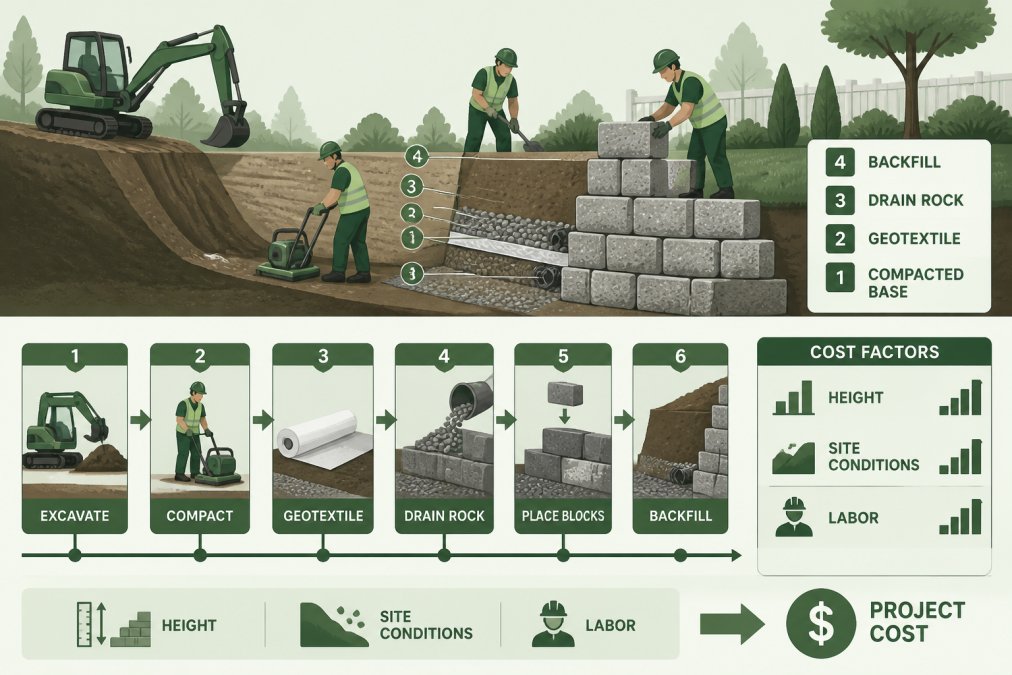
The real cost drivers aren't always obvious until a professional assesses your specific site conditions.
Retaining Wall Material Cost Comparison
Different materials bring different price points and performance characteristics to your retaining wall installation pricing equation. Natural stone delivers premium aesthetics but requires skilled installation. Interlocking concrete blocks offer consistency and faster installation timelines. Poured concrete provides structural strength for taller walls. Timber creates a rustic appearance but demands more maintenance over time.
Each material class handles drainage differently, affects your labor timeline, and carries distinct long-term durability profiles. A material that seems economical upfront may require expensive repairs within five years if it's mismatched to your soil conditions and water management needs.
| Material Type | Installation Complexity | Typical Lifespan | Best For |
|---|---|---|---|
| Interlocking Blocks | Moderate | 20-30 years | Residential, DIY-friendly |
| Poured Concrete | High | 30-40 years | Tall walls, heavy loads |
| Natural Stone | High | 50+ years | Premium aesthetics, permanence |
| Timber | Low | 10-15 years | Temporary, rustic designs |
Factors Affecting Retaining Wall Installation Time
Site conditions determine installation duration more than material choice alone. Excavation requirements, soil stability, drainage preparation, and accessibility all influence how long your retaining wall installation pricing project takes. A straightforward site with stable soil and good access completes faster than one requiring extensive grading, drainage systems, or geogrid reinforcement.
Professional crews typically work faster than DIY approaches because they manage logistics, material staging, and compaction procedures efficiently. Labor rates vary by region and contractor experience level. Permit requirements in some jurisdictions can add to your timeline before installation even begins.
Retaining walls represent a significant investment in your property's functionality and curb appeal. The right contractor combines structural expertise with transparent pricing and reliable execution. Luxury Concrete And Landscaping brings licensed, bonded expertise to every retaining wall installation, backed by a comprehensive 5-year workmanship warranty. Our in-house design team handles everything from initial site assessment through final grading, ensuring your wall performs beautifully for decades. Get My FREE Estimate today and see how professional-grade installation protects your investment.
Frequently Asked Questions
What factors have the biggest impact on retaining wall installation pricing?
The primary cost drivers are wall height, material choice, site conditions, and labor requirements. Taller walls need deeper foundations and reinforcement, increasing complexity. Difficult terrain, poor drainage, or slope stabilization needs raise excavation and base preparation costs. Material selection, whether poured concrete, natural stone, or interlocking blocks, directly affects both material and installation expenses. Professional installation accounts for skilled labor, equipment, and project management.
Do I need a permit for a residential retaining wall installation?
Permit requirements vary by location and wall specifications. Most jurisdictions require permits for walls of a certain height or in areas with specific drainage or slope concerns. Your contractor should verify local building codes and structural requirements. Permits ensure the wall meets safety standards for soil pressure and foundation depth. Working with a licensed contractor ensures compliance with residential retaining wall permit requirements and protects your property investment.
Why is a retaining wall drainage system important to the overall cost?
Proper drainage prevents water buildup behind the wall, which causes soil pressure and structural failure. Without adequate drainage systems, including drain tile, backfill aggregate, and geogrid reinforcement, walls shift, crack, or collapse within years. Installing drainage correctly during construction costs less than emergency repairs or replacement. A well-designed retaining wall drainage system importance cannot be overstated; it protects your investment and ensures long-term stability and structural integrity.
