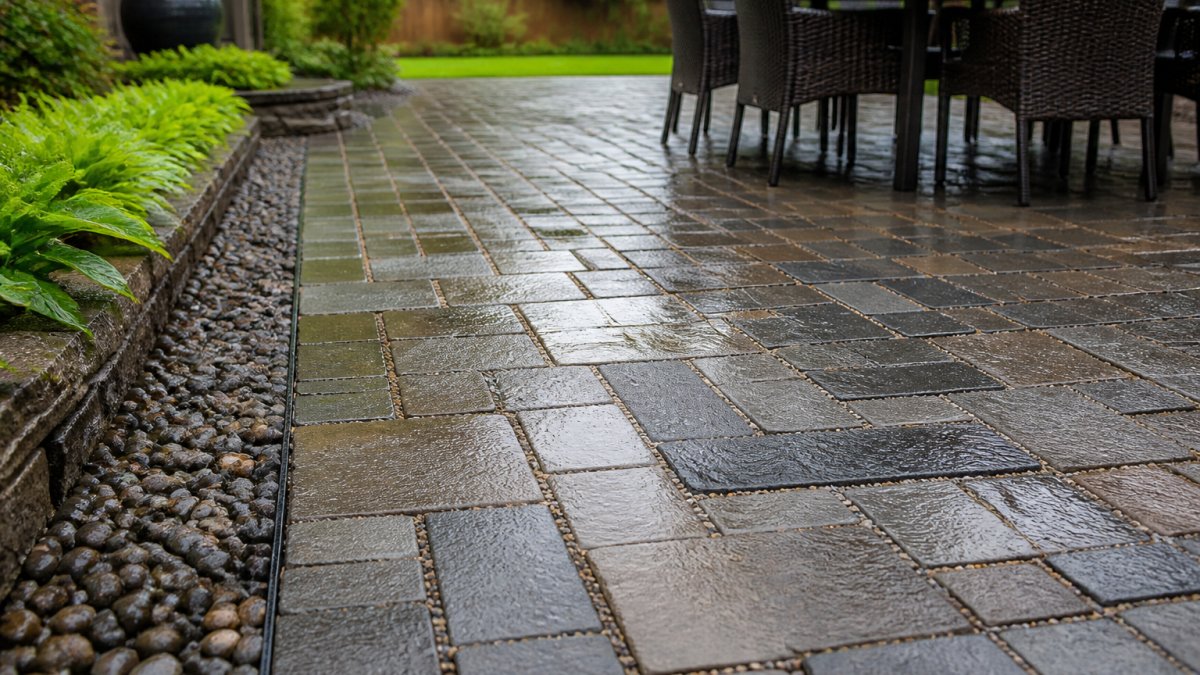
Permeable Surfaces: Improve Patio Drainage
Table of Contents
- How Permeable Pavers for Patios Improve Drainage
- Permeable Paver Base Layers and Patio Slope for Drainage
- Permeable Pavement Maintenance and Installation Mistakes to Avoid
- Frequently Asked Questions
Last Updated: October 13, 2026
How Permeable Pavers for Patios Improve Drainage
Permeable pavers for patios have small gaps between each unit, letting rainwater pass through instead of pooling on top. Water filters through a stone base and soaks into the ground, improving patio drainage with permeable surfaces rather than fighting runoff.
Permeable surfaces include permeable pavers, porous concrete, and permeable clay units.
Runoff drops sharply as water enters the joints instead of racing toward your house, and groundwater recharge improves.
The EPA's stormwater management guidance outlines how these systems reduce runoff volume at the source.
Permeable Paver Base Layers and Patio Slope for Drainage
A permeable paver base is an open-graded stone system that stores water while it soaks into the soil.
The layers, bottom to top: compacted subgrade, geotextile fabric, open-graded washed aggregate roughly 4 to 12 inches deep, pea gravel bedding, permeable pavers with consistent joint spacing, and washed gravel joint fill.
Patio slope for drainage should fall away from the house at about 1 to 2 percent, or roughly 1/8 to 1/4 inch per foot.
Skip the geotextile fabric and fine soil migrates into the aggregate, clogging the system from below.
Get My FREE Estimate →
Permeable Pavement Maintenance and Installation Mistakes to Avoid
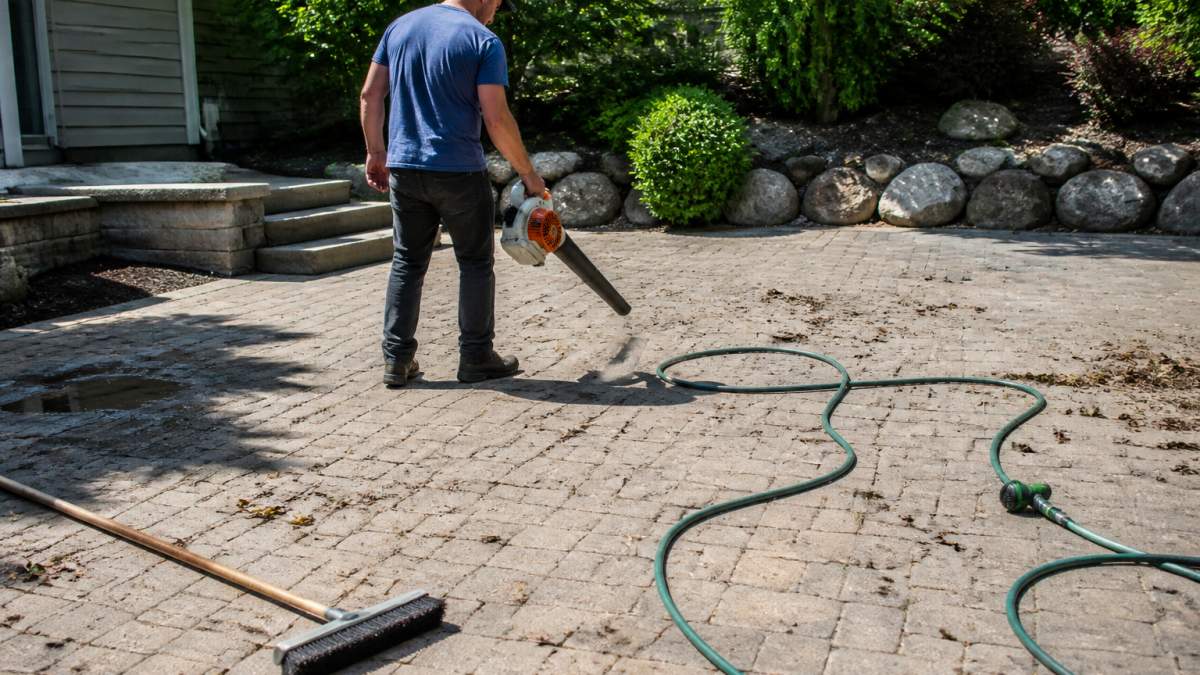
Permeable pavement maintenance comes down to one habit: keep the joints open. Most systems fail from neglect, not bad materials.
A simple schedule:
| Frequency | Task | Why It Matters |
|---|---|---|
| Weekly | Blow or sweep leaves and debris | Stops organic matter from sealing joints |
| Monthly | Rinse the surface with a hose | Flushes fine grit through the system |
| Seasonal | Inspect joints for clogging | Catches problems before water backs up |
| Annually | Deep clean with a vacuum sweeper | Restores infiltration rate |
Installation mistakes to avoid: over-compacting the subgrade, using fine-grained joint fill instead of washed gravel, skipping the geotextile fabric, flat grading, and ignoring soil type, clay drains slowly and often needs a French drain or rain garden alongside the pavers.
For soil that will not absorb water fast enough, a drainage layer or perforated pipe below the base carries excess away, protecting your foundation.
Frequently Asked Questions
How do permeable patio surfaces improve drainage?
Permeable surfaces allow water to pass through gaps between pavers and into a stone base, rather than running off the surface. This reduces surface runoff and standing water. A properly installed system with the right base layers and slope can manage typical rainfall, helping prevent soil saturation and foundation protection issues.
What is the best permeable surface for a patio?
Permeable pavers are a popular choice because they combine durability with design flexibility. Other options include porous concrete and permeable clay. The best choice depends on your soil type, climate, and how you plan to use the patio. In areas with freeze-thaw cycles, pavers with wider joint spacing and a deep base tend to perform well.
Do permeable pavers need a gravel base?
Yes, a gravel base is essential. It typically consists of a compacted aggregate layer, a smaller bedding layer, and sometimes a geotextile fabric to separate soil from stone. The base stores water temporarily and allows it to infiltrate slowly. Without a proper base, the pavers may shift and drainage will fail.
A patio that drains well protects your home and stays usable year-round. At Luxury Concrete And Landscaping, we design permeable patio systems with proper base layers, correct slope, and materials matched to your soil. Every project is backed by our 5-year workmanship warranty, and our team is licensed, bonded, and insured. Get started with Luxury Concrete And Landscaping and get a patio that handles water the way it should.
