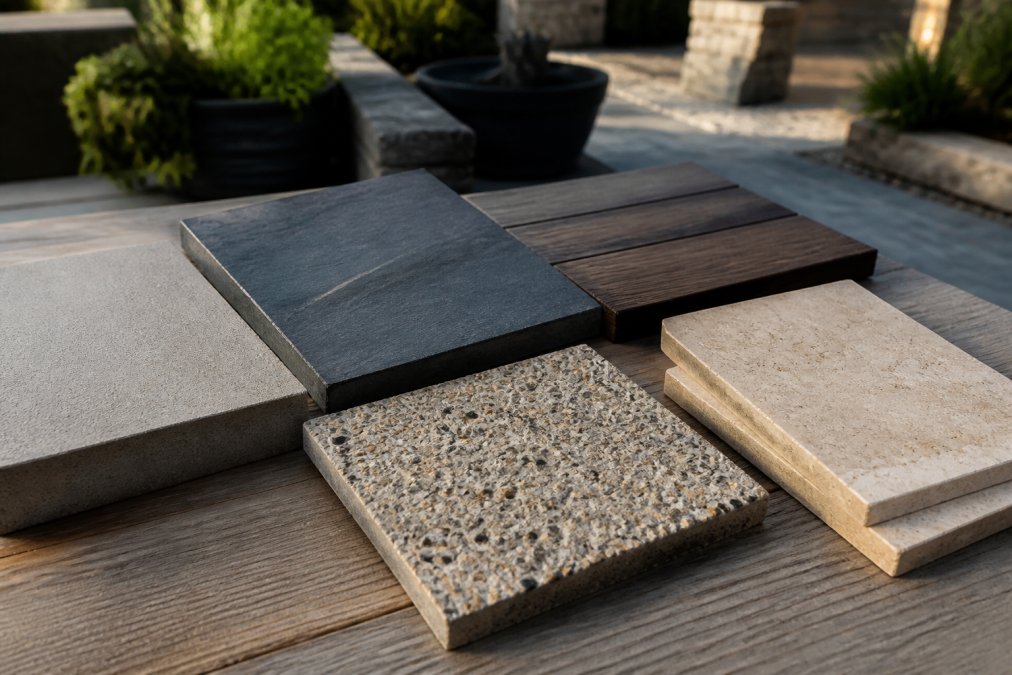
5 Best Materials for Luxury Patios
Table of Contents
- Quick Comparison: Luxury Patio Materials at a Glance
- 1. Porcelain Pavers: The Modern Durability Standard
- 2. Bluestone Pavers: Classic Elegance and Weather Resistance
- 3. Granite Pavers: Maximum Durability for High-Traffic Areas
- 4. Travertine Pavers: Luxury Warmth and Natural Slip Resistance
- 5. Stamped Concrete: Custom Outdoor Living Design Ideas for 2026
- Natural Stone vs. Manufactured Pavers: Which Fits Your Luxury Vision
- Concrete Patio Maintenance Tips for Long-Term Beauty
Last Updated: August 19, 2026
Quick Comparison: Luxury Patio Materials at a Glance
The material you choose determines durability, maintenance, cost, and long-term appearance. At Luxury Concrete And Landscaping, we've guided homeowners through this decision, and the answer is never one-size-fits-all. The best choice depends on your climate, traffic patterns, aesthetic goals, and maintenance commitment.
| Material | Durability | Maintenance | Aesthetic | Best Climate | Price Range |
|---|---|---|---|---|---|
| Porcelain Pavers | Highest | Minimal | Modern, versatile | All climates | Premium |
| Bluestone | Very High | Moderate | Classic, elegant | Cold/freeze-thaw | High |
| Granite | Highest | Low | Luxe, varied colors | All climates | High |
| Travertine | High | Moderate-High | Warm, natural | Hot/dry climates | Mid-High |
| Stamped Concrete | Good | Moderate-High | Custom designs | Temperate | Mid |
1. Porcelain Pavers: The Modern Durability Standard
Porcelain pavers are engineered stone designed for outdoor use, representing the closest thing to a no-compromise luxury material. Ultra-high-temperature firing creates a non-porous surface that resists staining, fading, and weather damage far better than softer materials.
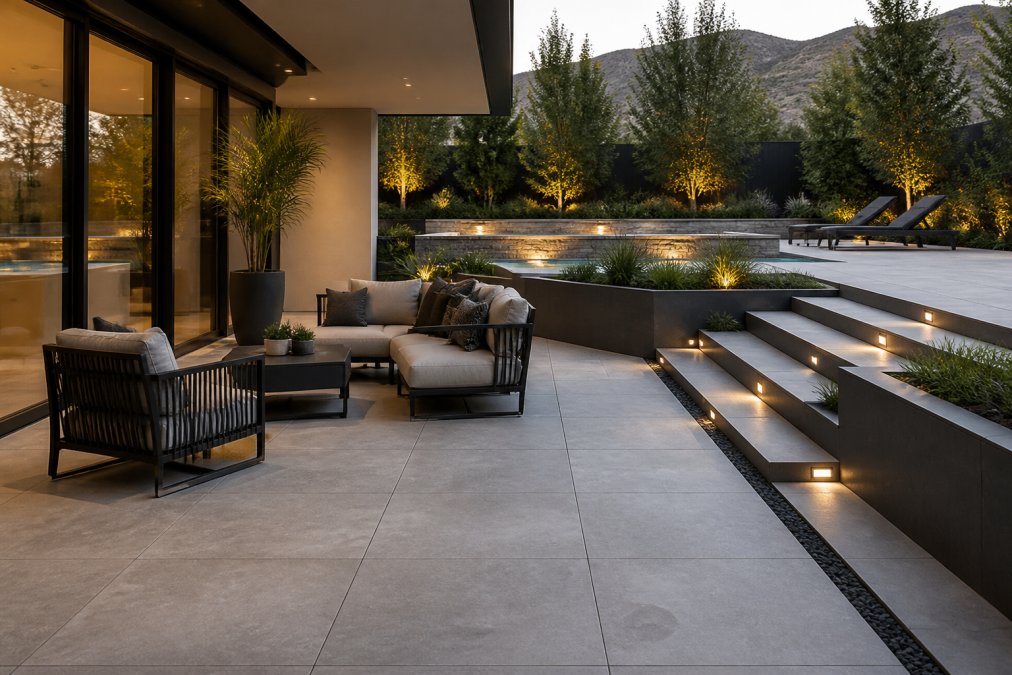
The key advantage is water absorption. Porcelain absorbs less than 0.1% water, making it immune to freeze-thaw cycles that crack natural stone. Install porcelain in fall with confidence that spring won't reveal damage.
Porcelain comes in textured finishes for slip resistance, ideal for pool decks and wet areas. The R11 textured finish is the industry standard. Design flexibility is another strength, manufacturers produce porcelain mimicking weathered wood, slate, or marble with precise color consistency and no surprise variations.
The honest limitation is cost. Porcelain runs at the premium end, and installation requires experienced crews familiar with engineered surfaces.
Pros:
- Virtually maintenance-free, no sealing needed
- Exceptional freeze-thaw resistance
- High slip resistance for wet areas
- Consistent color and sizing
- Resists stains and fading
Cons:
- Higher upfront cost
- Requires skilled installation
- Can feel less "natural" to some
2. Bluestone Pavers: Classic Elegance and Weather Resistance
Bluestone delivers authentic natural character that porcelain cannot. This sedimentary stone, quarried primarily in the Northeast, has been the gold standard for luxury patios for over a century. The distinctive blue-grey coloring with subtle variations creates timeless elegance that ages gracefully.
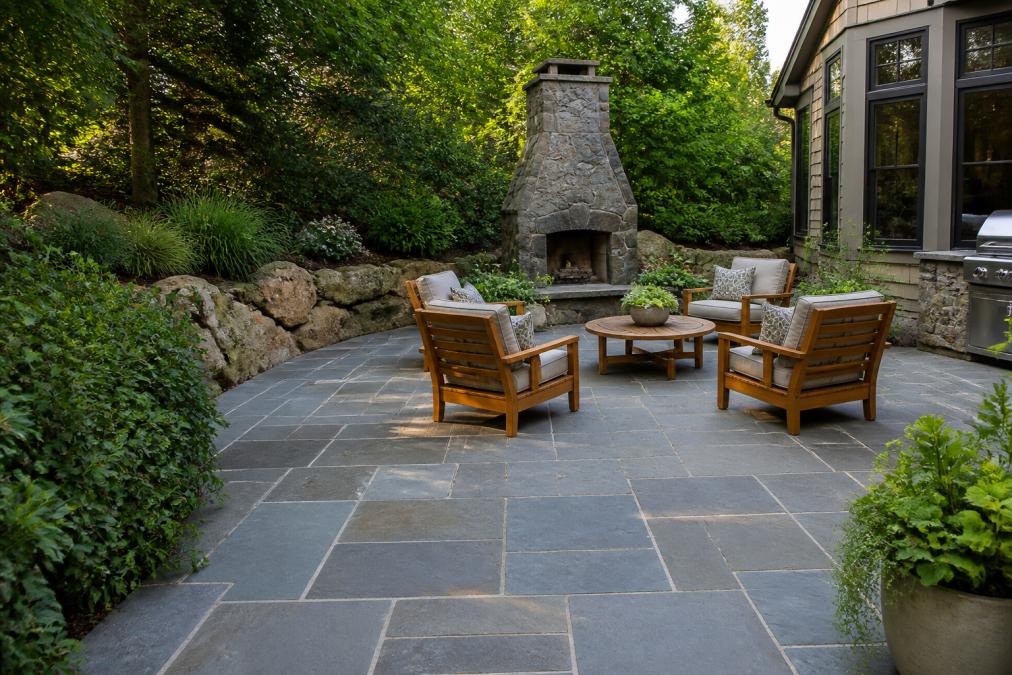
Durability is genuine. Bluestone handles heavy foot traffic, resists chipping, and stands up to weather extremes, particularly in cold climates. When properly sealed, it laughs at freeze-thaw cycles that destroy softer materials.
You get finish choices: natural cleft bluestone has an uneven, rustic surface visually interesting but requiring skilled installation; thermal-finished bluestone is smoother, easier to install, and offers better slip resistance.
The aesthetic appeal is undeniable. Natural variations mean no two patios look identical. The stone develops a subtle patina over time, becoming even more beautiful. Homeowners often describe bluestone as an investment that improves with age.
Maintenance is moderate but necessary. Bluestone is porous enough that it needs sealing every 2-3 years to maintain weather resistance and prevent freeze-thaw damage.
Pros:
- Timeless, sophisticated aesthetic
- Excellent durability and weather resistance
- Develops beautiful patina over time
- Strong slip resistance with thermal finish
- Natural variation adds visual interest
Cons:
- Requires sealing every 2-3 years
- Natural cleft finish increases installation complexity
- More expensive than concrete alternatives
- Freeze-thaw protection depends on proper sealing
3. Granite Pavers: Maximum Durability for High-Traffic Areas
If your patio is also a driveway or gets heavy daily use, granite simply outlasts everything else. It's the hardest natural stone commonly used for outdoor applications, offering density and tensile strength that handles abuse other materials cannot.
Granite resists scratches, stains, and weathering with minimal effort. You can place hot grills directly on it without concern. Road salt doesn't phase it. Freeze-thaw cycles leave it unaffected. This material is built for permanence.
Aesthetically, granite offers luxury without pretense. Most granite runs in grays with subtle variations, though pink, yellow, or multi-colored options exist. Polished or flamed finishes create visual depth. Granite's natural sparkle from mica and feldspar crystals catches light and creates an upscale appearance.
The practical advantage for high-traffic areas is maintenance simplicity. Granite needs no sealing. Clean it with mild soap and water. Over decades, it maintains its appearance with zero special care.
Weight is the one real consideration. Granite's density increases installation labor costs and may require additional sub-base preparation.
Pros:
- Unmatched durability and longevity
- Extremely resistant to scratches, stains, and weather
- No sealing required, minimal maintenance
- Luxury appearance with natural depth
- Handles high traffic and hot surfaces
Cons:
- Higher material and installation cost due to weight
- Limited color options compared to other materials
- Heavy weight may require reinforced sub-base
4. Travertine Pavers: Luxury Warmth and Natural Slip Resistance
Travertine occupies a unique position: natural stone with inherent warmth that feels different underfoot than harder materials. Quarried from hot springs deposits, travertine has a porous, textured surface with earthy tones, ivory, walnut, silver, and gold, creating naturally sophisticated aesthetics.
The most compelling feature is thermal comfort. Travertine stays significantly cooler than granite or concrete in direct sunlight. Walk barefoot in midsummer and your feet stay comfortable. For poolside patios and warm climates, this matters tremendously.
The surface naturally resists slipping, even when wet. The porous texture grips feet without requiring additional treatments. This is why travertine has been the material of choice for luxury pool decks for decades.
The aesthetic is unmistakably upscale. Warm, earthy tones and natural variation create an inviting, resort-like feeling that photographs exceptionally well.
The honest limitation is climate sensitivity. Travertine is porous, meaning it absorbs water. In freeze-thaw climates, water enters the stone, freezes, expands, and causes spalling and cracking. Sealing helps but doesn't eliminate the risk entirely. Travertine thrives in warm, dry climates where freezing is rare.
Maintenance is moderate. You'll seal it periodically, clean spills promptly (it stains more easily than harder stones), and accept that the surface may develop patina.
Pros:
- Stays cool underfoot in hot climates
- Naturally slip-resistant surface
- Warm, inviting aesthetic
- Resort-like luxury appearance
- Available in varied earthy tones
Cons:
- Requires sealing in freeze-thaw climates
- More prone to staining than harder stones
- Porous surface requires regular maintenance
- Poor choice for cold climates
5. Stamped Concrete: Custom Outdoor Living Design Ideas for 2026
Stamped concrete represents the most customizable approach to luxury patio design. Rather than working within natural stone constraints, stamped concrete lets you create virtually any pattern, color combination, or texture you envision.
The process involves pouring concrete and stamping it with patterns before it fully cures. The result can mimic brick, stone, tile, or entirely custom designs. You can incorporate color into the concrete itself, add stains after curing, or use sealers to enhance depth and richness.
For 2026, stamped concrete trends lean toward clean, geometric patterns and bold color statements. Modern designs feature large-format stamps with minimal grout lines, creating sleek, contemporary aesthetics. Warm earth tones remain popular, but cooler grays and dramatic blacks are emerging.
The cost advantage is significant. Stamped concrete delivers a custom, high-end look at a fraction of natural stone's price. This makes it attractive for larger patio areas where natural stone becomes prohibitively expensive.
The trade-off is longevity and maintenance. Concrete can crack, particularly in freeze-thaw climates. The stamped pattern can fade if the sealer isn't maintained. You'll need to reseal every 2-3 years to keep color vibrant and protect against staining and weathering.
Concrete absorbs water more readily than porcelain or granite. In cold climates, freeze-thaw cycles cause damage. In temperate or warm climates, concrete performs much better.
Pros:
- Highly customizable designs and colors
- Significantly lower cost than natural stone
- Can mimic more expensive materials
- Good for large areas on a budget
- Contemporary design options for 2026
Cons:
- Requires sealing every 2-3 years
- Can crack in freeze-thaw climates
- Stamped pattern can fade over time
- Not as durable as natural stone or porcelain
- Stains more easily than harder materials
Natural Stone vs. Manufactured Pavers: Which Fits Your Luxury Vision
Most homeowners face this decision: natural stone (bluestone, granite, travertine) or manufactured alternatives (porcelain, stamped concrete). Both paths lead to luxury patios, they just get there differently.
Natural stone delivers authenticity and character. Every paver is unique. The material develops patina and improves with age. The cost of this authenticity is maintenance and vulnerability. Natural stone is porous, requires sealing, can crack in freeze-thaw cycles, and stains more easily.
Manufactured materials, particularly porcelain, offer precision, consistency, and minimal maintenance. What you see is what you get, forever. No surprises, no patina development, no sealing cycles. The aesthetic is cleaner, more contemporary, more controlled.
The cost calculation is complex. Natural stone costs more upfront but might outlast you if properly maintained. Manufactured materials cost less initially but may need replacement sooner in harsh climates. Sealing costs for natural stone add up over decades. True cost depends on your climate, maintenance commitment, and how long you plan to stay.
Your climate is the deciding factor. If freeze-thaw cycles are common, porcelain or granite are safer bets. Travertine and bluestone become riskier. In warm, dry climates, all options perform well, and your choice can be purely aesthetic.
Concrete Patio Maintenance Tips for Long-Term Beauty
Whether you choose stamped concrete or any other material, understanding maintenance protects your investment. Concrete patios require proactive care to prevent premature aging, cracking, and staining.
Sealing is non-negotiable. Concrete is porous. Water penetrates and causes freeze-thaw damage in cold climates or allows staining in any climate. Seal your patio within the first year, then reseal every 2-3 years. This single step extends life by decades and keeps color vibrant.
Clean spills immediately. Oil, wine, rust, and organic matter all stain concrete if left sitting. Address spills within hours, not days. The longer something sits, the deeper it penetrates.
Avoid deicing salts in winter. Road salt accelerates concrete deterioration. Use calcium chloride or magnesium chloride instead of sodium chloride. Better yet, use sand for traction and shovel snow before it melts and refreezes.
Pressure wash annually, but carefully. Use low pressure (below 3000 PSI) to avoid damaging the surface or pushing water into micro-cracks. High-pressure washing can accelerate deterioration.
Monitor and seal cracks early. Small cracks are inevitable. Seal them before they become large using concrete crack filler designed for outdoor use. Addressing cracks when small prevents water from entering and expanding them.
Avoid harsh chemicals. Bleach, vinegar, and acidic cleaners damage concrete. Stick to pH-neutral cleaners or mild detergent and water.
Plan for professional sealing. While you can apply sealer yourself, professional application often yields better results. Professionals have commercial-grade sealers and equipment that create more durable finishes. Every 3-5 years, consider hiring professionals for resealing.
For luxury patios, maintenance is the difference between one that impresses for decades and one that deteriorates visibly within years. Luxury Concrete And Landscaping includes maintenance guidance with every project and offers a 5-year workmanship warranty covering installation defects, but protecting your investment long-term requires your commitment to sealing and cleaning.
The material you choose sets the trajectory for decades. Porcelain delivers durability and minimal maintenance at premium cost. Bluestone and granite offer natural stone beauty with varying maintenance demands. Travertine brings warmth and resort-like aesthetics to warm climates. Stamped concrete maximizes customization and design flexibility on a budget.
There's no universally "best" material, only the best for your climate, aesthetic vision, maintenance tolerance, and budget. Visit completed patios in your area if possible. Ask questions about long-term maintenance. Consider your climate's freeze-thaw cycles, sun exposure, and moisture patterns.
When ready to move forward, work with contractors who understand these materials deeply. Luxury Concrete And Landscaping specializes in premium patio installations across Utah, with an in-house design team that helps you navigate these decisions. Our licensed, bonded, and insured team combines expert craftsmanship with premium materials, backed by a comprehensive 5-year workmanship warranty. We ensure realistic timelines, transparent communication, and outdoor living spaces designed to impress for decades.
Get your free estimate today and let's create the luxury patio that matches your vision.
Frequently Asked Questions
What is the most durable material for a luxury patio?
Granite and porcelain pavers rank highest for durability. Granite offers unmatched hardness and resists scratches, stains, and extreme weather, making it ideal for high-traffic areas. Porcelain pavers provide ultra-low water absorption (often <0.1%), exceptional freeze-thaw resistance, and require no sealing. Both outperform natural stone in longevity, though granite is the densest option available for luxury patios.
How do natural stone and concrete compare for high-end patios?
Natural stone like bluestone, granite, and travertine offers timeless aesthetics, unique variations, and exceptional durability but requires sealing and ongoing maintenance. Stamped concrete and porcelain pavers provide more customization, lower maintenance, and consistent sizing. Natural stone works best for classic designs; stamped concrete excels in modern applications. Your choice depends on aesthetic preference, climate, and maintenance commitment.
What is the best material for a luxury patio in freeze-thaw climates?
Bluestone, granite, and porcelain pavers perform best in freeze-thaw conditions. Bluestone naturally resists freeze-thaw cycles when properly sealed. Granite's density provides superior weather resistance. Porcelain's ultra-low porosity prevents water absorption that causes cracking. Travertine requires careful sealing in colder climates. For maximum durability in harsh winters, porcelain and granite are your safest investments.
Is stamped concrete a good choice for luxury patio designs?
Yes, stamped concrete is an excellent luxury choice for 2026 designs. It offers unlimited customization, mimicking natural stone patterns at a lower cost. Stamped concrete provides excellent durability when properly sealed and maintained. The main advantage is design flexibility, you can create unique patterns and colors impossible with standard pavers. Maintenance requires periodic sealing, but the long-term aesthetic impact justifies the investment for custom outdoor living spaces.
This article was written using GrandRanker
