Pet-Friendly Turf Alternatives: 2026 Guide
Table of Contents
- Why Pet Owners Need Turf Alternatives
- Drought-Resistant Dog-Friendly Ground Cover Options
- Hard Surface Solutions: Pea Gravel and Crushed Rock
- Pet-Safe Landscaping Materials for High-Traffic Areas
- Low-Maintenance Dog Yard Ideas and Odor Management
- Safety Considerations: Paw Health and Toxic Plant Cross-Reference
- DIY Installation vs. Professional Hardscaping
- Conclusion
Last Updated: August 20, 2026
Why Pet Owners Need Turf Alternatives
Pet owners face a genuine dilemma: traditional grass lawns suffer under paws, claws, and urine. A dog's urine burns grass from high nitrogen content, creating brown patches. Heavy foot traffic compacts soil and kills vegetation in high-use zones. Mud becomes inevitable during wet seasons, tracked into the house repeatedly.
Pet-friendly turf alternatives eliminate this cycle. Rather than fighting nature with endless maintenance, homeowners can choose surfaces designed to handle pet activity. At Luxury Concrete And Landscaping, we've helped homeowners across Utah transform pet-damaged yards into durable outdoor spaces. Solutions range from natural ground covers that improve with pet use to engineered surfaces built specifically for animal traffic.
Drought-Resistant Dog-Friendly Ground Cover Options
Living ground covers offer homeowners a natural-looking yard that improves with pet use. Unlike traditional grass, many ground covers tolerate urine, recover quickly from foot traffic, and require minimal maintenance.
White Clover: Nitrogen-Fixing and Resilient
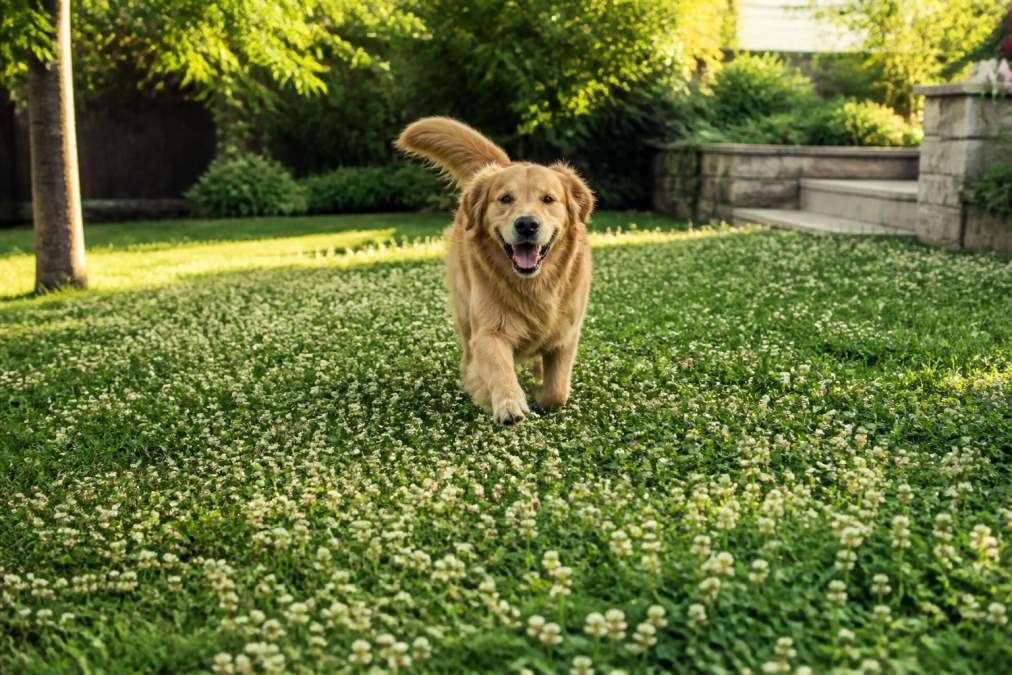
White clover is one of the most practical ground covers for pet owners. Unlike grass, clover benefits from the nitrogen in dog urine, the very thing that kills traditional lawns. This nitrogen-fixing plant pulls nitrogen from the air and stores it in soil, reducing or eliminating fertilizer needs. The dense mat fills in quickly, suppressing weeds and reducing mud in high-traffic zones.
Clover stays green during moderate drought and provides soft, cushioned surfaces for paws. The main drawback emerges during flowering season, when small white flowers attract bees, a concern for households with bee-allergic family members or pets. Mowing before flowers fully emerge solves this problem.
Clover seed is inexpensive and germinates quickly. Many pet owners overseed existing lawns with clover rather than replacing grass entirely.
Creeping Thyme: Low-Growing and Fragrant
Creeping thyme offers a low-growing ground cover reaching only 2-4 inches tall, creating a dense mat that withstands moderate foot traffic. When stepped on, it releases a pleasant fragrance and produces small purple flowers in summer. The plant is non-toxic to dogs and confirmed safe by the ASPCA.
Creeping thyme thrives in full sun with well-drained soil and tolerates drought once established. The limitation is foot traffic intensity, it handles moderate activity well but struggles under constant, heavy paw traffic from large or very active dogs. Thyme works best as a secondary surface in combination with other options. It also requires well-drained soil and may rot in wet climates.
Hard Surface Solutions: Pea Gravel and Crushed Rock
When ground covers can't handle pet use intensity, hard surfaces become necessary. Pea gravel and crushed rock offer excellent drainage, durability, and low maintenance.
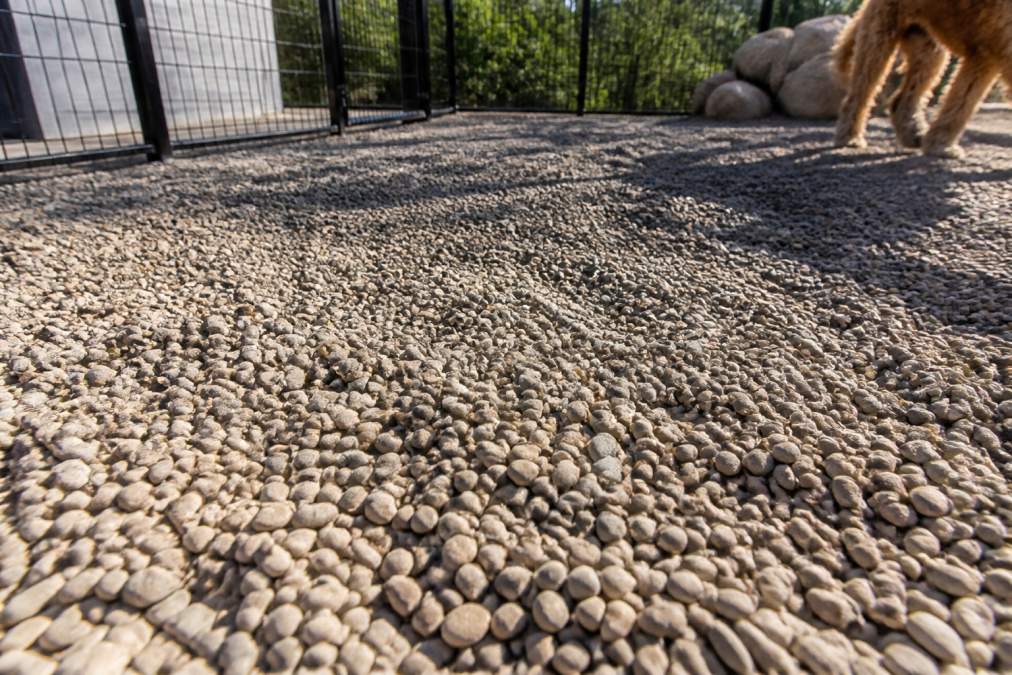
Pea gravel consists of smooth, rounded stones roughly the size of a pea. The rounded shape makes it comfortable for paws, far more comfortable than sharp, angular crushed rock. Dogs don't resist stepping on pea gravel the way they sometimes resist sharp stones.
Both materials excel at odor control. Urine drains through the porous surface instead of pooling. Solid waste remains visible and easy to remove. The primary maintenance task is replenishment, gravel settles, compacts, and migrates over time, requiring fresh material annually or every other year.
Pea gravel can become hot in direct sunlight during summer, potentially uncomfortable for sensitive paw pads. Creating shaded areas helps manage this.
Pet-Safe Landscaping Materials for High-Traffic Areas
Certain grass varieties and specialized products handle pet traffic better than standard lawn options.
Tall Fescue Grass for Urine Resistance
Tall fescue is a durable grass variety suited to pet-heavy yards. Unlike more delicate grasses, tall fescue tolerates pet urine better, showing less severe burn spots and recovering from foot traffic faster. Shade tolerance and deep roots that access moisture during dry periods make it more drought-resistant than many grass varieties.
The trade-off is maintenance. Tall fescue still requires regular mowing, watering, and fertilizing. Urine damage still occurs; tall fescue simply recovers faster. In extremely high-traffic areas, even tall fescue eventually wears thin. Pet owners typically combine it with hard surfaces or ground covers in the most heavily used zones.
K9Grass: Specialized Synthetic Turf for Dogs
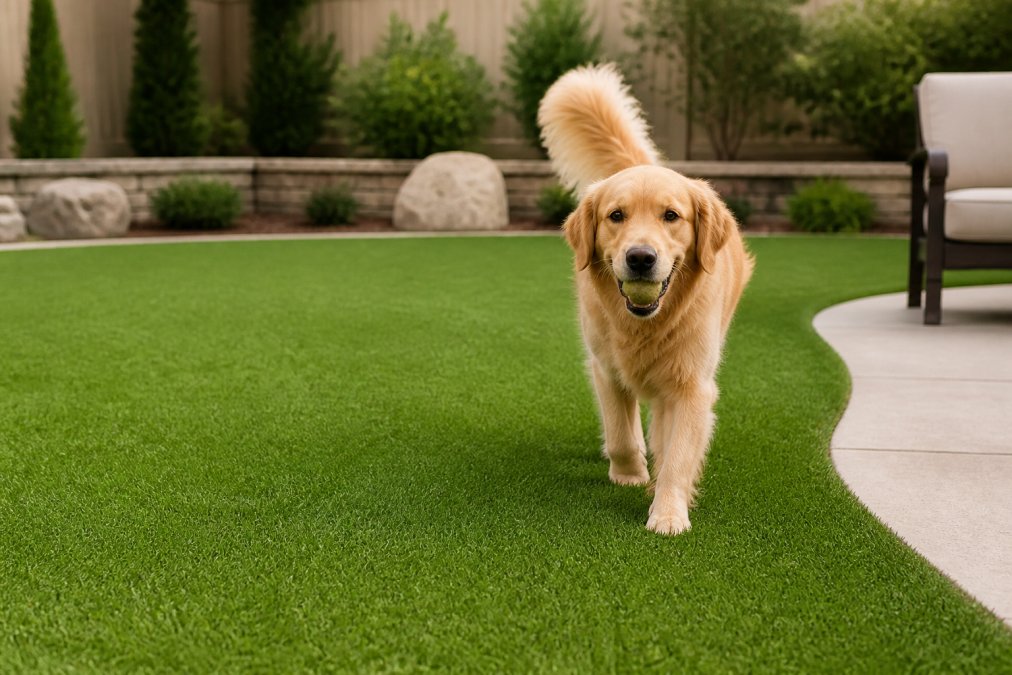
K9Grass represents the premium end of synthetic turf options, engineered specifically for pets. Unlike generic artificial turf, K9Grass incorporates antimicrobial technology that reduces odor at the source. The drainage system moves urine through the turf and into a subsurface layer, preventing pooling and wet spots.
The fibers mimic natural grass appearance while providing durability that exceeds any living ground cover. Dogs cannot kill K9Grass through urine damage, paw traffic, or digging. Surface temperature is a key feature, K9Grass incorporates reflective technology that reduces surface temperature by up to 22 degrees compared to standard artificial turf, addressing a significant comfort concern for pets in hot climates.
Installation requires professional work for full-yard applications, though K9Grass offers portable mats for smaller areas. The initial investment is substantially higher than natural alternatives, but long-term durability and minimal maintenance create value for pet owners tired of constant lawn repair. A K9Grass installation from Luxury Concrete And Landscaping includes professional subsurface drainage design, ensuring water moves away from your home's foundation while the turf remains dry and odor-free.
Low-Maintenance Dog Yard Ideas and Odor Management
The most durable pet-friendly surface becomes problematic if odor accumulates. Effective odor management requires understanding how waste breaks down and which surfaces trap or release odors most effectively.
Odor Control Protocols for Non-Grass Surfaces
Odor develops when urine saturates a surface and bacteria break down urea into ammonia. On impermeable surfaces like concrete, urine pools and ferments, creating intense smell. On permeable surfaces like pea gravel or K9Grass with proper drainage, urine drains away before bacterial breakdown accelerates.
The first step in odor management is choosing a permeable surface. Solid waste should be removed daily; this alone eliminates the majority of odor issues. For surfaces that retain moisture, enzymatic cleaners break down the organic compounds causing odor rather than masking the smell. Some pet owners add activated charcoal or baking soda to pea gravel areas to absorb odor compounds. Ventilation matters too, a dog yard with good air circulation naturally disperses odor faster than an enclosed area.
Managing Waste on Permeable and Hardscape Materials
On pea gravel or crushed rock, waste remains visible and easy to scoop. On K9Grass, waste sits on top rather than sinking into the fibers. Daily removal is straightforward, and the antimicrobial protection prevents bacterial growth that would cause odor.
Safety Considerations: Paw Health and Toxic Plant Cross-Reference
Pet safety extends beyond surface comfort to include toxic plants and paw health concerns. Many common landscape plants are toxic to dogs, including sago palms, lilies, azaleas, and foxgloves. When designing a pet-friendly yard, remove toxic plants entirely or ensure they're physically separated from dog access areas.
Paw health depends partly on surface choice. Sharp gravel causes cuts and irritation. Extremely hot surfaces burn sensitive pads. Muddy surfaces promote fungal growth between toes. Hard surfaces like concrete cause joint impact stress over time. The ideal surface balances comfort, drainage, and durability.
Regular paw inspections catch problems early. After yard time, check between toes for stones, cuts, or signs of irritation. Rinse muddy paws to prevent fungal infections. For dogs with sensitive paws or arthritis, softer surfaces like clover or tall fescue cause less impact stress than hard materials.
DIY Installation vs. Professional Hardscaping
The decision between DIY installation and professional work depends on project scope, complexity, and your comfort level with landscaping.
DIY projects work well for small areas and simpler materials. Seeding clover or thyme into existing lawn requires minimal equipment and technical skill. Spreading pea gravel in a designated dog run is straightforward. These projects cost less upfront and give you direct control.
DIY limitations emerge with larger areas and more complex installations. Proper site preparation, leveling, compacting, and installing drainage requires equipment and knowledge. Mistakes in grading cause water pooling and odor problems. K9Grass installation requires professional-grade equipment and expertise in subsurface drainage design.
Professional installation from Luxury Concrete And Landscaping eliminates guesswork. Our in-house design team assesses your yard's drainage, sunlight, and pet traffic patterns, recommending the best solution for your specific situation. Professional installation ensures proper grading, drainage integration with existing landscape, and finished results that last. The 5-year workmanship warranty protects your investment; if drainage fails or surfaces shift, we handle repairs at no cost.
Creating a pet-friendly yard doesn't require choosing between aesthetics and durability. From nitrogen-fixing clover to engineered K9Grass, options exist for every climate and maintenance preference. The most important step is matching the surface to your specific situation: your dog's size and activity level, your climate, and your maintenance tolerance.
Luxury Concrete And Landscaping specializes in transforming pet-damaged yards into durable outdoor spaces designed to last. Whether you choose living ground covers, hardscape solutions, or specialized synthetic turf, our team handles site assessment, professional installation, and long-term warranty protection. Get your free estimate today and discover how the right pet-friendly turf alternative can eliminate yard maintenance while keeping your dog safe and comfortable.
Frequently Asked Questions
What are the best pet-friendly turf alternatives for dogs that dig?
For diggers, pea gravel and crushed rock work well because they're permeable and easy to refresh. Clover and creeping thyme are also durable ground covers that recover from paw traffic. K9Grass synthetic turf resists damage from digging better than natural grass. Avoid loose materials like mulch in high-dig zones. Consider combining materials: hardscape in the dig zone, ground cover elsewhere. Your specific dog's behavior and your yard's drainage will determine the best choice.
How do I manage odor on drought-resistant dog-friendly ground cover?
Clover and creeping thyme naturally reduce odor because they're dense and promote drainage. For pea gravel, rinse weekly with a hose to flush urine through the stones. Use enzymatic cleaners designed for pet areas monthly. K9Grass includes antimicrobial protection that actively neutralizes odors. Ensure proper drainage underneath all materials, standing urine is the main odor source. In arid climates, drainage is usually excellent, but check for low spots where water pools.
Are there toxic plants I should avoid in a pet-safe landscaping setup?
Yes. Avoid sago palm, lilies, sycamore trees, and certain types of ivy, all are toxic to dogs. Clover and creeping thyme are ASPCA-confirmed safe. Tall fescue grass is non-toxic. When installing ground covers, verify with your supplier or veterinarian that all plants are dog-safe. If you're unsure about a native plant, check the ASPCA's toxic plant database before installation. This is especially important in landscaping designs that mix hardscape with plantings.
Should I choose DIY installation or hire a professional for pet yard alternatives?
DIY works for simple solutions: spreading pea gravel, seeding clover, or installing ground cover plants. Professional installation is worth considering for large areas, complex drainage requirements, or if you're combining multiple materials. Professionals ensure proper grading for drainage, which prevents urine pooling and odor. A licensed contractor like Luxury Concrete and Landscaping can design a custom solution tailored to your climate and pet's behavior, backed by a workmanship warranty for peace of mind.
This article was written using GrandRanker
