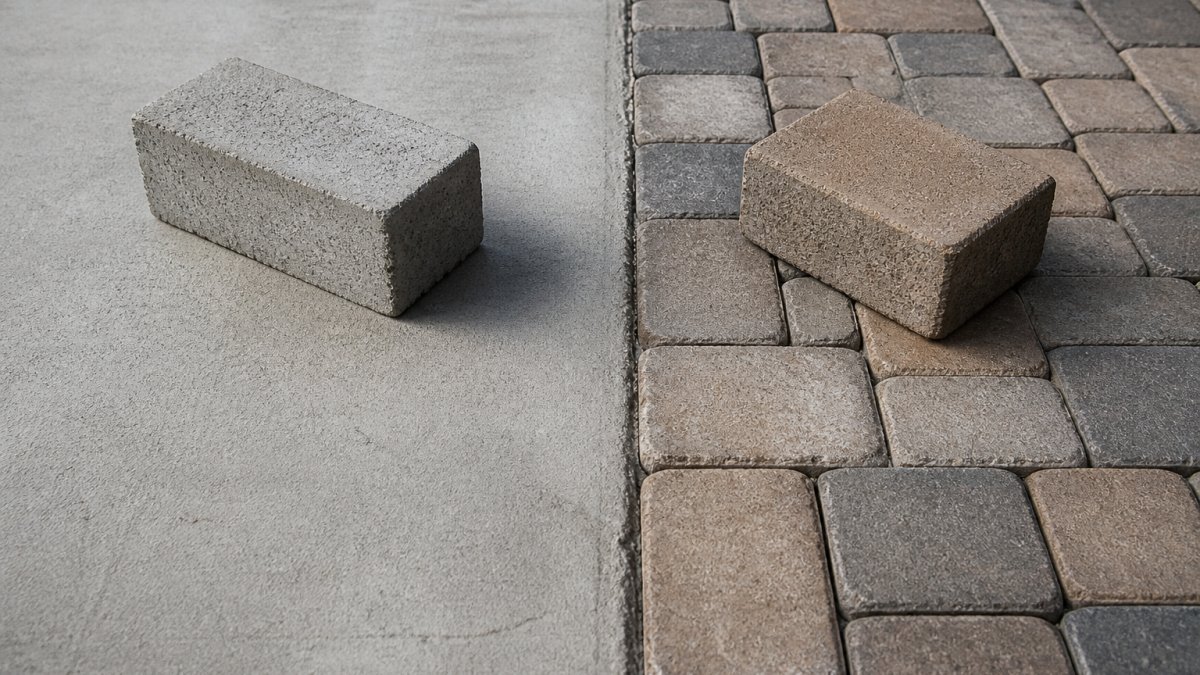
Concrete vs Pavers: Pros and Cons for Driveways
Table of Contents
- Concrete vs Pavers: A Head-to-Head Comparison
- Stamped Concrete vs Pavers: Appearance, Cost, and Durability
- Paver Maintenance and Repair vs Poured Concrete Care
- Frequently Asked Questions
Last Updated: October 15, 2026
Concrete vs Pavers: A Head-to-Head Comparison
Choosing between concrete vs pavers comes down to one trade-off: poured concrete costs less upfront and gives a smooth, uniform surface, while pavers cost more to install but handle soil movement, cracking, and repairs far better over time.
| Factor | Poured Concrete | Pavers |
|---|---|---|
| Upfront cost | Lower | Higher |
| Cracking risk | Higher | Low (flexes at joints) |
| Repair method | Patch or replace section | Swap individual units |
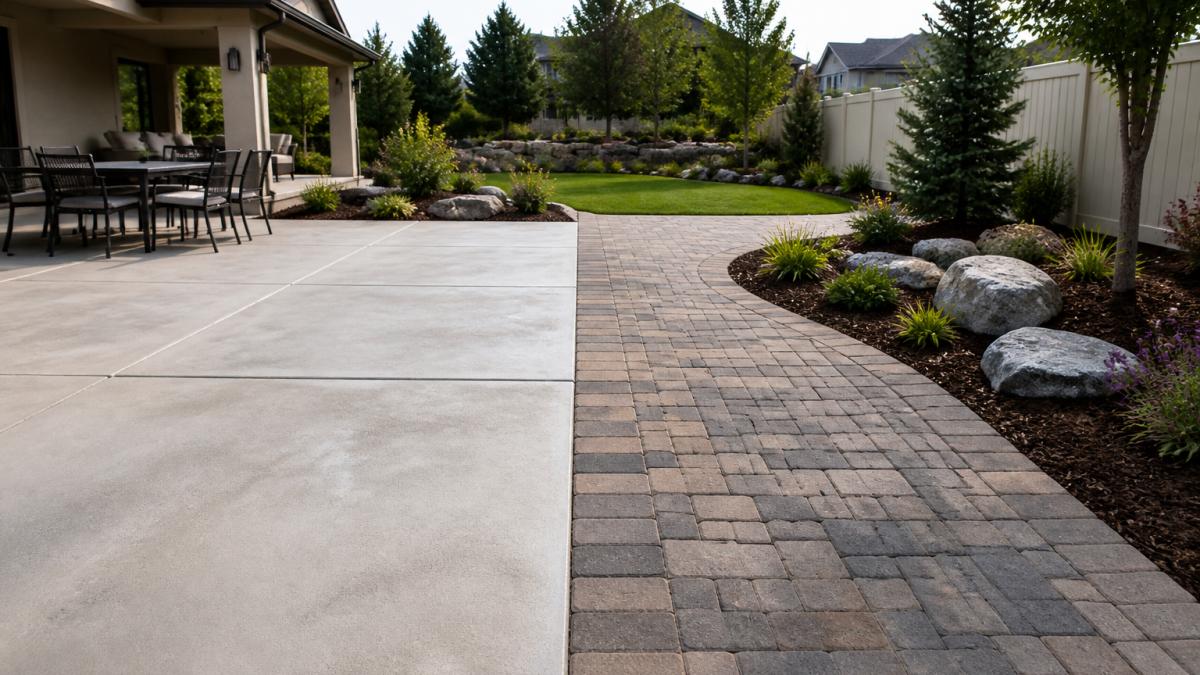
Stamped Concrete vs Pavers: Appearance, Cost, and Durability
Stamped concrete vs pavers is a question of look versus resilience: stamped concrete presses patterns into a poured slab at a lower upfront cost, while pavers achieve similar aesthetics with real units that move independently, offering more patterns, color blends, and flexibility for curved pathways and borders.
On durability, a rigid concrete slab cracks when the ground settles or heaves, while interlocking pavers flex at their joints and absorb that movement. Belgard's comparison of stamped concrete and pavers notes pavers resist freeze-thaw effects better, and HV Hardscapes' analysis of pavers versus concrete makes the same point from the cracking angle.
Paver Maintenance and Repair vs Poured Concrete Care
Paver maintenance and repair is simpler and more localized than concrete care: when a paver cracks or stains, you lift that unit, reset the base, and drop in a replacement, leaving the surrounding surface untouched. Concrete repairs mean filling a crack or re-pouring a section, and matching the original slab's color and texture is difficult.
Routine care for both is modest: sweep or rinse regularly, re-sand paver joints, seal concrete periodically, and address cracks early. According to Fixr's comparison of pavers and concrete, pavers offer strong versatility and can support resale value, partly because repairs stay invisible and the surface keeps its original appearance.
Get My FREE Estimate →
For homeowners weighing a paver patio or poured concrete driveway: concrete asks less now, and pavers ask less of your patience later.
Every driveway and patio faces the same test: soil moves, seasons change, and the surface has to hold up. At Luxury Concrete And Landscaping, we build both poured concrete and paver installations with the base preparation and materials that decide whether a surface lasts. Our licensed, bonded, and insured crews back every project with a 5-year workmanship warranty, an in-house design team, and realistic timelines we actually honor. Get started with Luxury Concrete And Landscaping and build an outdoor space that still looks right years from now.
Frequently Asked Questions
Which lasts longer, concrete or pavers?
A well-built concrete slab can last 30 years or more, but it is prone to cracking as soil shifts. Interlocking pavers can flex with ground movement instead of cracking, and individual units can be swapped out if damaged. In freeze-thaw climates, pavers often hold their appearance longer because they tolerate movement that would split a poured slab. The deciding factor for either surface is proper base preparation and installation.
Are pavers easier to repair than poured concrete?
Yes. With pavers, a damaged or stained unit is pried up, the base is re-leveled, and a matching paver is set back in place, leaving no visible patch. Poured concrete repairs usually mean filling cracks or cutting out and repouring a section, which rarely blends with the original slab. That difference matters for driveways where a dropped tool or a shifting root can damage a small area.
Do pavers require more maintenance than concrete?
Pavers need occasional sweeping, joint sand refills, and resealing every few years to keep the color and lock tight. Concrete needs sealing every few years and crack monitoring, but no joint sand. Both surfaces should be cleaned regularly. Paver maintenance and repair tends to be simpler and more localized, while concrete care is less frequent but harder to fix once damage appears.
