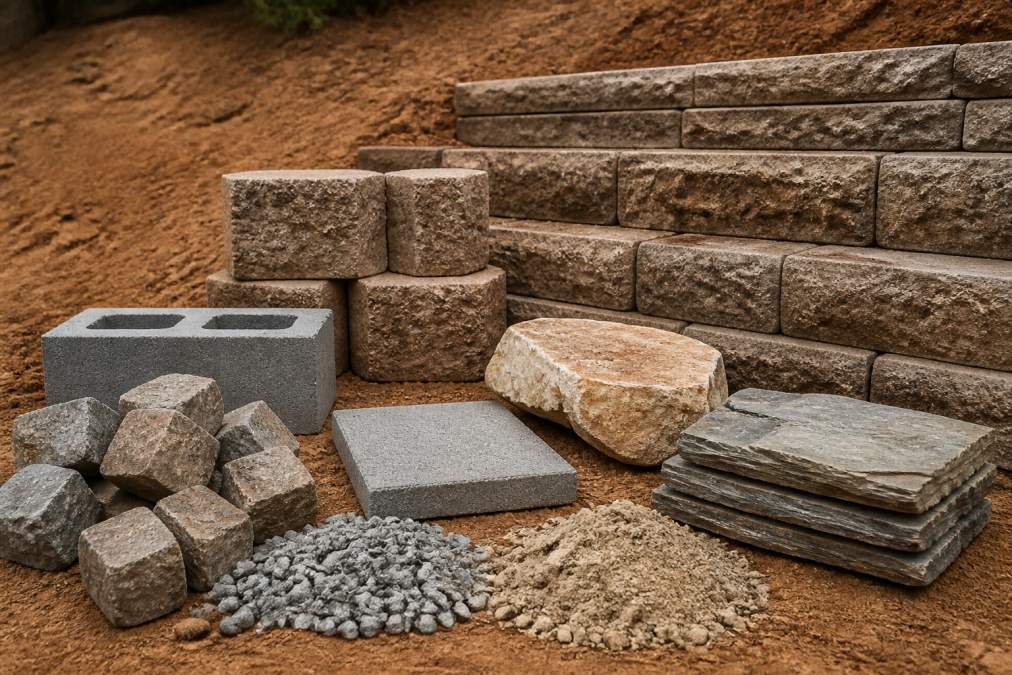
Best Materials for Retaining Walls in Clay Soil
Table of Contents
- Why Clay Soil Demands Different Retaining Wall Materials
- Understanding Retaining Wall Drainage Requirements for Clay
- Retaining Wall Base Preparation in Clay Soil
- Top Retaining Wall Materials for Clay Soil Conditions
- Backfill Materials for Clay Soil Behind Retaining Walls
- Common Mistakes When Building Retaining Walls in Clay
- Material Comparison: Pros, Cons, and Durability
- Conclusion
Last Updated: August 23, 2026
Why Clay Soil Demands Different Retaining Wall Materials
Clay soil presents unique engineering challenges that standard retaining wall construction often overlooks. Unlike sandy or loamy soils, clay swells when wet and shrinks when dry, creating lateral earth pressure that intensifies over time. This hydrostatic pressure, combined with poor drainage characteristics, makes material selection critical. The best materials for retaining walls in high clay soil must account for these forces while managing water infiltration that would otherwise compromise structural integrity.
At Luxury Concrete And Landscaping, we've spent years working with Utah's clay-heavy soil conditions. What we've learned is straightforward: the wrong material choice leads to wall failure, costly repairs, and landscape redesign. The right materials, paired with proper drainage and backfill strategy, create walls that last decades.
Understanding Retaining Wall Drainage Requirements for Clay
Drainage is the single most important factor in retaining wall performance on clay soil. Water trapped behind a wall creates hydrostatic pressure that pushes outward with tremendous force. In clay, which has low permeability, water moves slowly and collects, intensifying this pressure over months and years.
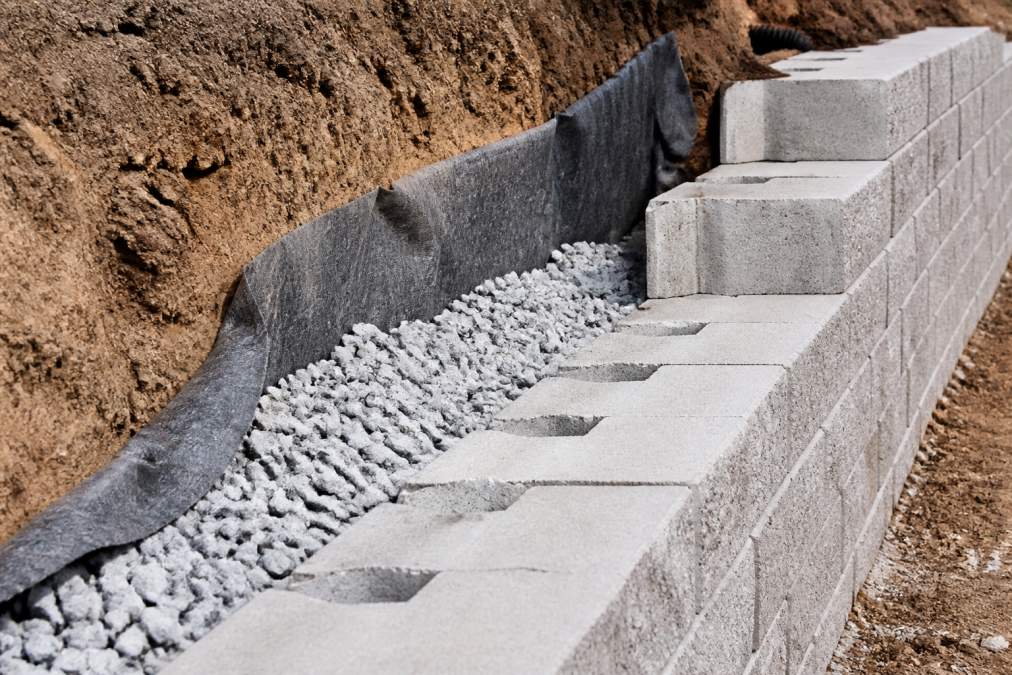
Effective drainage requires a layered approach. Start with a perforated drainage pipe installed at the base of the wall to capture groundwater before it builds pressure. Behind that pipe, place drainage stone (typically crushed limestone or clean gravel) that allows water to flow freely toward the pipe. Critically, separate the drainage stone from native clay soil with non-woven geotextile fabric. Without this barrier, clay fines migrate into the gravel, clogging the system and defeating the entire drainage strategy.
Weep holes, small openings in the retaining wall face, provide additional pressure relief. For concrete block walls, space them every 4 to 6 feet horizontally and every 2 to 3 feet vertically (asce.org). In high clay soil, weep holes are your insurance policy against hydrostatic buildup.
The permeability of your chosen material also matters. Solid concrete blocks are impermeable and trap water. Mortarless systems with hollow cores allow some water movement. Natural stone walls with unmortared joints provide passive drainage that's often superior to manufactured blocks.
Retaining Wall Base Preparation in Clay Soil
A weak foundation guarantees wall failure, especially in clay. Start by excavating a foundation trench at least 12 inches deep, deeper if your wall exceeds 4 feet in height. The trench should be wider than the wall's base by at least 6 inches on the back side to accommodate drainage material.
Compact the trench bottom thoroughly using a plate compactor or hand tamper to achieve 95% Standard Proctor density, the engineering standard for soil stability (astm.org). Loose clay in the foundation will settle over time, causing the entire wall to shift and crack.
Next, install a base course of compacted gravel, typically 4 to 6 inches of clean stone. This provides a level, stable platform and allows water to drain away from the wall's foundation, preventing frost heave in winter months.
For walls over 4 feet tall or in areas with significant slope, consider a concrete footing. Pour a reinforced concrete base that extends below the frost line (typically 3 to 4 feet in this region) and ties the wall to stable soil. This engineered approach prevents both settlement and frost damage.
Top Retaining Wall Materials for Clay Soil Conditions
1. Concrete Block Systems (Allan Block, Keystone, VERSA-LOK)
Segmental concrete blocks dominate residential retaining wall construction for good reason: they're engineered for clay soil conditions, mortarless installation simplifies construction, and they handle reinforcement with geogrids. Allan Block, Keystone, and VERSA-LOK each offer proven systems with interlocking designs that create structural integrity without mortar.
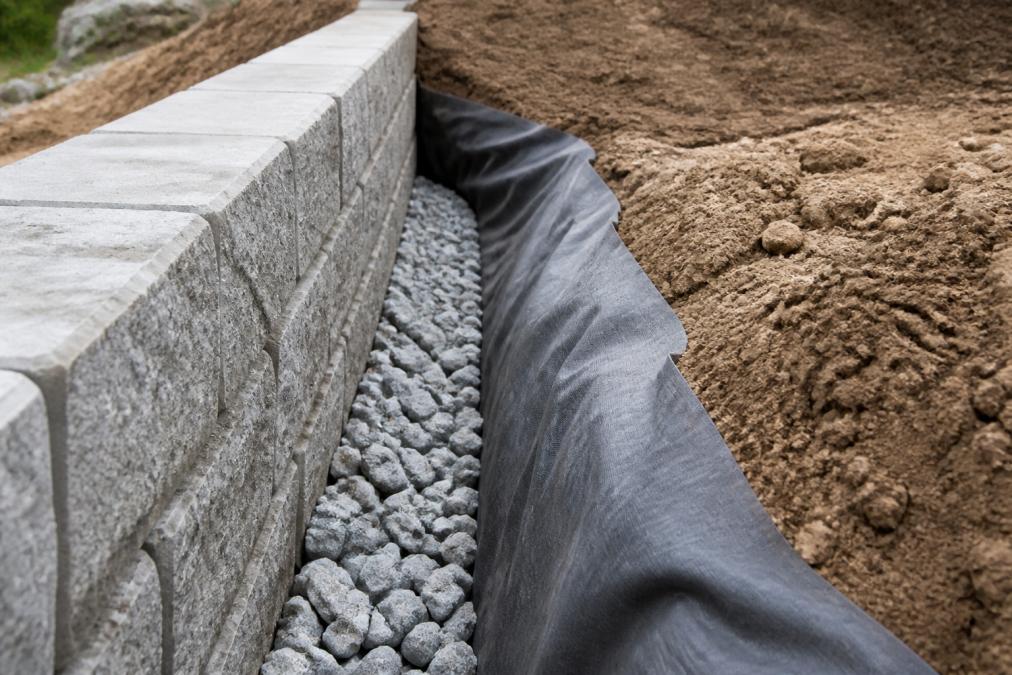
Allan Block's patented lip-and-notch design creates a secure connection between blocks, preventing lateral movement. Keystone systems use fiberglass pins for exceptional stability, making them ideal for taller walls or heavily reinforced applications. VERSA-LOK offers solid blocks with a split-face texture that ages naturally.
All three systems work well with geogrids, synthetic reinforcement layers that extend into the backfill and dramatically increase load-bearing capacity. In clay soil, geogrid reinforcement transforms a gravity wall into an engineered structure capable of handling greater heights and steeper slopes.
The trade-off with concrete blocks is that they're impermeable, so drainage becomes even more critical. Every block wall in clay soil must include perforated pipe at the base, geotextile fabric separation, and clean drainage stone behind the wall.
Best for: Homeowners wanting a durable, engineered wall with design flexibility.
Pros:
- Engineered for load-bearing; can be reinforced with geogrids for greater height and stability
- Mortarless construction simplifies installation and reduces labor costs
- Variety of colors and textures available for design flexibility
- Proven performance in clay soil when paired with proper drainage
Cons:
- Impermeable blocks require meticulous drainage design and maintenance
- Taller walls (over 4 feet) typically require professional engineering and geogrid reinforcement
- Moderate to high initial installation cost depending on height and reinforcement needs
2. Natural Stone Retaining Walls
Natural stone, limestone, sandstone, granite, offers timeless aesthetic appeal and inherent drainage advantages that make it excellent for clay soil. Unmortared stone walls rely on gravity and the interlocking weight of individual stones for stability. The gaps between stones provide passive drainage that prevents water accumulation behind the wall.
For walls under 4 feet, dry-stacked natural stone performs well in clay soil. Over time, the stone develops a weathered patina that blends seamlessly with the landscape. The durability of natural stone is exceptional, properly installed stone walls can last 50+ years with minimal maintenance.
Installation requires skilled masonry work. The stone must be carefully selected and placed so larger, heavier stones form the base and smaller stones fill gaps. Proper base preparation is essential.
Best for: Homeowners seeking a natural, durable aesthetic that complements regional landscapes. Ideal for walls under 4 feet in height.
Pros:
- Exceptional durability; stone walls last 50+ years with minimal maintenance
- Passive drainage through unmortared joints prevents hydrostatic pressure buildup
- Natural aesthetic that weathers beautifully over time
- Excellent load-bearing capacity when properly installed
Cons:
- Higher material and labor costs compared to concrete blocks
- Requires experienced masons for proper installation
- Limited to shorter walls (under 4 feet) for gravity-only systems
- Larger stones are heavy and difficult to move
3. Geotextile-Reinforced Walls with Geogrids
Geogrids are synthetic reinforcement layers that extend from the retaining wall face into the backfill, dramatically increasing the wall's load-bearing capacity and stability. Combined with concrete blocks or segmental systems, geogrids allow you to build taller walls, steeper slopes, and walls in more challenging soil conditions, including clay.
Geogrid-reinforced walls work by distributing load across a larger soil mass. As the wall tries to move outward due to hydrostatic pressure, the geogrids anchor the structure and transfer that force into stable soil deeper in the backfill. In clay, where lateral earth pressure is significant, this reinforcement is often the difference between a wall that fails and one that performs reliably.
Tensar TriAx geogrids exemplify this technology. The triaxial design provides 360-degree radial stiffness. When installed at the proper spacing and length (typically extending 60-70% of the wall's height into the backfill), TriAx geogrids allow walls 6 to 8 feet tall or taller to be built safely in clay soil (peer-reviewed research).
Installation requires engineering. You must calculate the proper geogrid spacing, length, and connection to the wall blocks. The backfill material must be properly compacted around the geogrids, loose backfill defeats the reinforcement.
Best for: Taller walls (4+ feet), steep slopes, or areas where native clay soil is highly expansive.
Pros:
- Allows construction of taller, more stable walls in challenging clay soil
- Distributes load across larger soil mass, preventing settlement and movement
- Enables steeper slopes or walls with surcharge loads
- Proven performance with proper engineering and installation
Cons:
- Requires professional engineering and design
- Adds significant cost compared to gravity walls
- Proper backfill compaction is critical; inadequate compaction compromises performance
- Not visible once installed, so quality depends entirely on proper execution
Backfill Materials for Clay Soil Behind Retaining Walls
Backfill material is as important as the wall itself. Native clay soil should never be used as backfill, it traps water, compacts unevenly, and creates the hydrostatic pressure you're trying to avoid. Instead, use engineered backfill designed specifically for drainage and compaction.
The ideal backfill consists of three layers. First, place drainage stone (crushed limestone or clean gravel, typically 3/4-inch diameter) immediately behind the wall, extending 12 to 18 inches outward. This layer allows water to flow freely toward the perforated drain pipe at the wall's base.
Second, install non-woven geotextile fabric between the drainage stone and native soil. This fabric is critical, it allows water to pass through while preventing clay fines from migrating into the drainage stone and clogging it. Overlap geotextile sheets by at least 12 inches to ensure complete coverage.
Third, use compacted granular material (typically crushed limestone or clean sand-gravel mix) for the remaining backfill. Compact the backfill in 6-inch lifts using a plate compactor, achieving 90-95% Standard Proctor density.
Perforated drain pipe (typically 4-inch HDPE with a filter sock) should run along the base of the wall, sloped to daylight or a drainage outlet. In clay soil, this pipe is non-negotiable, it's your primary defense against hydrostatic pressure.
Common Mistakes When Building Retaining Walls in Clay
The most common mistake is underestimating clay soil's drainage challenges. Contractors often build walls without adequate drainage, assuming clay's low permeability means water won't be a problem. The opposite is true, water accumulates behind the wall, creating dangerous hydrostatic pressure.
Second, many builders skip geotextile fabric, assuming gravel alone will prevent clay from clogging the drainage system. This fails within 2-3 years as clay fines migrate into the gravel, blocking water flow.
Third, inadequate base preparation causes foundation settlement. Clay that isn't properly compacted will settle unevenly, causing the wall to shift and crack.
Fourth, using native clay as backfill is a critical error. Always use engineered backfill: clean drainage stone near the wall, geotextile separation, and compacted granular material for the remaining fill.
Fifth, neglecting slope stability on the backfill side can cause slope failure. Proper slope angle (typically 2:1 or less steep) and compaction prevent this.
Material Comparison: Pros, Cons, and Durability
| Material | Best For | Durability | Drainage | Cost | Installation Complexity |
|---|---|---|---|---|---|
| Concrete Blocks (Allan Block, Keystone, VERSA-LOK) | Engineered walls, geogrid reinforcement, design flexibility | 30-40 years | Good (with proper system) | Moderate | Moderate |
| Natural Stone | Aesthetic appeal, gravity walls under 4 feet | 50+ years | Excellent (passive) | Higher | High (skilled masonry) |
| Geogrid-Reinforced Systems | Taller walls, steep slopes, challenging soil | 40-50 years | Excellent (engineered) | Higher | High (engineering required) |
| Perforated Drain Pipe (ADS, NDS) | Water management, foundation drainage | 25-40 years | Excellent | Low | Low |
| Geotextile Fabric (Non-Woven) | Soil separation, drainage filtration | 20-30 years | Excellent | Very Low | Very Low |
Durability depends more on the complete system than on any single material. A concrete block wall without proper drainage fails in 10-15 years. The same wall with geotextile, drainage stone, and perforated pipe lasts 30-40 years. Natural stone with poor base preparation fails; natural stone with engineered foundation lasts 50+ years.
In clay soil, the most durable systems combine multiple strategies: engineered base preparation, proper drainage design, geotextile separation, and appropriate backfill material. Luxury Concrete And Landscaping designs walls with this systems approach, ensuring each component works together.
Conclusion
Building retaining walls in high clay soil requires a systems approach: engineered material selection, meticulous drainage design, proper base preparation, and engineered backfill. Concrete block systems like Allan Block and Keystone, reinforced with geogrids and paired with perforated drainage pipe and geotextile fabric, deliver reliable performance. Natural stone offers aesthetic appeal and excellent passive drainage for shorter walls. The common thread across all successful installations is treating drainage as the primary design concern.
At Luxury Concrete And Landscaping, our in-house design team engineers each wall to handle your specific soil conditions, slope, and load requirements. Every project is backed by our 5-year workmanship warranty. Get your free estimate and let us show you how proper material selection and engineering create walls that last.
=== FAQ ANSWERS (audit these too, same rules) ===
[1] Q: Why does clay soil require special drainage for retaining walls? A: Clay soil has low permeability, meaning water cannot drain through it easily. When water accumulates behind a retaining wall, it creates hydrostatic pressure that pushes against the wall. This lateral earth pressure increases over time, especially after heavy rain or snowmelt, causing the wall to fail. Proper drainage systems with perforated pipe, drainage stone, and geotextile fabric redirect water away from the wall, preventing soil saturation and structural failure. Without these systems, even well-built walls in clay soil will eventually shift or collapse.
[2] Q: What are the best backfill materials for clay soil retaining walls? A: The best backfill materials for clay soil are granular materials that allow water to drain freely. Use clean crushed limestone, drainage stone, or compacted gravel in the layer directly behind the wall. These materials should be wrapped with non-woven geotextile fabric to prevent clay soil from migrating into the drainage layer. Avoid using native clay as backfill; instead, replace the upper 12-18 inches behind the wall with granular fill. This combination maintains permeability and reduces hydrostatic pressure buildup that would otherwise compromise the wall's structural integrity.
[3] Q: What is the strongest material for a retaining wall in high clay soil? A: Concrete block systems (such as Allan Block, Keystone, or VERSA-LOK) combined with geogrid reinforcement offer the strongest performance in high clay soil. These mortarless systems allow for proper drainage and can be reinforced with geogrids to distribute lateral earth pressure over a wider base. Natural stone works well for shorter walls (under 4 feet) because the unmortared construction allows passive drainage. The key to strength is not the material alone but the complete system: proper base preparation, drainage, backfill, and reinforcement. Professional installation and engineering for taller walls ensure load-bearing capacity meets the demands of expansive clay soil.
[4] Q: How does hydrostatic pressure affect retaining wall material choice? A: Hydrostatic pressure, the force exerted by water trapped in soil, increases dramatically in clay soils because water cannot drain away. This pressure pushes horizontally against the wall with tremendous force. Materials must be chosen based on their ability to withstand this lateral earth pressure. Concrete blocks with reinforcement systems handle hydrostatic pressure better than gravity-based stone walls. Proper drainage design is more critical than material choice; even premium materials will fail without effective drainage systems that include perforated pipe, drainage aggregate, and geotextile fabric to manage water and reduce pressure buildup.
Frequently Asked Questions
Why does clay soil require special drainage for retaining walls?
Clay soil has low permeability, meaning water cannot drain through it easily. When water accumulates behind a retaining wall, it creates hydrostatic pressure that pushes against the wall. This lateral earth pressure increases over time, especially after heavy rain or snowmelt, causing the wall to fail. Proper drainage systems with perforated pipe, drainage stone, and geotextile fabric redirect water away from the wall, preventing soil saturation and structural failure. Without these systems, even well-built walls in clay soil will eventually shift or collapse.
What are the best backfill materials for clay soil retaining walls?
The best backfill materials for clay soil are granular materials that allow water to drain freely. Use clean crushed limestone, drainage stone, or compacted gravel in the layer directly behind the wall. These materials should be wrapped with non-woven geotextile fabric to prevent clay soil from migrating into the drainage layer. Avoid using native clay as backfill; instead, replace the upper 12-18 inches behind the wall with granular fill. This combination maintains permeability and reduces hydrostatic pressure buildup that would otherwise compromise the wall's structural integrity.
What is the strongest material for a retaining wall in high clay soil?
Concrete block systems (such as Allan Block, Keystone, or VERSA-LOK) combined with geogrid reinforcement offer the strongest performance in high clay soil. These mortarless systems allow for proper drainage and can be reinforced with geogrids to distribute lateral earth pressure over a wider base. Natural stone works well for shorter walls (under 4 feet) because the unmortared construction allows passive drainage. The key to strength is not the material alone but the complete system: proper base preparation, drainage, backfill, and reinforcement. Professional installation and engineering for taller walls ensure load-bearing capacity meets the demands of expansive clay soil.
How does hydrostatic pressure affect retaining wall material choice?
Hydrostatic pressure, the force exerted by water trapped in soil, increases dramatically in clay soils because water cannot drain away. This pressure pushes horizontally against the wall with tremendous force. Materials must be chosen based on their ability to withstand this lateral earth pressure. Concrete blocks with reinforcement systems handle hydrostatic pressure better than gravity-based stone walls. Proper drainage design is more critical than material choice; even premium materials will fail without effective drainage systems that include perforated pipe, drainage aggregate, and geotextile fabric to manage water and reduce pressure buildup.
This article was written using GrandRanker
