Best Concrete Finish for Driveways: 2026 Guide
Table of Contents
- Concrete Driveway Finishes: Overview and Comparison
- Broom Finish vs Stamped Concrete Driveway
- Exposed Aggregate: Durability and Slip Resistance
- How Long Does a Concrete Driveway Finish Last
- Concrete Driveway Sealing Best Practices
- Cost Comparison and Installation Factors
- Choosing the Right Finish for Your Home
Last Updated: August 26, 2026
Concrete Driveway Finishes: Overview and Comparison
Choosing the best concrete finish for driveways balances durability, safety, maintenance demands, and budget. At Luxury Concrete And Landscaping, we work with homeowners daily who face this decision. The right choice depends on your climate, traffic patterns, and long-term expectations.
A concrete finish determines how your driveway performs under freeze-thaw cycles, vehicle weight, and weather exposure. It affects slip resistance, longevity, maintenance costs, and curb appeal for years to come. Some finishes hide wear beautifully; others show every crack and stain. Some require annual sealing; others demand minimal upkeep.
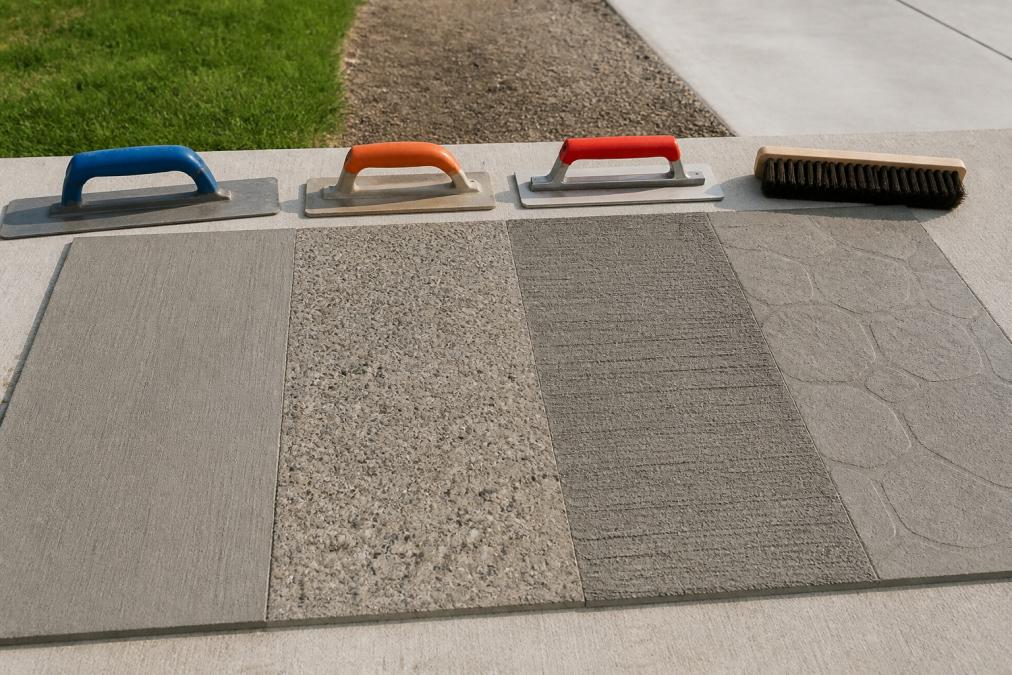
This guide breaks down four primary concrete finish options: broom finish, stamped concrete, exposed aggregate, and resurfacing. We'll cover durability under specific climate conditions, real installation costs, maintenance requirements, and whether each finish is realistic for DIY work or requires professional installation.
Broom Finish vs Stamped Concrete Driveway
Broom finish concrete is the industry workhorse: simple, economical, and proven. A stiff-bristle broom is dragged across wet concrete to create subtle ridges and uniform texture. This finish provides excellent traction, especially in wet conditions, and costs $6-$10 per square foot.
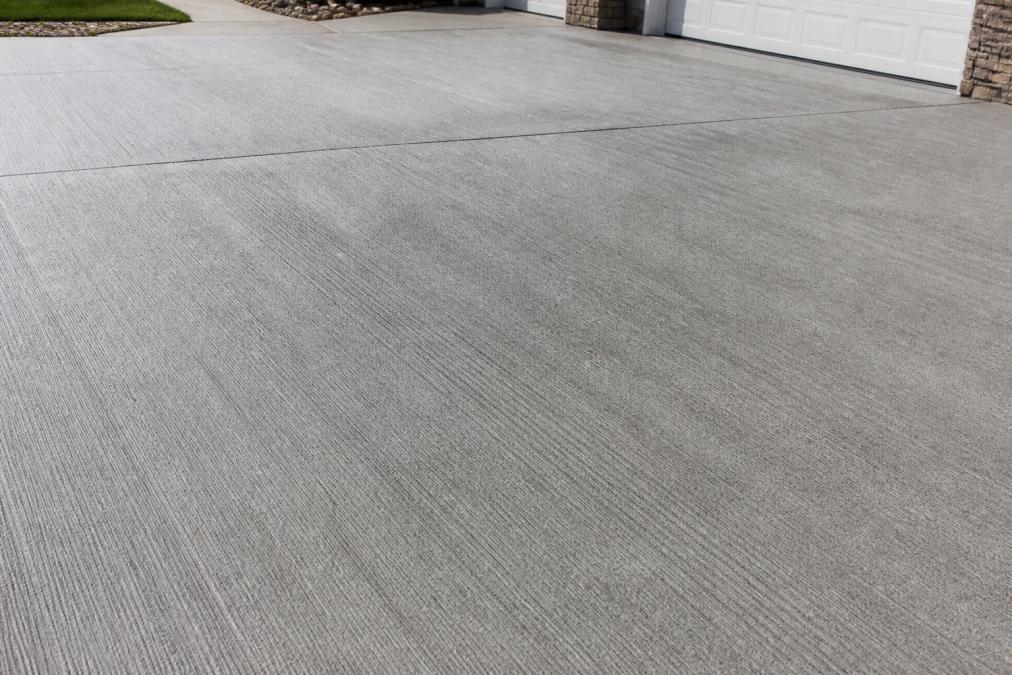
Broom finish works because the texture creates micro-friction. Vehicles and pedestrians grip the surface reliably, which is critical in regions where moisture and ice are seasonal realities. Minor imperfections in the concrete pour disappear into the texture, and the surface hides dirt and tire marks better than smooth concrete.
The trade-off is aesthetic simplicity. If curb appeal drives your decision, broom finish feels utilitarian. For homeowners who prioritize function over form, this is a non-issue. For those wanting their driveway to be a design statement, broom finish won't deliver.
Stamped concrete replicates the look of stone, brick, slate, or wood by pressing patterns into wet concrete before it sets. Pricing ranges from $9-$16.25 per square foot, reflecting both material cost and skilled labor. Patterns include ashlar slate, cobblestone, random stone, and wood plank designs.
Stamped concrete wins on visual impact. You get the aesthetic of expensive materials at a fraction of the cost. Color hardeners and stains add depth and variation, creating surfaces that genuinely look like natural stone.
The catch: stamped concrete requires professional installation. The timing window is narrow, and mistakes are permanent. Once cured, you can't fix a misaligned pattern or shallow stamp. DIY stamping is rarely successful.
Durability between the two is comparable when properly sealed. Both last 25-30 years if maintained. Broom finish requires less maintenance because the texture is simpler, while stamped concrete benefits from regular sealing to protect stains and maintain color vibrancy.
Exposed Aggregate: Durability and Slip Resistance
Exposed aggregate concrete reveals stones and pebbles mixed into the concrete by washing away the top layer of cement after pouring. The result is a textured, decorative surface where the aggregate, typically river rock, marble chips, or colored pebbles, becomes the visual feature.
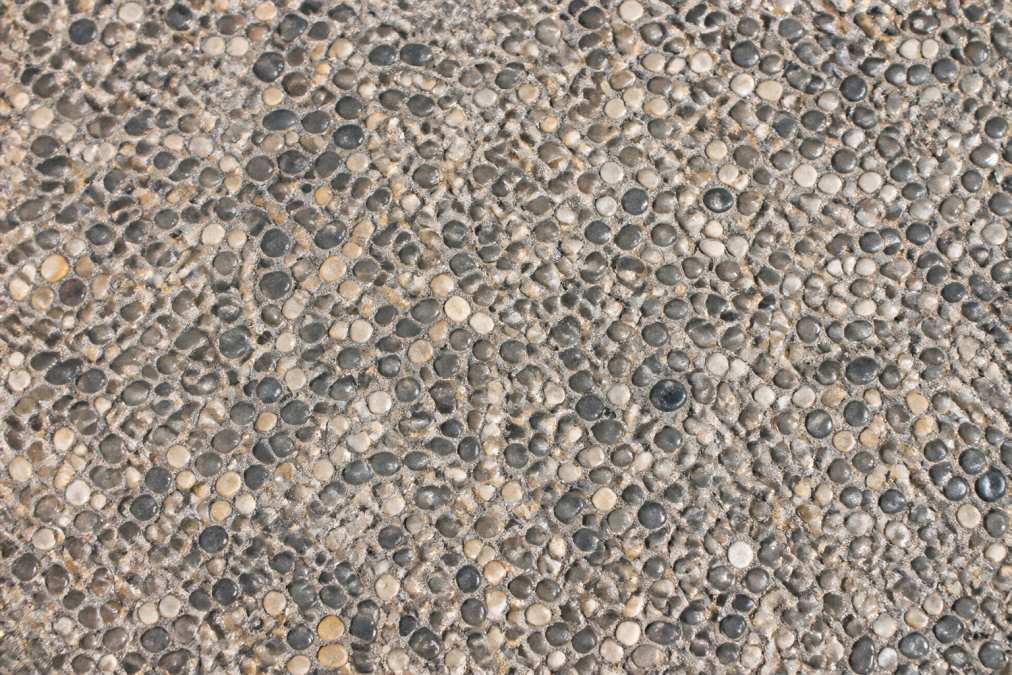
This finish delivers superior slip resistance. The aggregate creates genuine traction, not just surface texture. Coefficient of friction is measurably higher than broom finish, which matters if your driveway slopes or if you live where rain and ice are common. Exposed aggregate is often specified for commercial applications specifically because of this safety advantage.
The aesthetic appeal is substantial. Unlike broom finish, exposed aggregate offers visual interest and sophistication. You can choose aggregate colors, earth tones, whites, blacks, or mixed, to complement your home's exterior. The finished surface looks like high-end terrazzo or natural stone.
Exposed aggregate costs $8-$15 per square foot, positioning it between broom finish and stamped concrete. The labor involves careful timing: the concrete must be washed at exactly the right stage of curing. This requires professional expertise.
Durability is excellent. The aggregate itself is harder than surrounding concrete, so the surface improves with age. As cement washes away over years of exposure, the aggregate becomes more prominent and traction increases.
Maintenance is the trade-off. Exposed aggregate is porous and collects dirt and debris in exposed pockets. Sealing helps but doesn't eliminate the issue. In regions with heavy rain or snow melt, water can penetrate the porous surface and cause freeze-thaw damage if the concrete isn't sealed regularly. Annual or biennial sealing is recommended.
How Long Does a Concrete Driveway Finish Last
The lifespan of a concrete finish depends on three factors: base concrete quality, finish type, and climate.
Base concrete quality is foundational. A properly poured driveway with adequate thickness (4 inches minimum), correct slope for drainage, and proper curing can last 30-40 years. Poor base work cuts lifespan dramatically. Freeze-thaw cycles accelerate deterioration in poorly constructed driveways because water penetrates cracks and expands when frozen.
Broom finish concrete typically lasts 25-30 years with minimal maintenance (peer-reviewed research). In freeze-thaw climates, the surface may show scaling (small flakes chipping away) after 15-20 years if the concrete wasn't air-entrained or sealed. Scaling is cosmetic unless severe.
Stamped concrete lasts similarly, 25-30 years, but decorative elements require attention. Stains fade over time, and the surface benefits from resealing every 2-3 years to maintain color and protect against water penetration. If you neglect sealing, stains may wear unevenly.
Exposed aggregate is the longest-lasting finish in most climates. The aggregate is inert and durable. Properly maintained exposed aggregate can last 40+ years. The risk isn't the aggregate itself but freeze-thaw damage to the base concrete if water penetrates through inadequate sealing.
Climate is the dominant variable. In freeze-thaw regions, any finish deteriorates faster without proper sealing and maintenance. In mild climates, finishes last longer because thermal stress is minimal.
Concrete Driveway Sealing Best Practices
Sealing is the single most important maintenance step for extending driveway life. A concrete finish needs protection from water penetration, UV degradation, salt exposure, and chemical spills.
Concrete is porous. Even properly cured concrete absorbs water, which causes freeze-thaw damage, staining, and surface scaling. A quality sealer fills the pores and creates a moisture barrier.
Timing matters. New concrete should cure for 28 days before sealing. After the initial cure, apply the first sealer coat within 30 days.
Sealer type depends on your finish and priorities. Acrylic sealers are affordable, easy to apply, and provide good protection for 1-2 years. They're ideal for broom finish. Polyurethane sealers last longer (3-5 years) but cost more. Penetrating sealers (silicone-based) don't change the concrete's appearance and are excellent for exposed aggregate.
For stamped concrete, choose a sealer that enhances color without making the surface slippery. Matte-finish sealers are safer for driveways.
Resealing frequency depends on traffic and climate. High-traffic driveways need sealing every 1-2 years. Moderate-traffic driveways benefit from sealing every 2-3 years. In freeze-thaw climates, annual sealing is ideal.
Surface preparation is critical. The concrete must be clean and dry before sealing. Pressure wash the driveway at least 48 hours before sealing. Let it dry completely; moisture trapped under sealer causes adhesion failure.
Application is straightforward for most homeowners. Acrylic sealers can be rolled or sprayed. If you're uncomfortable applying sealer yourself, professional application costs $0.50-$1.50 per square foot.
Cost Comparison and Installation Factors
The cost of a concrete finish varies by finish type, local labor rates, and site conditions.
| Finish Type | Cost per Sq. Ft. | Installation Difficulty | Maintenance Frequency | Best For |
|---|---|---|---|---|
| Broom Finish | $6-$10 | Low (DIY possible) | Annual sealing | Budget-conscious, high-traffic areas |
| Stamped Concrete | $9-$16.25 | High (professional required) | Sealing every 2-3 years | Curb appeal, design-focused |
| Exposed Aggregate | $8-$15 | Medium-High (professional recommended) | Annual sealing | Safety, durability, visual interest |
| Resurfacing | $3-$10 | Medium (DIY possible) | Annual sealing | Renewing worn existing concrete |
For a 500-square-foot driveway, total costs range from $3,000 (broom finish) to $8,100 (stamped concrete), excluding sealing. Sealing adds $250-$750 for the initial application, then $125-$375 annually.
Installation factors affect pricing. Site accessibility, narrow driveways, or steep slopes increase labor time. Existing concrete removal costs $1-$2 per square foot. Soil preparation and base compaction add $0.50-$1 per square foot.
DIY feasibility varies. Broom finish is the most DIY-friendly. Stamped concrete is nearly impossible to DIY successfully. Exposed aggregate is intermediate; the washing step requires experience but is doable for motivated homeowners.
Luxury Concrete And Landscaping handles all preparation, installation, and finishing work with in-house expertise. Professional installation eliminates timing mistakes and guarantees the finish matches your vision. The 5-year workmanship warranty protects your investment.
Choosing the Right Finish for Your Home
The best concrete finish depends on three decisions: climate priorities, aesthetic preferences, and budget.
Climate first. In freeze-thaw regions, prioritize slip resistance and durability. Exposed aggregate or broom finish excel here. Stamped concrete is beautiful but requires diligent sealing. In mild climates, any finish performs well.
Aesthetic second. If curb appeal is central, stamped concrete or exposed aggregate deliver visual impact. Broom finish is functional but plain. Consider your home's style when choosing patterns and colors.
Budget third. Broom finish is most economical upfront and over time. Stamped concrete costs more initially and requires regular sealing. Exposed aggregate splits the difference.
Consider maintenance tolerance. If you're willing to seal annually, stamped concrete and exposed aggregate reward you with lasting beauty. If you prefer minimal maintenance, broom finish requires less attention.
Think long-term. Your driveway is one of the first things visitors notice daily and affects curb appeal and property value. A $2,000 investment in stamped concrete lasts as long as a $1,500 broom finish but looks significantly better. If you plan to stay in your home for 10+ years, the aesthetic investment often pays dividends.
Your driveway is one of the first things visitors notice about your home. The finish you choose shapes both how it performs and how it looks for decades. Broom finish delivers reliability and economy; stamped concrete brings design sophistication; exposed aggregate combines durability with safety and visual appeal. Luxury Concrete And Landscaping specializes in all three, with in-house design expertise to help you choose the finish that matches your climate, aesthetic, and long-term vision. Our licensed, bonded, and insured team handles site preparation, installation, and finishing to professional standards, backed by a 5-year workmanship warranty. Get your free estimate today and discover how the right concrete finish transforms your driveway into a lasting investment in your home's curb appeal.
=== FAQ ANSWERS (audit these too, same rules) ===
[1] Q: What is the best concrete finish for a driveway? A: The best concrete finish depends on your priorities. Broom finish offers excellent traction and affordability, making it ideal for wet climates. Stamped concrete provides decorative appeal and customization for homeowners prioritizing curb appeal. Exposed aggregate balances durability, slip resistance, and distinctive aesthetics. Consider your climate, budget, maintenance tolerance, and design preferences when selecting a concrete finish for driveways.
[2] Q: How long does a concrete driveway finish last? A: Most concrete driveway finishes last 25-30 years or longer with proper maintenance. Broom finish and exposed aggregate typically perform well through freeze-thaw cycles common in varied climates. Stamped concrete may require resealing every 2-3 years to maintain appearance and durability. Regular sealing, proper drainage, and prompt crack repair extend the lifespan significantly. Professional installation and quality materials ensure your concrete finish reaches its full longevity potential.
[3] Q: Is broom finish or smooth finish better for driveways? A: Broom finish is superior for driveways because it provides excellent traction and slip resistance, especially in wet or icy conditions. The textured surface created by dragging a stiff-bristle broom across wet concrete reduces accident risk. Smooth finishes look polished but become slippery when wet, making them less practical for driveways. Broom finish also hides dirt and minor imperfections better while remaining durable and low-maintenance.
[4] Q: What are the best concrete driveway sealing practices? A: Seal your concrete driveway every 2-3 years to protect against moisture, UV damage, and weather deterioration. Wait 28 days after installation before applying sealer to allow full curing. Clean the surface thoroughly and repair any cracks before sealing. Use a high-quality, penetrating sealer appropriate for your finish type, stamped and exposed aggregate finishes benefit most from regular sealing. Professional application ensures even coverage and maximum protection for your investment.
Frequently Asked Questions
What is the best concrete finish for a driveway?
The best concrete finish depends on your priorities. Broom finish offers excellent traction and affordability, making it ideal for wet climates. Stamped concrete provides decorative appeal and customization for homeowners prioritizing curb appeal. Exposed aggregate balances durability, slip resistance, and distinctive aesthetics. Consider your climate, budget, maintenance tolerance, and design preferences when selecting a concrete finish for driveways.
How long does a concrete driveway finish last?
Most concrete driveway finishes last 25-30 years or longer with proper maintenance. Broom finish and exposed aggregate typically perform well through freeze-thaw cycles common in varied climates. Stamped concrete may require resealing every 2-3 years to maintain appearance and durability. Regular sealing, proper drainage, and prompt crack repair extend the lifespan significantly. Professional installation and quality materials ensure your concrete finish reaches its full longevity potential.
Is broom finish or smooth finish better for driveways?
Broom finish is superior for driveways because it provides excellent traction and slip resistance, especially in wet or icy conditions. The textured surface created by dragging a stiff-bristle broom across wet concrete reduces accident risk. Smooth finishes look polished but become slippery when wet, making them less practical for driveways. Broom finish also hides dirt and minor imperfections better while remaining durable and low-maintenance.
What are the best concrete driveway sealing practices?
Seal your concrete driveway every 2-3 years to protect against moisture, UV damage, and weather deterioration. Wait 28 days after installation before applying sealer to allow full curing. Clean the surface thoroughly and repair any cracks before sealing. Use a high-quality, penetrating sealer appropriate for your finish type, stamped and exposed aggregate finishes benefit most from regular sealing. Professional application ensures even coverage and maximum protection for your investment.
This article was written using GrandRanker
